


Introduction
School holidays can feel like a relief and a headache at the same time. One moment, you are glad the spelling lists, Math homework, CCA timings and tired weekday evenings are finally on pause. The next, it is only 9am, the screens are already out, the weather cannot decide what it is doing, and you are wondering what to do with kids on school holidays without overspending or turning the break into another exhausting timetable.
If that sounds familiar, you are not alone. Many families in Singapore want the same thing, a mix of rest, fun and just enough structure to keep the day from falling apart. When you are balancing work, budget limits and children with very different energy levels, that is not always easy.
The good news is that there are plenty of sensible school holiday activities in Singapore, from libraries and neighbourhood parks to indoor play spaces, museum visits and simple HDB-friendly activities at home. The trick is not to fill every slot. It is to choose activities that actually fit your child, your schedule and your budget.
Key Takeaways
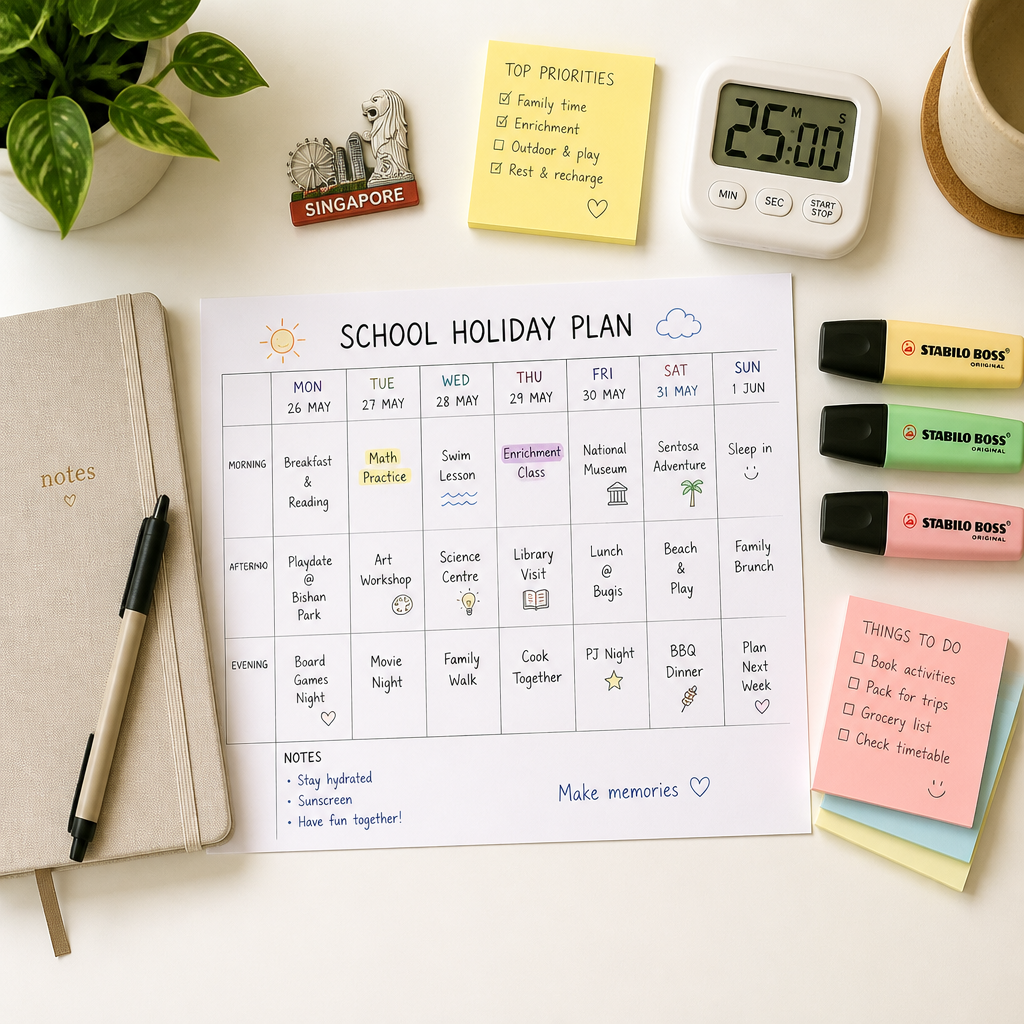
- A simple routine works better than a packed schedule. Children usually cope better with a loose daily rhythm, such as outing time, quiet time and free play, instead of back-to-back classes that leave everyone tired. A predictable flow also cuts down on whining and helps parents manage expectations more calmly.
- Mix fun with light learning. Educational holiday activities do not need to feel like extra school. A museum visit, library challenge or baking session can build curiosity, vocabulary and problem-solving without triggering resistance.
- Indoor backup plans matter in Singapore. Rain, haze or afternoon heat can derail outdoor plans quickly, so keeping a shortlist of indoor activities you can reach easily makes life much easier. This is especially helpful for younger children who struggle with sudden changes.
- Budget-friendly options are everywhere. Many affordable school holiday ideas are found in neighbourhood libraries, parks, community spaces and simple home activities. You do not need expensive attractions every week to create a meaningful break.
- Primary school children often need purposeful downtime. If you are wondering what to do with primary school kids during school holidays in Singapore, think in terms of balance, not constant productivity. Rest, reading and free play still matter.
- Working parents need convenience, not perfection. The best holiday plan is often the one that is realistic, near home and easy to repeat, not the one with the most impressive photos or longest travel time.
- A little academic maintenance can help. Short, gentle reading or revision sessions can prevent holiday regression, especially for children who forget quickly after the term. If needed, you can explore home tutors in Singapore for support during term time.
Create A Holiday Rhythm Without Overscheduling
A lot of parents begin the holidays with good intentions, then accidentally overfill the calendar. By the second week, everyone is irritable. The child is tired, the parent is stretched, and even fun plans start to feel like chores.
Build around rhythm, not a full timetable
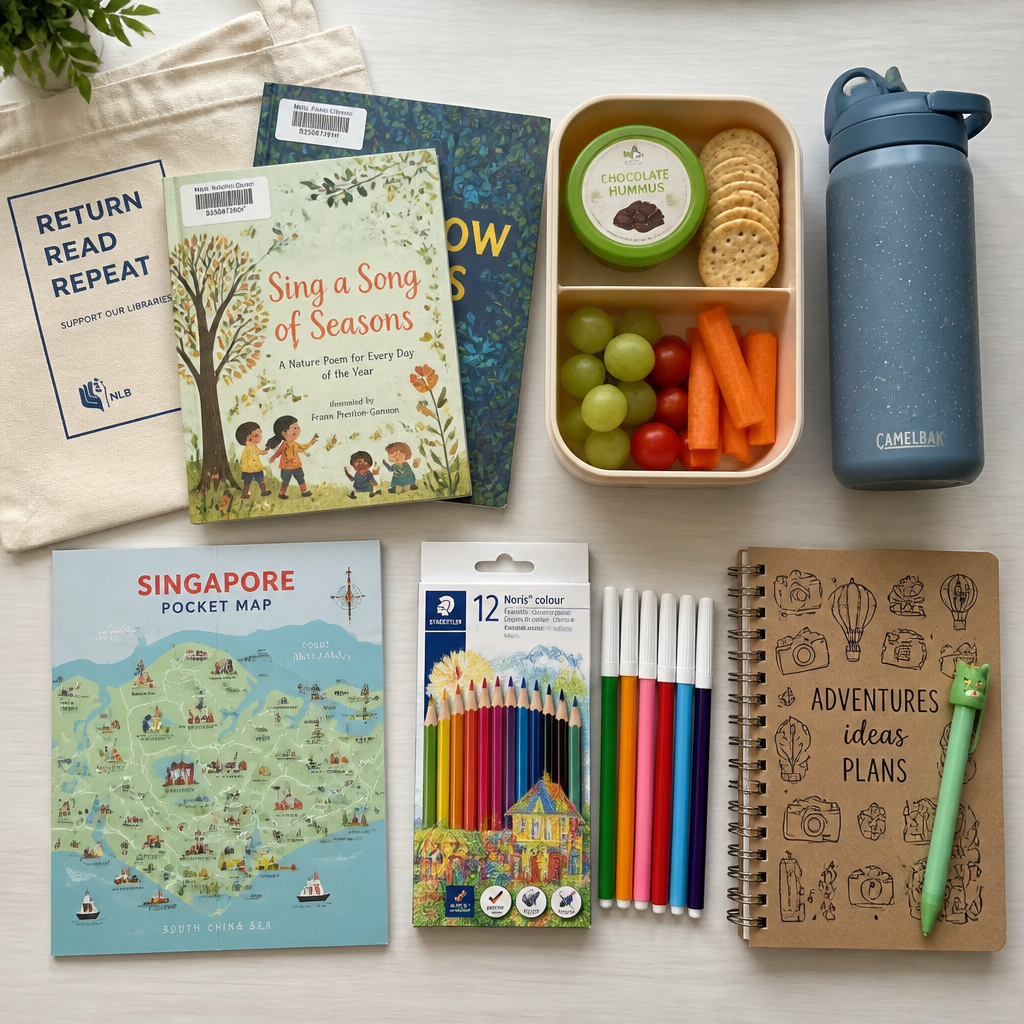
A holiday routine does not need to look impressive on paper. For most families, three anchors are enough, a morning activity, afternoon quiet time and evening family time.
A primary school child might go to the library in the morning, have lunch and reading time at home, then head downstairs for playground time in the late afternoon. That kind of flow is often more sustainable than squeezing in coding class, enrichment, an art workshop and dinner out all in one day.
Children, especially younger ones, need unstructured time to process, play and even be bored for a while. Tutors often notice that when every hour is filled, children become less flexible, not more. Boredom is uncomfortable at first, but if screens are not the immediate default, it often leads to creative play.
Leave room for recovery after the school term
Some children finish the term completely drained. This is especially true when school days are long and packed with CCA and tuition. It is easy for parents to worry that rest means wasted time, but a child who has been running on low energy may need a few slower mornings before they feel curious and cooperative again.
A common pattern among students is that when they are overscheduled, they become more irritable, less cooperative and oddly resistant even to activities they usually enjoy. So if you are thinking about how to keep kids productive during the school holidays, it helps to remember that rest is part of productivity too.
Plan by energy level, not just age
A lively six-year-old who loves to move may cope much better with park play and water play than a long seated workshop. A ten-year-old who enjoys reading and making things may be perfectly happy with a library visit followed by a craft challenge at home.
The right activity is not only about age. It is also about attention span, temperament and how much stimulation your child can handle that day.
School Holiday Activity Ideas By Age Group
Indoor School Holiday Activities Singapore Parents Can Actually Use
Anyone planning school holidays in Singapore knows how quickly outdoor plans can collapse. You leave the house thinking it is a park day, then the rain comes in, or the heat becomes too much before lunch. That is why indoor options are not just nice to have. They are essential.
Make the most of libraries
The National Library Board is often one of the most useful school holiday resources, yet many families do not fully use it. Libraries are air-conditioned, affordable, educational and suitable for different ages.
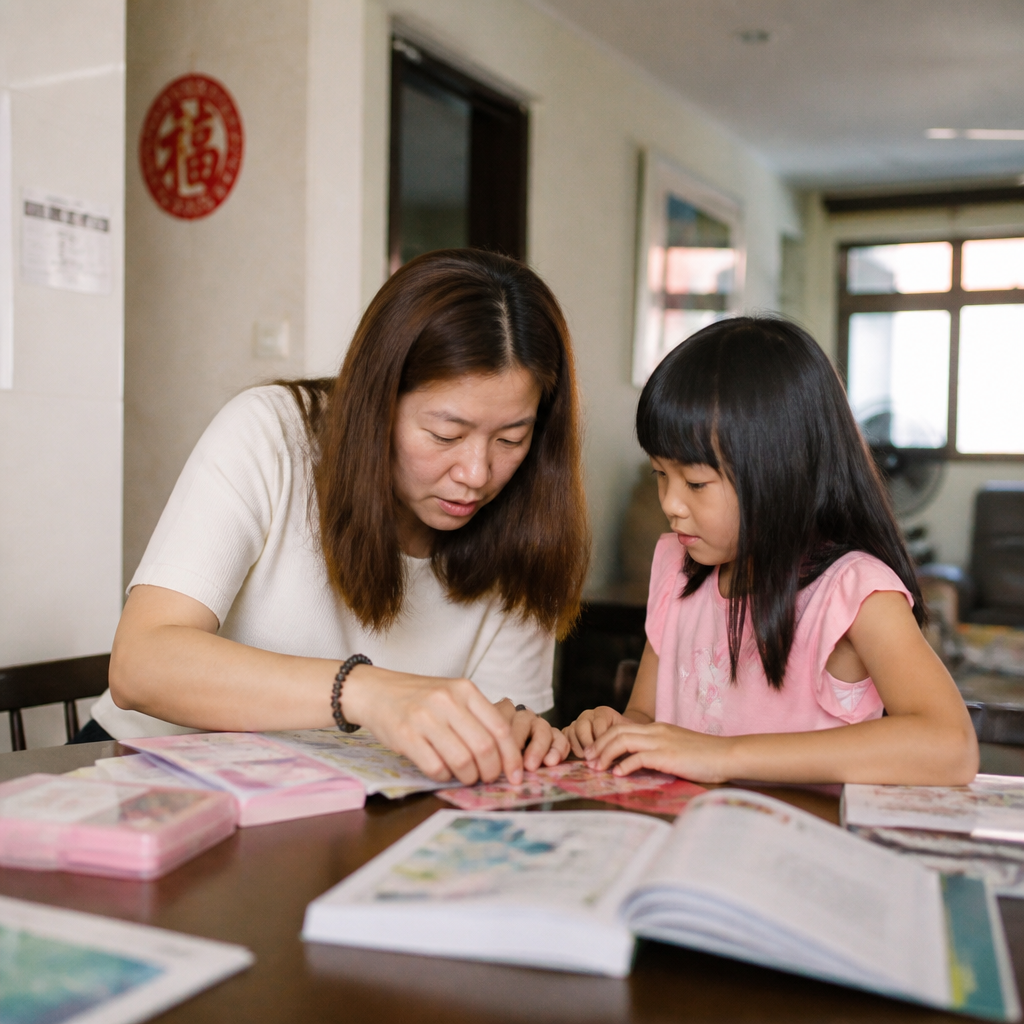
Preschoolers can browse picture books and attend storytelling sessions when available. Primary school children can borrow books tied to their interests, whether that is animals, football or comics.
A simple tweak makes a big difference. Instead of saying, choose some books, give your child a small mission. Ask them to find one funny book, one fact book and one story set in another country. That small bit of structure turns the outing into an exploration.
Choose museums that feel like play
For parents looking for educational school holiday activities in Singapore, museums are a strong option. Many children connect better with Science, history or art when they can see and touch things rather than only read about them. A child who seems uninterested in school topics may suddenly have plenty of questions after an interactive exhibit.
Keep the goal simple. You do not need to cover the whole museum. Pick one section, spend an hour or two, then stop for a snack. In many families, shorter visits go much better than trying to squeeze everything into one trip.
For example, families can consider places such as the National Library branches, Children’s Museum Singapore, Science Centre Singapore, National Gallery Singapore, or neighbourhood community club programmes, depending on the child’s age and interests. Always check the latest opening hours, ticket prices, and programme availability before heading down.
Try easy home-based activities in HDB flats
Not every holiday plan needs transport, tickets or entrance fees. Some of the most useful indoor activities for kids happen at home. Baking simple muffins, building cardboard structures, doing a scavenger hunt around the flat, creating a reading fort or asking your child to run a pretend café with toy food and handwritten menus can go a long way.
In a smaller home, setup matters. If the activity is too messy or too complicated, most parents will not want to repeat it. Keep materials simple, paper, tape, recycled boxes, markers and measuring cups. The goal is engagement, not perfection.
A helpful trick is to keep one small “holiday box” ready with easy supplies. When the rain starts or a planned outing gets cancelled, you can pull out colouring materials, puzzle books, stickers, origami paper or recycled craft items without scrambling for ideas.
Outdoor Ideas That Still Work In Singapore
Outdoor time can reset a child’s mood surprisingly fast. After too many hours indoors, children often become noisier, more restless and more argumentative. Sometimes what looks like bad behaviour is simply pent-up energy.
Use parks and green spaces well
Singapore has many family-friendly green spaces that work well during the holidays. Early mornings or late afternoons are usually easier. A simple park outing can include scooter time, playground play, a picnic mat, bubbles for younger children or a mini nature challenge like spotting five birds or collecting different leaf shapes.
Children do not always need a major attraction. For many preschool and primary school children, open space, movement and your attention are enough.
Keep water play simple
When the weather is hot, water play areas and child-friendly splash spaces can be more appealing than a regular playground. Bring a change of clothes, simple snacks and set expectations before leaving. Saying something like, we are staying for one hour, then lunch, often helps reduce the end-of-outing meltdown.
For families on a tighter budget, basic alternatives can work too. A bucket wash station on the service balcony, toy car washing or sponge relay games in the bathroom can meet the same need on a rainy day.
Prioritise convenience over novelty
One common mistake is assuming every holiday outing must feel special. In reality, a nearby playground, reservoir path or community space that you can reach in 10 to 20 minutes may be far more sustainable than a big day out with long travel, queues and expensive meals.
This matters even more for working parents or families with siblings of different ages. The best school holiday activities are often the ones you can actually repeat without dread.
What Primary School Kids Usually Need During The Holidays
Primary school children are in a tricky stage. They are old enough to reject anything that feels too babyish, but not always independent enough to manage a whole day well on their own. Left completely unstructured, many drift into endless videos and gaming. Pushed too hard, they become resistant and defensive.
Give them small responsibilities
If you are wondering what to do with primary school kids during school holidays in Singapore, start with one daily responsibility that feels grown-up but manageable. It could be preparing a simple snack, packing items for an outing, reading to a younger sibling or helping compare prices at the supermarket.
This kind of participation keeps children engaged without making the holiday feel like punishment. It also helps children who are used to being entertained every minute build some initiative.
Keep academic maintenance short and calm
School holidays do not need to become a second term. At the same time, a complete stop can make the return to school harder, especially for children who already struggle with reading fluency, Chinese vocabulary or multiplication facts.
A light touch usually works best.
An experienced tutor often sees the same pattern after long breaks. Children do not always forget everything, but they lose stamina. They may read instructions more slowly, become less patient with problem-solving and feel more reluctant to write. Small, regular touchpoints usually prevent that slide better than one heavy revision session on Sunday night.
If your child needs more structured academic help but you do not want the holidays to feel stressful, you can learn more about home tutors in Singapore and keep support gentle during the school term.
Match outings to maturity level
A Primary 1 child may still enjoy playground-based days and craft corners. A Primary 5 child may prefer escape-room style challenges, science centres, board game cafés, sports sessions or photography walks with a simple phone camera.
Matching the outing to maturity level often reduces the complaints that the activity is boring or for babies. It also helps siblings enjoy the day more when expectations are realistic from the start.
Budget-Friendly School Holiday Ideas For Families In Singapore
Holiday costs can add up quickly, especially once transport, tickets and meals out start stacking up. The encouraging part is that many budget-friendly school holiday ideas are also the easiest to sustain.
Use a low-cost weekly pattern
Instead of planning ten different expensive outings, it often helps to rotate a simple weekly mix.
This pattern works especially well for siblings. It also takes away the pressure to keep inventing something new.
Check community-based options
Look at nearby community centres, town events, library programmes and mall-based school holiday workshops. Some are free or low-cost, and they are often easier to access than destination venues across the island.
Programmes, prices and schedules can change, so it is best to check the latest organiser or venue details before heading out.
Watch the hidden costs
An outing that looks cheap online can become expensive once transport, drinks, snacks and impulse purchases are added in. Before confirming a plan, it helps to ask yourself a few practical questions. Will we need to buy meals there? How long is the travel? Will the children still have energy for it?
Sometimes the most budget-friendly option is not the cheapest ticket. It is the easiest half-day plan near home.
Make Learning Feel Natural During The Break
Many parents want some learning during the break, but children usually resist when every activity starts to feel instructional. A better approach is to let the learning sit inside the experience.
Turn everyday outings into learning moments
A trip to a wet market can become a language and numeracy activity. Ask your child to compare prices, identify vegetables in English and Chinese, or estimate the total bill. A bus or MRT ride can turn into map reading and observation. Cooking at home includes reading instructions, measuring and sequencing.
These are practical ways to keep kids engaged during the school holidays without placing them at a table for extra worksheets.
Let interests lead the learning
A child obsessed with dinosaurs may enjoy library books, museum exhibits, drawing labelled dinosaur cards and watching a documentary clip with discussion after. A football-loving child may resist composition practice but happily write match reports, create player profiles or read sports articles.
Children usually learn more willingly when the topic already matters to them. This is especially helpful for reluctant readers, who often respond better to interest-led materials than school-like passages.
Use workshops selectively
Holiday workshops in art, coding, sports or speech can be meaningful, especially if your child genuinely enjoys them. But too many structured programmes can leave no room for free play or family downtime.
For many families, a middle ground works best, choose one or two activities with real appeal, then leave the rest of the week more open. For families with school-age children, it is also wise to keep an eye on official school calendars and announcements through MOE, especially when planning around term dates or school-related commitments.
A Simple Way To Plan The Week
If holiday planning feels mentally tiring, use a repeatable formula instead of starting from scratch each week. Many parents find it easier to think in categories: one outdoor activity, one indoor outing, one home project, one social activity and plenty of free time around them.
For example, your week might include a park morning, a library visit, one baking session at home and one playdate with cousins or neighbours. That is already enough variety for many children. The rest of the time can stay open for reading, independent play, errands and rest.
This kind of planning also helps with sibling management. If one child prefers active outings and another prefers quieter activities, you can make sure both styles appear across the week without forcing every single day to satisfy everyone equally.
Choose Activities That Fit Your Family
Not every good activity is right for your family this month. The best choice depends on practical constraints as much as enrichment value.
Think about transport, weather and timing
An excellent venue across the island may not be worth it if your child gets cranky on long rides or if you need to rush back for a younger sibling’s nap. A simple morning plan in your own neighbourhood may go much more smoothly.
Singapore weather matters too. Outdoor plans are usually easier before midday, while afternoons often suit indoor spaces better.
Match activities to your season of family life
A family with one preschooler and one primary school child needs different plans from a family with tweens. Working parents may need repeatable, low-prep options more than one-off adventures. If grandparents or helpers are involved, choose activities they can manage comfortably too.
That does not mean lowering your standards. It simply means choosing plans that your family can actually enjoy, instead of plans that look good but leave everyone exhausted.
Frequently Asked Questions
How do I stop my child from spending the whole school holiday on screens?
Total bans often turn into battles, especially with primary school children. A more workable approach is to set clear screen windows and fill the day with a few predictable alternatives. For example, no screens before lunch, library in the morning, quiet reading after lunch, then limited screen time later in the day. Children usually cope better when they know what is replacing the screen, not just what is being taken away.
What are good indoor activities for kids when Singapore weather makes outdoor plans difficult?
Libraries, museums, indoor play spaces, community workshops, baking at home, board games, craft stations and scavenger hunts around the flat are all realistic options. Keep a short backup list ready so rain does not derail the whole day. In practice, the best backup plan is usually the one that needs the least preparation.
What if I need budget-friendly school holiday ideas for weekends only?
Keep it simple. Choose one low-cost outing and one home-based activity each weekend. Saturday morning at the library and Sunday afternoon making pizza or building a recycled craft project can already feel like a good balance. Repeating familiar routines saves money and reduces planning stress, especially when weekdays are already packed.
How can I keep my child learning without making the holidays feel like tuition?
Use real-life activities with educational value, such as cooking, reading challenge cards, museum visits, journalling or market maths. Keep formal work short. Many children accept 15 minutes of revision more easily when it sits beside enjoyable activities instead of replacing them.
Should I book holiday camps or keep the schedule free?
It depends on your child’s temperament, energy and your family logistics. Camps can be useful for social interaction and structure, especially for working parents. But children who are already tired from term time may benefit more from a lighter holiday. Many families do best with a middle ground, one or two structured activities, plus plenty of free time.
Conclusion
Figuring out what to do with kids on school holidays in Singapore does not have to mean filling every day with expensive outings or enrichment classes. In many families, the happiest holidays come from a balanced mix, some indoor options for rainy days, some outdoor movement, a few educational experiences that feel natural, and enough downtime for children to reset after the school term.
If you are deciding what to do with primary school kids during school holidays, keep it realistic. A library visit, a neighbourhood park, a museum morning, a home baking session or a low-cost workshop can go a long way when chosen with your child’s interests and your family’s energy in mind. Programmes, prices and schedules may change, so do check the latest organiser, venue or official website details before heading out.
If the holidays have shown that your child may need gentler academic support before the next term begins, you can learn more about our home tutors in Singapore for help that fits your child’s pace and school routine.