


Introduction
It is 9.30pm, your child has just come back from CCA, dinner was rushed, and there is still a pile of worksheets sitting on the table. Somewhere between fatigue, scrolling, and “I’ll do it later”, homework turns into the daily battleground. That is usually when many parents start wondering, does homework really matter, especially when exams still feel far away or revision seems more urgent.
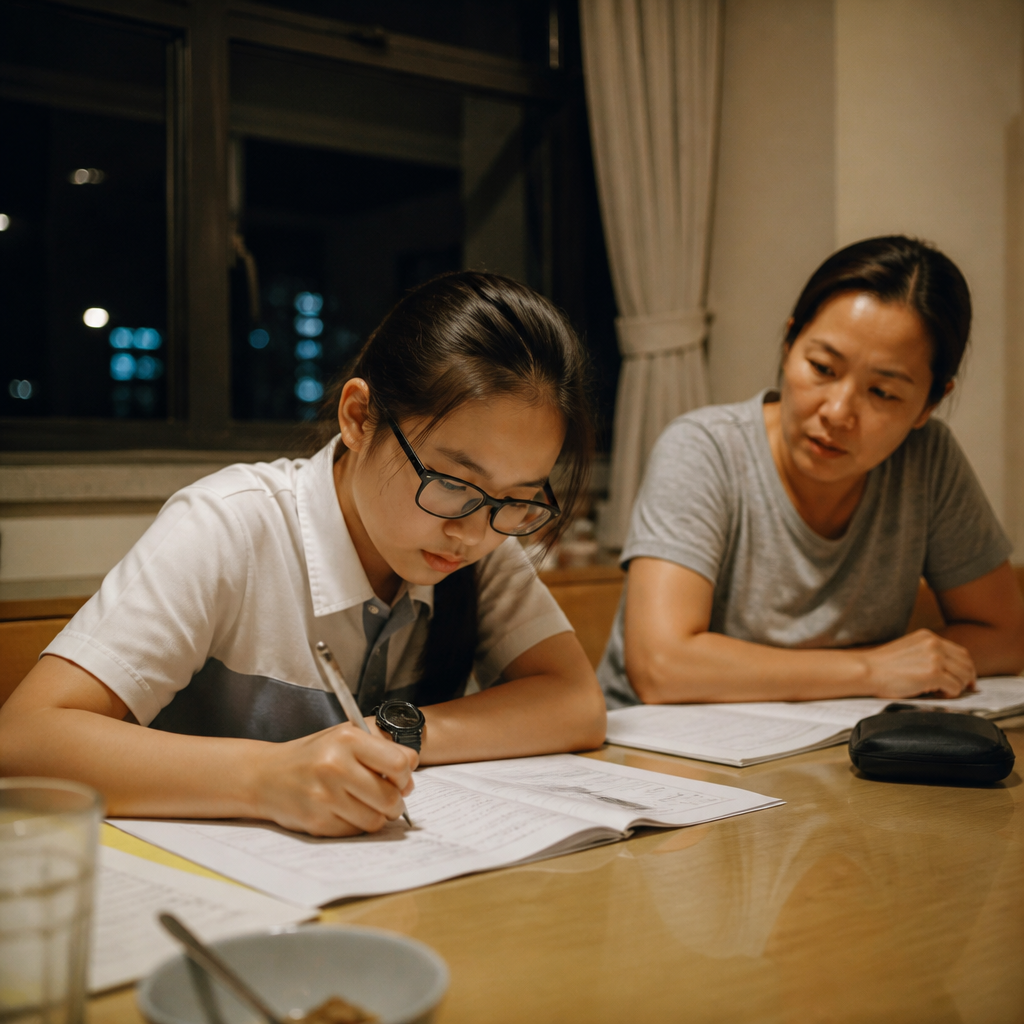
In secondary school, especially in Singapore, homework is not just extra schoolwork to keep students occupied. When it is used well, it becomes one of the main ways students keep up with content, practise exam skills, and avoid the last-minute panic before WA1, WA2, End-of-Year exams, and O-Levels.
Homework is not magic, and it does not guarantee top grades on its own. But it often shows something very important, whether a student truly understands a topic, can apply it independently, and is building habits that support exam success.
For parents who feel torn between pushing harder and backing off, the goal is not more homework for the sake of it. The goal is meaningful, manageable homework that supports learning, revision, and exam readiness.
Key Takeaways
- Homework builds retention over time. Short, regular practice helps secondary students remember concepts better than cramming everything the week before an exam. This matters especially in subjects like Math and Science, where later chapters depend on earlier ones.
- Homework exposes weak spots early. A wrong Science explanation, a careless algebra step, or a poorly structured English response can show where understanding is shaky long before WA2 or O-Levels arrive. That gives students time to fix problems before they become bigger.
- Homework trains exam habits, not just content knowledge. Completing questions with some time pressure, writing full working, and organising answers properly all prepare students for actual papers. These habits often separate students who “know” a topic from students who can score in it.
- Homework matters most when it is reviewed. Simply finishing worksheets is not enough. Students need to check mistakes, ask questions, and understand why they lost marks, or the same errors will keep repeating.
- Too much homework, or poorly managed homework, can backfire. If a student is exhausted, copying answers, or rushing through everything at 11pm, the learning value drops sharply. Productive homework should support learning, not nightly burnout.
- Lower secondary and upper secondary homework needs are different. Secondary 1 and 2 students need habit-building and consistency, while Secondary 3 to 5 students need more exam-focused homework linked to stronger content mastery and timed practice.
- A sustainable routine works better than intense bursts. The best homework routine for secondary students in Singapore is one that fits school, CCA, rest, and revision, rather than relying on last-minute stress.
Why Homework Supports Exam Success, Not Just Daily Schoolwork
A lot of the frustration comes from treating homework and exams as two separate things. In reality, they are closely linked. In most secondary school subjects, exam success depends on repeated exposure, correction, and practice. Homework is where much of that happens quietly in the background.
Homework turns classroom exposure into actual learning
In class, a student may feel like they understand a chapter because the teacher’s explanation sounds clear. The real test comes later, when the student sits alone at the desk and has to solve the Math problem, explain the History source, or write the Chemistry equation without help.
That is one big reason homework matters so much for secondary students in Singapore. School lessons move quickly, and teachers often have to keep pace with the curriculum. You can view the broader curriculum expectations at MOE’s secondary curriculum page. Homework gives students the first real chance to turn passive understanding into independent performance.
Tutors often notice the same pattern. A student says, “I know this” during class, then freezes when faced with a similar question at home. That is not always laziness. More often, it means the concept has not settled yet. Homework brings that weakness to the surface early, while there is still time to ask for help.
Exams reward recall, application, and structure
Secondary school exams do not test whether a student recognised the chapter in class. They test whether the student can retrieve knowledge, organise it, and apply it under pressure. Homework starts building those habits much earlier.
Take English. A student may understand a comprehension answer when it is explained, but still struggle to infer properly when doing homework alone. In Math, a formula may feel familiar during guided practice, but disappear during homework because there is no prompt. In Science, the idea may be there, but marks are lost because the explanation lacks the right keywords.
These are not small issues. They are often the exact gaps that show up later in tests and exams. Homework is often the first rehearsal for independent exam performance.

How Homework Improves Exam Results
Parents often ask whether homework really helps with exam preparation, or whether revision is still the main thing that matters. The honest answer is that homework helps most when it feeds into revision. It is part of the preparation chain, not a substitute for everything else.
Homework strengthens memory through repeated retrieval
Many students fall into the same trap. They reread notes, highlight pages, and feel productive, then feel shocked when very little stays in their head. Homework works differently because it forces retrieval.
When a Secondary 2 student completes a Geography worksheet on plate tectonics two days after the lesson, then sees a related question again the next week, the brain has to pull the information back out. That effort is what strengthens memory. The same applies to Chinese compositional phrases, Biology definitions, and algebraic manipulation.
This is one practical reason homework improves exam results. It gives the brain spaced practice instead of one heavy revision session the night before. Over time, recall becomes faster and more reliable during tests.
Homework builds familiarity with question types
Exam stress often comes from unfamiliarity. Sometimes students are not panicking only because the content is hard. They are panicking because the wording, format, and expected answer style feel unpredictable.
Homework helps reduce that shock. Over time, students begin to notice patterns.
This becomes especially useful in upper secondary, where O-Level papers demand both content knowledge and exam technique. Parents can check the official examination information at SEAB’s GCE O-Level page, but in daily life, homework is where students start getting used to that style of thinking.
Homework creates a record of progress over time
Another benefit that is easy to overlook is that homework leaves a trail. Old worksheets, corrections, and teacher comments show whether a student is improving or repeating the same mistakes.
That matters because exam preparation is not only about effort. It is also about feedback. If a student keeps losing marks for incomplete explanation in Biology or weak paragraph structure in English, homework makes that pattern visible. Parents, teachers, and tutors can then respond earlier instead of waiting for a disappointing exam paper to reveal the issue.
Why “Studying” Is Not Always Enough
Some students look hardworking. They sit at the table, open books, and spend hours “studying”. Yet the results stay inconsistent. This is where many parents start feeling confused and discouraged.
Passive studying is not the same as active practice
Looking busy is not the same as learning deeply. A student may copy notes neatly, watch explanation videos, or reread model essays, but still underperform because there has been too little active practice.
Homework creates output. It asks the student to do something with the information.
- A Math worksheet reveals missing steps. A student who thought simultaneous equations were manageable may realise they keep making sign errors when solving independently. That is useful because it shows exactly what needs correction before the next test.
- A Science open-ended question exposes vague understanding. “I know the chapter” quickly becomes “I cannot explain diffusion clearly in full sentences.” This matters because many school exams reward precise explanation, not just rough familiarity.
- An English summary practice shows weak paraphrasing. Reading model answers feels useful until the student has to condense a passage alone. Homework makes that weakness visible while there is still time to improve.
This is one of the clearest reasons homework matters. It turns intention into evidence.
Written work gives teachers and tutors something concrete to correct
Without written work, many weaknesses stay hidden. A student may tell a parent, “I understand already”, and genuinely believe it. But a marked worksheet can reveal missing keywords, weak structure, careless reading, or poor time use.
That is why unfinished or skipped homework becomes risky over time. It does not just mean less practice. It also means fewer chances for correction before major exams.
If your child regularly falls behind on homework because of weak routines or subject confusion, some families find it helpful to get steady external support, especially before workload snowballs in upper secondary. You can learn more here: Private home tuition support.
Why Homework Matters Even More In Upper Secondary
Homework feels different in Secondary 4 and 5. The stakes are higher, the content is denser, and time suddenly feels much shorter. At this stage, homework should become more targeted, not just heavier.
Upper secondary homework reinforces layered content
For O-Level students, the benefits of homework are not about quantity alone. In many subjects, upper secondary chapters build on one another. If a student is weak in earlier topics, later homework becomes much harder.
In Additional Math, weak algebra affects progress in calculus. In Chemistry, shaky understanding of mole concepts affects later chapters. In English, weak summary or situational writing skills do not disappear just because prelims are approaching.
Homework in upper secondary acts like ongoing maintenance. It helps students avoid relying entirely on massed revision before prelims and O-Levels.
Homework builds exam stamina and discipline
An often-overlooked part of exam preparation is stamina. Students are not only tested on knowledge, but also on whether they can stay focused through full papers, manage time, and keep accuracy when tired.
Homework helps build this gradually. A 25-minute E Math paper done properly on a weekday may not look dramatic, but over months, it builds concentration. A student who regularly completes timed sections is usually less rattled than one who only starts timed work near the exam period.
Still, more homework is not automatically better. By upper secondary, quality matters hugely. Three carefully reviewed questions can be more useful than ten copied answers done half asleep.
When Homework Stops Helping
This is the part many parents need to hear with some relief. Homework matters, but not every homework habit is healthy or effective.
Exhaustion can cancel out learning
This scene is familiar in many Singapore homes. School ends, CCA runs late, tuition takes another slot, dinner is rushed, and homework starts when the child is already mentally flat. At that point, the student may still be “doing work”, but retention is poor and mistakes multiply.
A tired Secondary 1 student may take 90 minutes to finish what should have taken 30. A Secondary 4 student may spend the evening staring at a worksheet and absorbing almost nothing. That does not mean homework is useless. It means the routine is no longer supporting learning.
Poor homework habits create false confidence
Some students complete homework in ways that look productive but do very little for exam readiness.
Parents do not need to police every page. But it does help to notice patterns. If homework is consistently ending in tears, mindless copying, or midnight fatigue, the answer may not be “work harder”. It may be work differently.
Building A Homework Routine That Works
There is no perfect routine that fits every child. A Secondary 1 student adjusting to new school demands needs something different from a Secondary 4 student preparing for O-Levels. Still, the best homework routines usually have one thing in common, they are realistic enough to be sustained.
Lower secondary: focus on consistency and independence
Secondary 1 and 2 students often underestimate homework because major national exams still feel far away. This is usually when habits are formed.
A workable routine might look like this:
- Start with school-assigned homework first. After a short break and dinner, a student can spend 45 to 60 minutes clearing immediate tasks before moving to anything extra. This reduces procrastination and stops work from piling up.
- Use short subject blocks. A lower secondary student may do better with 25 minutes of Math, followed by a short break, then 25 minutes of English. This keeps attention from drifting and makes homework feel less overwhelming.
- End with a quick review. Even five minutes spent checking corrections or clarifying one confusing question makes homework more meaningful. It also helps students return to school knowing what they still need to ask.
At this stage, parents often help most not by applying more pressure, but by helping the child become less dependent on repeated reminders.
Upper secondary: connect homework to revision priorities
Secondary 3 to 5 students need a more strategic approach.
- Match homework to weak topics. If the student keeps losing marks in Physics calculations, some homework time should go there instead of only doing easier subjects first. This makes the effort more targeted and useful.
- Mix school homework with exam-style practice. A Secondary 4 student may finish assigned Chemistry work, then do one timed O-Level structured question to build transfer from school learning to exam performance.
- Protect sleep and recovery. Staying up late to finish every task can reduce performance the next day. Sometimes the better choice is to prioritise the most valuable work and continue the rest earlier the next day or over the weekend.
Homework should complement revision, not replace it. It should also leave space for rest, because an exhausted brain does not learn efficiently.
A simple weekly approach can prevent pile-ups
One practical way to make homework more sustainable is to spread it across the week instead of treating every night the same. For example, students can use lighter CCA days for more demanding subjects and reserve heavier school days for shorter review tasks. Weekend slots can then be used for corrections, unfinished work, or one or two timed practices rather than a full-day catch-up session.
This kind of planning reduces panic. It also teaches students an important exam skill: managing workload before it becomes overwhelming.
Frequently Asked Questions
Does homework help secondary school students prepare for exams if they already attend tuition?
Yes, if the homework is meaningful and reviewed properly. Tuition can explain concepts and provide guidance, but homework is often where the student proves whether the understanding holds independently. A student who depends only on tuition lessons without doing follow-up practice may still struggle in exams.
How much homework is reasonable for a secondary school student?
It depends on level, subject combination, school demands, and whether there is CCA or tuition on the same day. The better question is not just how much there is, but whether the student can complete it with focus and learn from it. Two hours of distracted work with constant phone use is less useful than one solid hour of attentive practice.
Why does my child do all the homework but still score poorly?
Finished homework does not always mean effective homework. Some students copy, rush, avoid corrections, or repeatedly practise only familiar question types. Others complete work mechanically without understanding mistakes. Improvement usually comes from doing, checking, and correcting, not just submitting.
Should I supervise my secondary school child’s homework every day?
Not in the same way as primary school. Most secondary students need increasing independence. What usually helps more is light monitoring, such as checking whether homework is planned, whether difficult subjects are being avoided, and whether repeated mistakes are piling up. The goal is support, not constant hovering.
What should I do if homework is affecting sleep and motivation?
That is usually a sign the system needs adjustment. Look at timing, workload, distractions, and whether the student is taking too long because they are stuck. In some cases, better structure or extra academic support can reduce the struggle. The aim is sustainable preparation, not nightly burnout.
Conclusion
So, why does homework matter for secondary school exams? Because it does the quiet work that exams later reveal. It helps students remember what they learned, practise applying it alone, spot misunderstandings early, and build the discipline needed for WA1, WA2, EOYs, prelims, and O-Levels.
It is not glamorous, and it is not enough by itself. But it is often the difference between feeling vaguely familiar with a topic and being able to answer confidently under exam conditions.
For Singapore parents and students, the real goal is not endless homework. It is purposeful homework, done consistently, reviewed properly, and balanced with revision and rest. Lower secondary students need routines that build independence. Upper secondary students need homework that sharpens exam readiness without tipping into burnout.
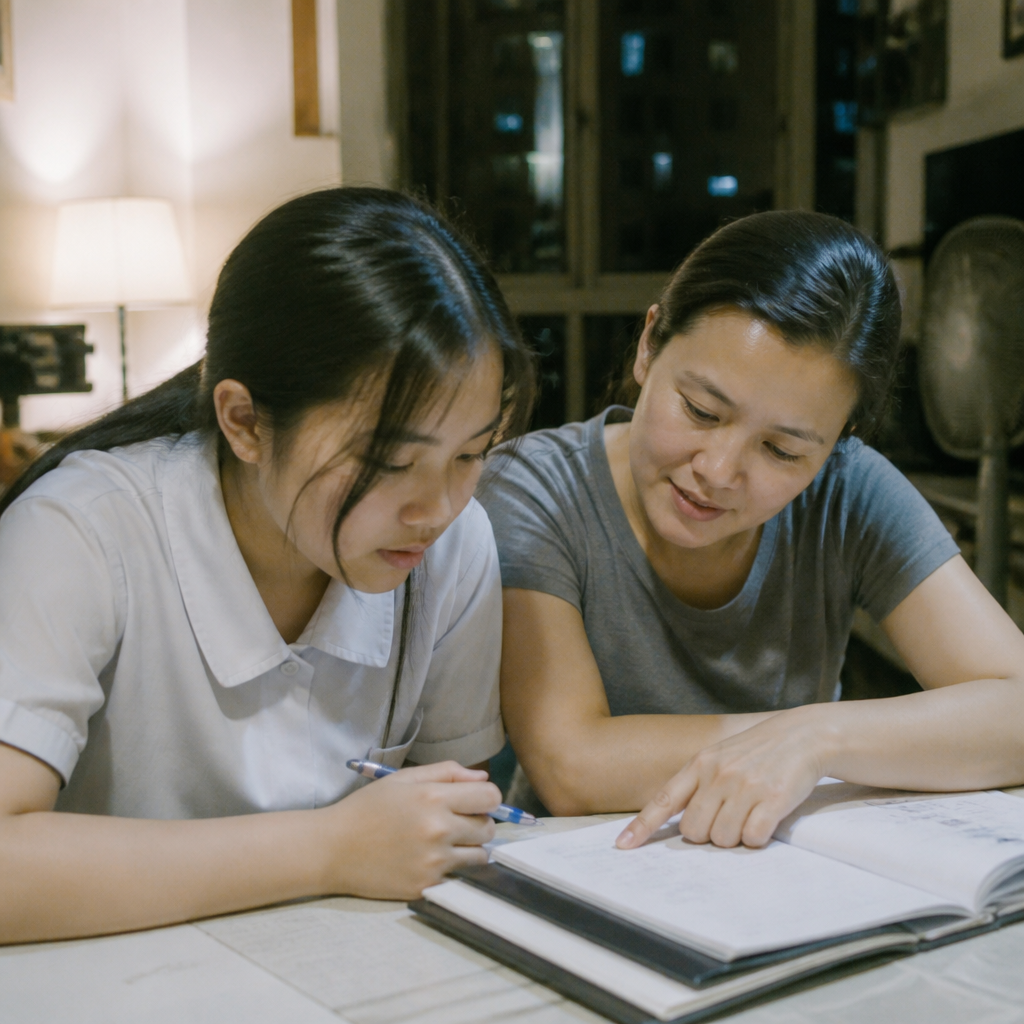
If your child needs steady support with homework routines, revision habits, and subject understanding, you can learn more about our tutors at Singapore Tuition Teachers or get in touch directly through our contact page.