


Introduction
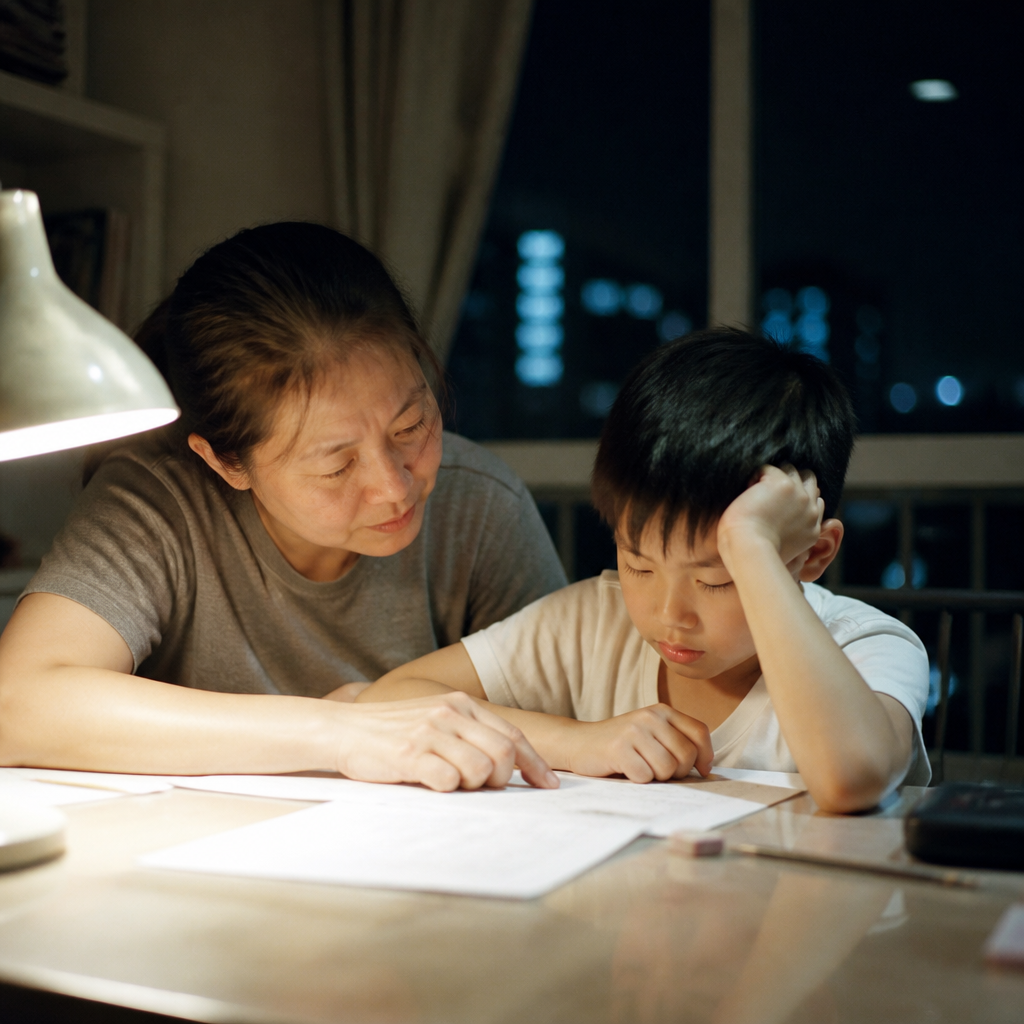
If you have ever sat at the dining table after a long workday, trying to get through homework with a tired child who is already frustrated, you will know this feeling. The worksheet looks simple at first. Then the same mistakes keep happening, corrections drag on, and before long, everyone is stressed. In moments like this, tuition can stop feeling like an “extra” and start feeling like support.
That is often the real reason why parents send their child to tuition in Singapore. For many families, it is not only about grades. It is about helping a child keep up with school pace, rebuild weak foundations, prepare for major exams, and reduce tension at home. At the same time, not every child needs tuition straight away. Some children truly need extra academic help. Others may first need rest, routine, or better study habits.
This guide looks at why tuition is so common in Singapore, what it is really helping with, and how to decide calmly whether your child needs it now.
Key Takeaways
- Tuition is often about support, not just marks. Many parents seek tuition because their child needs clearer explanations, more practice, structure, or accountability, not because they are chasing perfection.
- School pace can move faster than some children can comfortably follow. In a full classroom, a child who misses one core concept in Maths or Science can quietly fall behind before the problem becomes obvious.
- Working parents often use tuition to fill a practical gap. This is one reason many families hire private tutors in Singapore, especially when weekday evenings are rushed and revision at home keeps turning into conflict.
- Not every struggling child needs tuition immediately. If the real issue is burnout, sleep deprivation, overpacked schedules, or low motivation, adding tuition too quickly can make things worse.
- The signs matter more than what other families are doing. Repeated weak performance in one subject, recurring mistakes, long homework time, and falling confidence are more useful signals than hearing that “everyone else has tuition”.
- Tuition needs differ by age and stage. The benefits of tuition for primary school students are often different from what a Secondary or JC student needs.
- The best decision is a calm, child-specific one. Tuition can help, but it is not compulsory and it does not guarantee results.
Why Tuition Is So Common In Singapore
The stereotype is familiar. Singapore parents send children to tuition because they want top marks. Sometimes that is true, but in real family life, the reasons are usually more layered than that.
Tuition often starts as a response to pressure points at home
For some parents, concern starts quietly. A child who used to finish homework in 30 minutes now takes two hours and still gets basic questions wrong. A parent tries to help after dinner, but the child shuts down, cries, or says, “My teacher explained differently.” What was meant to be support turns into a nightly struggle.
In situations like this, tuition is not simply about pushing harder. Very often, it is about protecting the parent-child relationship. An outside tutor can explain the same concept without the emotional weight that often comes with family revision time. That shift alone can make home life feel calmer.
Tuition also helps rebuild confidence and consistency
Many children are not struggling because they cannot learn. They are struggling because they are confused, too embarrassed to ask questions in class, or inconsistent with revision. Over time, this creates a painful cycle. They do badly, lose confidence, avoid the subject, then do even worse.
That is one of the less obvious reasons parents send their child to tuition. They want someone to help their child feel, “I can do this again.” Often, the first improvement is not a dramatic jump in grades. It is a child attempting questions with less fear, making fewer careless mistakes, or no longer dreading the subject.
When School Pace And Class Size Make It Hard To Catch Up
Singapore schools do a great deal, and many teachers are deeply committed. But schools also work within limits. A teacher may be handling a large class with different learning speeds, different confidence levels, and limited time to reteach each concept one-to-one.
Some children need more repetition than school can provide
One of the most common reasons parents choose tuition is simple. Their child needs concepts broken down more slowly and explained in smaller steps.
A typical example is Primary Maths. In class, the teacher may move from word problems to fractions to model drawing quite quickly. If a child does not fully grasp one step, they may start memorising methods without understanding them. That may not show up immediately in daily work, but it often appears during weighted assessment.
This is especially true in cumulative subjects. If multiplication is weak, fractions become much harder later. If grammar basics are shaky, composition and comprehension start to suffer too. Tuition often comes in when parents realise the problem is not just one worksheet. It is a missing foundation that keeps affecting new topics.
Quiet children are often missed until confidence has already dropped
Not every struggling child looks obviously lost. Some are quiet copers. They copy notes, nod along, and say “nothing” when asked about school. Then results come back, and only then do parents realise the child has been confused for weeks.
In a one-to-one or small-group setting, these students often ask the questions they were too shy to raise in class. That is often when parents see that the issue was never effort alone. It was also a lack of space to clarify safely.
If you want a clearer overview of Singapore’s education structure and expectations across levels, it helps to refer to MOE’s guide to education in Singapore and exam information from the Singapore Examinations and Assessment Board.
Why Working Parents Often Turn To Tuition
There is also a very practical side to why working parents hire private tutors in Singapore. It is not always possible to supervise schoolwork consistently, even when parents care deeply and want to be involved.
Time, energy, and timing are real constraints
Picture a weekday evening. It is close to 9pm. Your child still has a Chinese worksheet, Science corrections, and a spelling list to finish. You are replying to work messages while trying to check a Maths question you have not seen in years. Everyone is tired. Nobody is at their best.
This is where tuition can provide structure. A regular tutor or tuition session gives the child a protected slot for academic support before panic sets in. Instead of relying on exhausted last-minute revision, the child gets scheduled help. Over time, that consistency can reduce stress and help the child stay on track.
Sometimes tuition protects family harmony
When a parent teaches, emotions can get mixed in very quickly. The child may hear correction as disappointment. The parent may hear resistance as laziness. Both walk away upset.
A tutor can create healthier distance. A child may accept guidance more easily from someone outside the family, especially in subjects that already bring up shame or defensiveness. This does not mean parents are failing. In many cases, it simply means the family is trying to reduce repeated conflict and make learning feel safer again.
If that sounds familiar, you can learn more about support options through Singapore Tuition Teachers or explore personalised help at this home tuition contact page.
Is Tuition Necessary In Singapore?
Tuition is common in Singapore, but it is not automatically necessary for every child. The better question is whether tuition is solving a real problem for your child right now. If your child has repeated gaps in one subject, cannot follow school lessons, or is losing confidence despite regular effort, tuition may be useful. But if the main issue is exhaustion, poor sleep, overscheduling, or one isolated bad result, adding tuition immediately may not be the best first step.
When Tuition May Help And When It May Not Be The First Answer
This is often the real question behind everything else. Not “Should all children have tuition?” but “When does tuition actually make sense?”
A clearer way to think about it is to compare the patterns you are seeing at home.
Signs your child may benefit from tuition
A child may benefit from tuition when the same academic pattern keeps repeating over time, not just after one bad test.
- Repeated weak performance in the same subject. This usually points to a gap in understanding or answering technique.
- Inability to follow school lessons. A child copies notes without understanding or cannot explain what was taught that day.
- Recurring mistakes. Repeated errors often mean the child needs targeted correction and guided practice.
- Poor exam technique. Some children know the content but lose marks through incomplete working, misreading command words, or poor time management.
- Falling confidence. Once a child starts identifying with failure, recovery becomes harder without support.
- Homework taking unusually long. If a short worksheet becomes a weekly struggle, something deeper may be off.
- Revision at home becoming too tense. If every session ends in arguments, outside help may be more effective.
Signs tuition may not be the first solution
Sometimes tuition is added too quickly because parents are scared their child will fall behind. That fear is understandable, but the root issue may not be academic teaching.
- Burnout or overscheduling. A child with school, CCA, enrichment, and little rest may not need more lessons.
- Poor sleep. Many children underperform because they are exhausted and cannot focus well.
- Lack of routine. If the issue is disorganised homework habits or inconsistent revision, tuition alone may not fix it.
- General motivation issues across everything. There may be emotional or lifestyle issues to address first.
- Reasonably stable coping with school support. If your child is doing adequately and only had one poor paper, immediate tuition may be unnecessary.
In short, tuition is helpful when it matches the actual problem. If it does not, adding more lessons can sometimes increase stress rather than solve it.
How Tuition Needs Change From Primary To JC
The reasons for tuition change as children grow. What works for a Primary 3 child is often very different from what a Secondary 4 or JC2 student needs.

Primary school: foundations and learning habits
The benefits of tuition for primary school students often show up first in small but meaningful ways. Parents may notice better understanding of basics, neater working, improved spelling, stronger reading habits, or less fear of school tests.
At this stage, weak foundations matter a lot. A child who does not understand place value, sentence structure, or basic Chinese vocabulary may struggle more each year. Tuition can help slow things down, reteach carefully, and build confidence before the gap widens.
Secondary school: heavier content and exam demands
By Secondary school, content grows quickly and abstract thinking becomes more important. Students are also balancing more subjects, longer school days, CCA fatigue, and rising exam pressure.
This is often when parents start asking whether home tuition is worth it for a struggling student. For some teenagers, the answer is yes, especially if they are slipping in one or two key subjects and no longer know how to recover.
JC: pace, independence, and high-stakes pressure
JC tuition decisions often come from a slightly different concern. The pace is fast, the syllabus is dense, and students are expected to study independently. Some manage well. Others seem fine until lectures pile up, tutorials go unfinished, and confidence drops sharply before major exams.
At this stage, tuition is often less about spoon-feeding and more about clarifying difficult concepts, correcting misconceptions early, and keeping the student accountable.
Why Tuition Also Helps With Exam Pressure, Accountability, And Technique
PSLE, O-Levels, and A-Levels carry emotional weight in many homes. Even when parents try not to pressure their child, children often feel it anyway. They hear classmates comparing marks, see friends attending tuition, and start worrying that they are falling behind.
Exams test more than content knowledge
Parents sometimes assume that if a child studies, results should improve. In reality, many children “study” by rereading notes, highlighting everything, or memorising model answers without understanding.
Tuition can help with exam technique, such as question interpretation, step-by-step working, answering formats, and time control. These are practical skills many students need to be taught directly.
Accountability matters more than many parents expect
A child may fully intend to revise after dinner, then drift into half-studying and distraction. A weekly tuition slot can create momentum. Work gets reviewed, mistakes are revisited, and someone notices when the child is avoiding a topic.
That accountability is one reason tuition remains common even among children who are not failing. It means some children benefit from external structure and consistent follow-through.
Choosing The Right Tuition Format For Your Child
When parents think about tuition in Singapore, they are often also wondering what kind of support makes sense. The format should match the reason for seeking help.
Home tuition
Home tuition is often chosen when the child needs personalised pacing, direct attention, or a familiar environment. It also suits families with tight schedules because it removes travel time.
Tuition centres
Tuition centres may work well for children who are comfortable learning in groups, benefit from structured materials, and do not need highly individualised teaching.
Small-group tuition
This can be a useful middle ground. Children get more attention than in a large class, but still have some peer interaction and a more moderate price point.
Online tutoring
Online tutoring can be practical for older students or busy families, especially if travel is a problem. But it may not suit every child, particularly those who are easily distracted.
The key point is simple. The best tuition format depends on the reason for getting help.
Frequently Asked Questions
Is tuition necessary in Singapore for every child?
No. Some children cope well with school lessons, school-based support, and a healthy home routine. Tuition becomes useful when there is a clear need, such as weak foundations, repeated struggles in one subject, poor exam technique, or rising conflict at home over revision.
When should parents consider tuition for their child?
Usually when the problem is repeated and specific, not after one disappointing result. If your child has been struggling in the same subject for months, cannot follow lessons, keeps making the same mistakes, or is losing confidence, tuition may help.
Is home tuition worth it for struggling students?
It can be, especially when the child needs individual attention, flexible pacing, and less distraction. But if the real issue is burnout, poor sleep, or overscheduling, home tuition may not solve the root problem on its own.
What benefits do primary school students usually get from tuition?
Often, the earliest benefits are better understanding of basics, more confidence in class, shorter homework time, and fewer tears over revision. Marks may improve later, but the first win is often reduced struggle and stronger foundations.
Why do so many working parents hire private tutors in Singapore?
Many working parents care deeply but have limited time and energy on weekday evenings. A tutor can provide regular academic guidance, structure, and accountability without turning every night into a stressful revision battle.
Conclusion
Understanding why parents send their child to tuition in Singapore starts with letting go of the assumption that tuition is only for chasing top grades. Very often, parents are trying to solve something more immediate and more human: a child who is confused, discouraged, overwhelmed, inconsistent, or struggling in ways that school support alone has not fully addressed.
At the same time, tuition is not compulsory, and it is not the right answer for every child at every stage. If your child is mainly tired, overscheduled, or coping reasonably well, adding more lessons may not help. The best decision is usually the calmest one, based on your child’s actual patterns rather than comparison, guilt, or fear.
If you feel your child may benefit from extra support, you can explore home tuition options here to find personalised help that supports confidence, strengthens weak subjects, and makes schoolwork feel more manageable.