


It is 9.45pm on a weekday. Your child has finished schoolwork, eaten a rushed dinner, attended tuition, and still needs to practise the piano or prepare for a coding lesson. You may wonder whether stopping an activity would protect their energy—or mean losing something they have worked hard for.
Should you reduce enrichment classes during the PSLE year? There is no universal answer. Some Primary 6 children benefit from keeping a much-loved sport, music lesson or language class because it gives them a mental reset. Others are overwhelmed, sleeping too late and completing work mechanically just to get through the week.
The aim is not to clear every non-academic commitment. It is to decide which activities still support your child and which are making PSLE preparation unnecessarily difficult.
Key Takeaways
- Keep activities that genuinely recharge your child. A weekly swim or music lesson may be more restorative than another tired hour of assessment-book practice.
- Look beyond the timetable. Two children can attend the same number of classes, yet only one may be losing sleep, becoming tearful or struggling to finish homework.
- Reduce before removing completely. Shorter lessons, alternate-week arrangements or a temporary pause can preserve an interest without overloading the schedule.
- Expect greater pressure before prelims. Assessments, revision packages and oral preparation can sharply increase the workload.
- Use tuition for a specific learning need. More academic classes do not automatically produce better PSLE outcomes, especially when a child is exhausted.
- Include your child in the decision. A calm conversation shows that the family is protecting their wellbeing, not punishing them.
Start With Your Child’s Actual Week
Before cancelling anything, examine the week your child is actually living through, not the week you hope they can manage. The question is not simply, “Can my child fit this in?” It is, “What does this schedule leave them with at the end of the day?”
Look for pressure showing up at home
PSLE stress does not always appear as an obvious complaint. Some children become quiet, procrastinate over simple tasks or argue over every reminder. Others insist they are “fine” but fall asleep in the car, skip meals or need an hour to begin a worksheet.
Fatigue may also look like slower work, declining confidence or difficulty explaining recently learnt material. A child can attend every class and complete every assignment while still becoming steadily less effective.
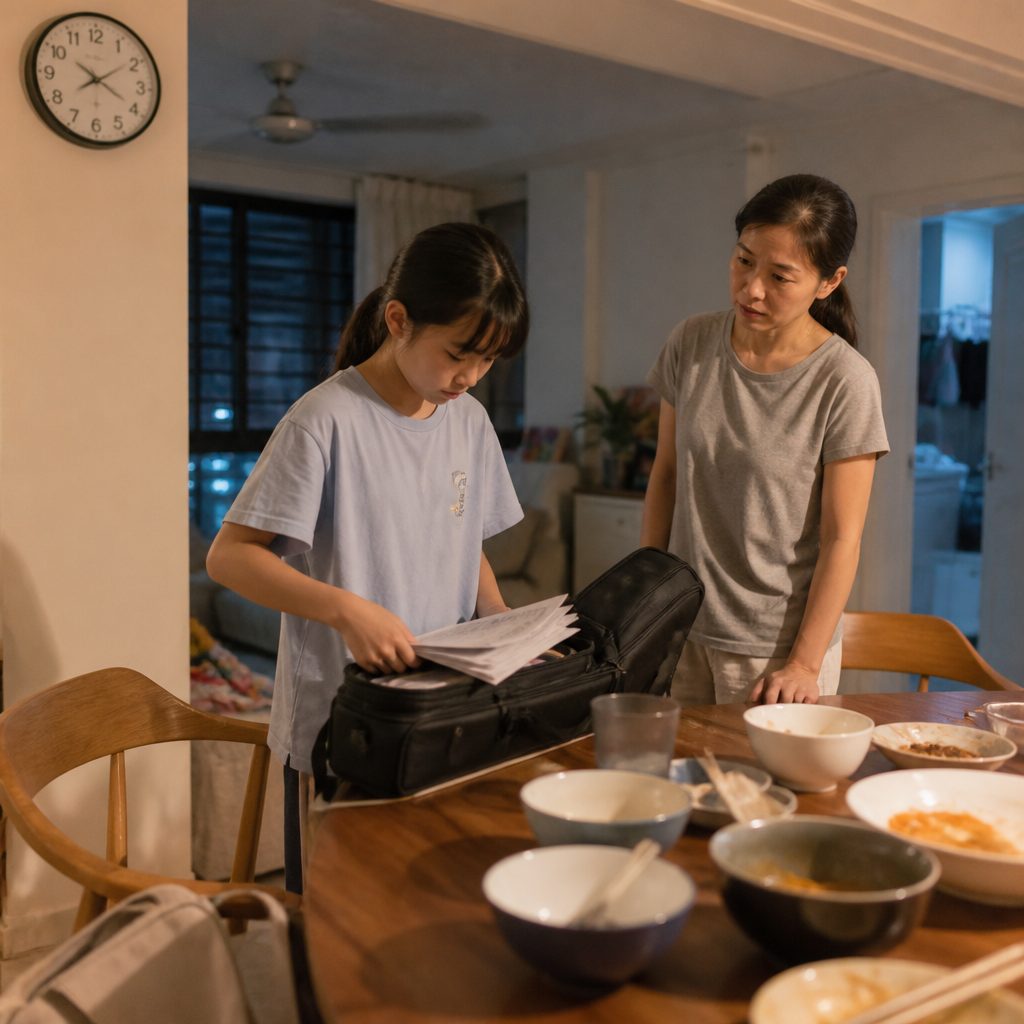
Watch the pattern across two ordinary weeks. If your child moves from school to tuition to enrichment with no unhurried time to eat, shower, talk or rest, the schedule is probably too tight. A child who practises violin happily on Saturday morning is in a different position from one dragged to a 9pm weekday lesson after Science corrections.
Ask what each activity gives and takes
Rather than labelling a class “good” or “unnecessary”, consider its real effect.
A football session may provide friendship and movement, while a once-loved art class may now be met with dread. Music and language learning often benefit from continuity, so a lighter arrangement may work better than stopping altogether.
Remember the hidden time cost. A 90-minute class can consume three hours once travel, changing, eating and settling back into homework are included.
What PSLE Preparation Really Needs
The PSLE is not simply a test of how many worksheets a child completes. It assesses knowledge, application, reading, writing, problem-solving and exam technique across English Language, Mother Tongue Languages, Mathematics and Science.
English and Mother Tongue include oral components, while written papers demand sustained concentration. Current information is available from SEAB and its PSLE examination-format page. Families should also check their school’s guidance and MOE, as arrangements can change.
Why an overfilled schedule can backfire
A packed schedule may look reassuring on paper. In practice, tired children may read a comprehension passage without absorbing it, rush through problem sums or memorise model compositions without learning how to adapt them.
Some students attend several academic classes but cannot explain an error the next day. The issue is not always ability or effort. They may simply lack time to review mistakes, sleep properly and let learning settle.
More academic time can feel productive, but it may achieve little if it displaces the focused revision that helps a child understand errors.

Protect work that cannot be rushed
PSLE preparation needs regular, focused practice rather than constant activity. Make room for tasks that benefit from alertness:
- Review Maths errors carefully. Redoing weak question types may help more than beginning another full paper while tired.
- Practise oral responses aloud. Children need space to improve clarity, vocabulary and confidence instead of memorising a script.
- Revise Science concepts deeply. Interpreting unfamiliar questions is more useful than relying only on keyword spotting.
- Plan and write independently. Composition skills grow when children develop their own ideas and organisation rather than copying model answers.
If enrichment leaves no room for these tasks, reducing it may be sensible.
Adjust Commitments as the Year Changes
The right decision in January may not suit August. Review arrangements as the school year changes instead of making one all-or-nothing choice.
Build routines before cutting everything
During the first months of Primary 6, enrichment can remain if your child has manageable homework, enough sleep and a workable revision rhythm. This is also the time to identify weak areas before anxiety rises around major assessments.
For example, a child who enjoys Saturday coding might keep it while moving a weekday language class to alternate weeks. The freed time can support school revision and rest without turning the entire year into exam preparation.
Protect capacity before prelims
As preliminary examinations approach, revision worksheets, extra classes, oral practice and timed papers can make existing commitments feel heavier.
A weekly sports session may remain valuable because it releases tension. However, competitions, intensive rehearsals or several back-to-back tuition sessions may need temporary changes. This is a practical response to a demanding period, not an admission of failure.
Favour calm consistency in the final stretch
Avoid making every evening feel like an emergency. A child with sound foundations often benefits more from correcting recurring mistakes and maintaining sleep than from adding new classes.
Some families pause enrichment for several weeks. Others retain one low-pressure activity so their child’s world does not shrink to schoolwork alone. Choose the arrangement that leaves your child steadier, not merely busier.
Retain, Reduce, Pause or Reschedule?
Instead of treating every activity as essential or expendable, choose an arrangement suited to its role.
Music, sports and creative activities
Music may be calming, but demanding daily practice targets can create conflict. Consider maintaining lessons with lighter expectations, such as shorter practice sessions three times a week.
Sports can support sleep, mood and concentration. Late-night training, tournaments and long travel may nevertheless become difficult near prelims. Reducing competition commitments while keeping one recreational session can preserve movement and breathing space.
Coding and language lessons
Coding can be stimulating, but projects may spill into weekday evenings. When assignments accumulate alongside schoolwork, a temporary pause or school-holiday arrangement may be kinder than repeatedly rushing unfinished tasks.
Consider the purpose of language lessons. Targeted Mother Tongue support may be useful, while a class unrelated to PSLE needs may be rescheduled if it has become another obligation.
Academic tuition
Tuition can help with a specific gap, such as Maths heuristics, composition planning, Science open-ended responses or oral confidence. It cannot guarantee a PSLE result, and adding lessons to an overloaded week may worsen stress.
If your child needs focused subject support while balancing revision, rest and enrichment, learn more about our tutors and explore an arrangement suited to your child’s workload, confidence and learning needs.
Create a Sustainable Routine Together
A timetable imposed during an argument rarely lasts. A calm conversation may reveal anxiety about a teacher, fear of falling behind teammates or relief at the thought of one less class. Listening does not mean surrendering every decision; it means creating a plan your child understands.
Ask, “Which part of your week leaves you most tired?” rather than, “Why are you always so slow?” Your child may want to keep basketball but dread the rushed dinner before tuition. That suggests a scheduling problem, not necessarily a reason to cancel basketball.
Explain that the family is reviewing the schedule because sleep, wellbeing and steady revision matter. Never frame a pause as punishment for disappointing marks.
Leave a few pockets of unscheduled time each week. A Primary 6 child needs room to decompress, chat, read or recover from a difficult school day. One evening without tuition or enrichment, plus a lighter weekend block after a timed paper, can prevent unexpected schoolwork from creating a stressful domino effect.
Frequently Asked Questions
Should my child stop all enrichment classes for PSLE?
Not necessarily. Stopping everything can remove healthy outlets and make the year feel bleak. Keep activities that bring joy, movement or confidence, provided they do not consistently reduce sleep or obstruct necessary revision.
Is it better to replace enrichment with more tuition?
Only when tuition addresses a clear need and suits your child’s energy level. Extra lessons are less useful when the real problem is fatigue, weak routines or insufficient time to review errors.
How do I know whether my child is stressed or avoiding work?
Look for patterns rather than one bad day. Persistent sleep difficulties, frequent tears, headaches, anger over small requests or a sharp loss of interest in previously enjoyed activities suggest that the workload needs attention.
When should we change the schedule?
Review commitments at the start of the year, before major school examinations and after prelims. Make smaller changes early where possible instead of waiting until everyone is exhausted.
Choose Balance, Not a Perfect PSLE Year
Reducing enrichment classes in the PSLE year is not automatically the responsible choice, just as keeping every class is not automatically more ambitious. The best decision reflects your child’s workload, sleep, emotional state, interests and learning needs at that point in the year.
A sustainable routine gives your child space to practise PSLE skills thoughtfully, recover from demanding school days and remain connected to parts of life they enjoy. Review the schedule together, adjust without guilt, and remember that a calmer child is often better able to learn than a fully booked one.