


Introduction
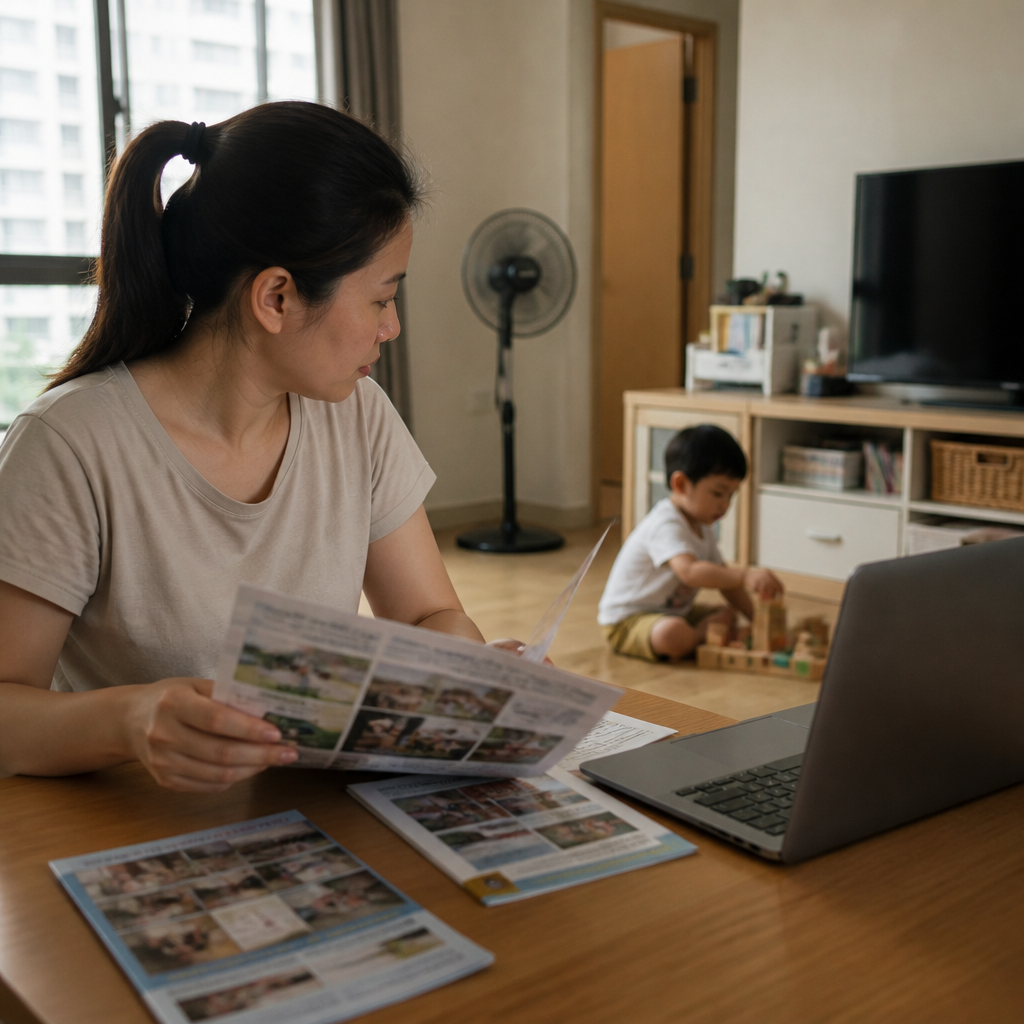
You visit one centre and see colourful walls, neat classrooms, and smiling photos. You visit another and hear all the right phrases, holistic learning, school readiness, bilingual exposure. Yet when you head home, the real question still lingers, will my child actually learn and grow here, or just be looked after until pickup time?
Choosing a daycare in Singapore can feel more emotionally loaded than many parents expect. For working parents especially, there is often that quiet worry in the background. Is your toddler spending long hours in a place that supports language, confidence, thinking, and social growth, or simply moving from snack time to nap time with very little meaningful learning in between?
A good daycare curriculum does not mean pushing academics too early. It means age-appropriate, thoughtful experiences that help children grow through play, routines, conversations, movement, and guided exploration.
This guide will help you assess what a strong daycare learning curriculum actually looks like in a Singapore childcare setting, what questions to ask, and how to compare centres with more confidence.
Key Takeaways
- A good daycare curriculum is more than worksheets. Strong programmes build language, early numeracy, social skills, curiosity, and independence through daily routines, play, stories, songs, outdoor activity, and guided interaction. If a centre talks mainly about paper tasks, that is usually too narrow a view of early learning.
- Look at what children do across the whole day. A centre may talk about learning corners and monthly themes, but the real curriculum shows up in transitions, mealtimes, circle time, play, teacher conversations, and how children are engaged hour by hour. The daily experience matters more than a polished brochure.
- Age-appropriateness matters more than looking “advanced”. If a toddler is memorising letters but cannot follow simple routines, express needs, or interact well with others, the programme may be too academic and not developmentally balanced. Strong early childhood education builds foundations before formal performance.
- Teacher quality affects curriculum quality. Even a nicely written programme can feel weak if teachers mainly manage behaviour, rush activities, or give one-size-fits-all tasks instead of responsive support and rich language exposure. In daycare, the adult-child interaction is part of the curriculum.
- Centre visits reveal more than brochures. When comparing daycare curriculum in Singapore, watch how teachers speak to children, how materials are used, whether play has purpose, and whether children seem calmly engaged rather than passive or constantly waiting.
- Communication with parents should be clear and meaningful. Good centres can explain what children are learning, why those experiences matter, and how development is progressing, without relying only on vague updates like “had a good day” or a stream of photos without context.
What A Good Daycare Curriculum Really Means
When parents search for the best daycare curriculum for toddler development in Singapore, the worry is often simple, is my child learning enough? That concern is understandable, especially when another centre is advertising phonics, Chinese writing, or enrichment-style programmes for very young children.
Learning should happen across the whole day
In daycare, curriculum should not be judged only by whether there is formal lesson time. For infants, toddlers, and nursery-aged children, much of the learning happens through repeated routines and daily interactions.
A teacher helping a two-year-old name fruits at snack time, wait for a turn during water play, or describe a picture book is already building language, self-regulation, and thinking skills. These moments may look ordinary, but they are often where the real learning sits.
This is what many parents miss during short tours. It is easy to focus on displays on the wall. It is harder, but more useful, to notice whether the daily flow actually supports learning. A good centre does both. It plans intentional activities, and it also treats everyday moments as part of the curriculum.
It should not feel like primary school in miniature
Some centres look impressive because children sit at tables doing paper tasks. For parents anxious about school readiness, that can feel reassuring at first. But in early childhood, looking advanced is not always the same as being developmentally strong.
A three-year-old who traces alphabets daily but has limited conversation, weak listening stamina, or poor peer interaction may not be in the strongest learning environment. Tutors often notice that children do better when early literacy and numeracy are introduced through songs, stories, movement, sorting, counting, pretend play, and shared talk.
If you are wondering what to look for in a preschool curriculum within a daycare setting, balance is a good place to start. A strong curriculum builds foundations, not pressure.
Study The Daily Routine, Not Just The Timetable
One of the most practical ways to find a daycare with a good curriculum is to ask for the daily schedule, then look beyond the timetable itself. Many centres can produce a routine. Fewer can show how that routine actually supports learning and development.
Look for rhythm, variety, and engagement
A healthy daycare day should include a mix of guided learning, free play, outdoor time, language-rich group experiences, meals, rest, and transitions that are not chaotic. If children are moved from one block to another with long waiting times, a lot of the day may be spent managing behaviour rather than supporting development.
A common pattern among stronger centres is that the day feels steady without feeling rigid. Children have room for movement, repetition, relationships, and learning through different modes.
This comparison can help when you are visiting centres:
Watch how teachers use everyday moments
During a visit, pay attention to simple moments. Do teachers talk with children during handwashing? Do they ask questions during story time? Do they encourage children to notice shapes, colours, sounds, and feelings? Or do they mostly give instructions like “sit down”, “finish up”, and “keep quiet”?
Over time, the strongest centres are usually the ones where teachers use ordinary routines intentionally. That is often a better sign of curriculum quality than a classroom filled with posters.
Parents should also notice whether transitions are used well. Lining up, packing away toys, putting on shoes, and preparing for meals can either become dead time or valuable learning time. In stronger centres, teachers use these moments to build independence, vocabulary, patience, and social awareness.
Parents who want extra support beyond childcare hours sometimes also look for help in early literacy or numeracy. If that is your concern, you can explore preschool tuition to complement what your child is doing in daycare.
Compare Daycare Centres By What Children Are Actually Doing
Brochures often sound very similar, holistic learning, bilingual exposure, inquiry-based play, confidence building. The challenge is how to compare daycare curriculum in Singapore when every centre sounds polished.
Observe the children, not just the sales pitch
A useful visit is not one where the principal speaks the most. It is one where you can observe the children. Are they actively involved, talking, exploring, building, sorting, pretending, listening, and moving? Or are many children wandering, disengaged, or waiting for the next instruction?
Sometimes the more academic-looking classroom is not actually the stronger one. A toddler acting out a story with props may be building language, comprehension, imagination, and emotional engagement in a way that a worksheet simply cannot match at that age.
It also helps to notice the emotional tone of the room. Are children comfortable approaching teachers? Do adults respond calmly when a child makes a mess, refuses an activity, or becomes upset? A good curriculum is not only about planned content. It also depends on whether children feel safe enough to participate and learn.
Compare age groups carefully
The best daycare curriculum for toddler development is not the same as a strong K1 or K2 programme. Toddlers need sensory play, movement, language repetition, simple routines, and emotional security. Nursery children need more opportunities for conversation, pretend play, patterning, problem-solving, and early self-help skills.
A centre that makes all age groups do similar paper-based tasks may not be responding properly to developmental stages. Good curriculum planning should look different for a 20-month-old, a 3-year-old, and a 5-year-old.
Check whether the centre follows sound early childhood guidance
In Singapore, parents can use ECDA to check preschool information and licensing matters. It is also helpful to read the Nurturing Early Learners framework, because it gives a clearer sense of what quality preschool learning should include.
You do not need a centre to recite framework terms perfectly. What matters is whether the programme reflects sound early childhood principles in real classroom practice.
What To Look For In A Strong Preschool Curriculum Inside Daycare
Many parents ask what to look for in a preschool curriculum Singapore centres offer, but in daycare settings, the answer has to be grounded in everyday care and learning together. A strong curriculum is not just a weekly lesson plan. It is how the centre combines nurturing, structure, and developmental growth over long childcare hours.
Rich language exposure
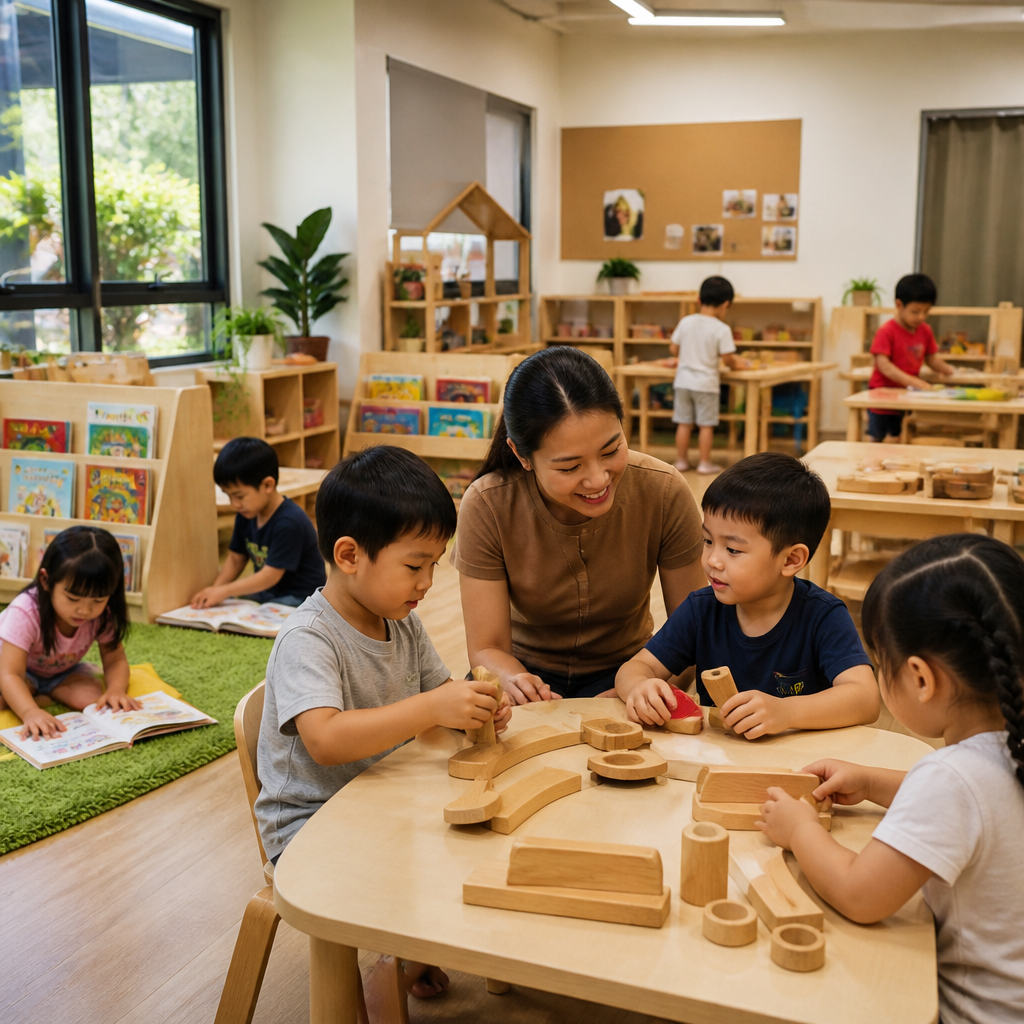
This is one of the clearest signs of quality. Young children learn language through constant interaction, not through isolated drilling alone. Listen for whether teachers speak in full sentences, introduce new words naturally, sing songs, read aloud expressively, and invite children to respond.
In a weaker setting, adults may mostly supervise logistics. In a stronger one, a teacher kneeling beside a child might turn a simple activity into a conversation. That kind of exchange builds vocabulary, thinking, and confidence.
In bilingual Singapore settings, also ask how English and Mother Tongue exposure are handled. It does not need to be flashy, but it should be intentional and regular.
Hands-on early numeracy
For young children, numeracy means more than reciting numbers. A good daycare curriculum includes counting real objects, comparing sizes, sorting by colour or shape, noticing patterns, and understanding quantity in everyday activities.
A centre that says “we do Math every day” may simply mean workbook time. A centre with stronger practice may involve counting fruit slices, matching cups, building towers, and discussing who has more or less during play. That is often more meaningful, especially for toddlers and nursery children.
Social and emotional development
Parents sometimes focus so much on reading readiness that they overlook emotional and social development. Yet in the first few years, these are core curriculum areas.
Can children take turns, express needs, recover from frustration, join group routines, and build trust with adults? Teachers in strong daycare settings do not only stop conflicts. They coach children through them. That matters greatly in a full-day environment where relationships shape learning.
Opportunities for independence
Another sign of a good curriculum is whether children are encouraged to do age-appropriate things for themselves. This includes packing their bags, washing hands, feeding themselves, tidying up, choosing activities, and following simple routines.
These may seem like care tasks rather than learning tasks, but they are deeply connected to development. Independence supports confidence, attention, responsibility, and smoother adjustment to later school settings. A centre that does everything for children may look efficient, but it can limit growth.
Questions To Ask Before You Decide
Asking the right things helps you move past marketing language. The best questions to ask a daycare about its learning curriculum are the ones that reveal how the centre thinks about children, not just how well it presents itself.
Ask how learning is planned and adapted
You can ask how the curriculum differs for toddlers, nursery, and kindergarten-aged children. A thoughtful answer should mention developmental readiness, attention span, language level, and social skills, not just “harder worksheets for older children.”
You can also ask how teachers support children who are slower to speak, shy in groups, or less ready for structured tasks. A strong centre will usually talk about observation, gradual support, and child pacing. A weaker one may simply say the child will “adjust over time.”
Another useful question is how much of the day is play-based, and how that play is used for learning. Good centres can explain this clearly. If the answer feels vague or defensive, that is worth noting.
Ask for real examples
Try asking, “Can you show me what children learned this week, and how that looks in class?” This question helps because it moves the conversation from slogans to specifics.
You can also ask how teachers communicate progress to parents. If the answer is only through photos or generic app updates, you may not get much insight into actual learning. Better communication includes short observations such as language growth, social milestones, fine motor progress, or areas needing support.
It can also be useful to ask what happens when a child is not interested in an activity. Do teachers force participation, redirect gently, or adapt the task? The answer reveals a lot about whether the curriculum is responsive or rigid.
If you want extra support for your child’s early language, literacy, or numeracy development alongside preschool, you can contact us about preschool tuition.
Do Not Be Misled By Appearances
When parents choose a childcare centre with a strong curriculum, a common mistake is giving too much weight to what looks impressive in the first 15 minutes. Bright displays, polished branding, and thick portfolios can create confidence quickly. But curriculum quality usually shows up in quieter details.
Be careful of “too much, too early”
It is understandable to feel drawn to centres that promise reading, writing, coding, speech and drama, and enrichment-style lessons all built into the day. For some children, though, an overloaded schedule can lead to fatigue, resistance, or shallow learning.
A toddler who spends a full day in childcare does not need every hour to look productive in an adult sense. Rest, free play, outdoor movement, and repeated routines are not empty time. They are part of healthy development.
Notice whether children seem secure
Experienced educators often notice this quickly. In stronger daycare environments, children usually appear settled enough to explore. They may not all be perfectly quiet, but there is a sense of trust and responsiveness.
In weaker environments, you may see more aimless behaviour, clinginess, distressed crying that is poorly handled, or teachers who sound constantly corrective. For working parents, practical matters like opening hours and location matter a lot, and they should. But if two centres are similarly convenient, choose the one where your child is more likely to be known, spoken to, and guided well across the day.
Frequently Asked Questions
Does a good daycare curriculum mean my child should be reading early?
Not necessarily. In daycare, especially for toddlers and younger nursery children, strong learning often shows up first in listening, vocabulary, attention, confidence, routine-following, and curiosity. Early reading exposure is helpful, but pushing decoding too early can backfire if a child is not developmentally ready.
How much play should a good daycare curriculum include?
Quite a lot, especially in the younger years. The key question is whether the play is purposeful and supported. Water play, pretend kitchens, block building, song-and-movement sessions, and storytelling can all build important foundations when teachers guide children with language and interaction.
What if a centre has a strong curriculum on paper but my child seems unhappy there?
That matters. A curriculum cannot work well if a child feels constantly stressed, unseen, or emotionally unsafe. Some adjustment is normal, but if your child remains distressed and the centre cannot explain how they are supporting that transition, the fit may not be right.
Should I choose the most academic daycare if I am worried about primary school later?
Usually no. In the early years, a more balanced programme often prepares children better over time. Children who can communicate, listen, regulate emotions, and engage with stories and patterns tend to cope better later than those who only practised early worksheets.
Where can I verify whether a childcare or daycare centre is properly regulated in Singapore?
You can start with ECDA for preschool-related information and checks. It is also wise to ask the centre directly about its programme, teacher communication, and daily learning approach instead of relying only on listings.
Conclusion
Learning in daycare should feel warm, intentional, and age-appropriate. If you are trying to work out how to find a daycare with a good curriculum, the best approach is to look past the brochure and pay attention to the real daily experience.
Watch the routine. Listen to the teacher-child conversations. Ask how language, numeracy, social development, outdoor play, and emotional growth are built into the day. Notice whether the programme fits your child’s stage, not just your hopes for fast progress.
A strong daycare curriculum in Singapore does not mean early pressure. It means your child is spending long hours in a place where care and learning are thoughtfully woven together. That is what gives parents real peace of mind.
If you want extra support for your child’s early language, literacy, or numeracy development alongside preschool, you can learn more about our preschool tuition options.