


It is a familiar weekday morning scene. Your child is packing their bag, you are rushing to leave for work, and then comes the question: “Can I have extra money today?” Maybe their friends are buying drinks at recess, or perhaps their usual amount suddenly feels “not enough anymore”.
For many parents deciding on primary school pocket money in Singapore, it is hard to know where to draw the line. You want your child to have enough to eat and feel included, but you may also worry that extra cash will disappear on snacks. The aim is not to match what another child receives. It is to provide enough for genuine school-day needs while helping your child understand that money comes with choices.
Key Takeaways
- Start with real school-day costs. Check what your child needs for recess, lunch, transport, and occasional after-school commitments.
- Adjust pocket money as your child grows. A Primary 1 child who goes home after school has different needs from a Primary 6 child staying for CCA or supplementary lessons.
- Build in a small buffer, not unlimited top-ups. Some flexibility can prevent hunger or anxiety, while constant extra cash can make budgeting meaningless.
- Separate needs from wants. A basic meal and water are necessities. A second snack, sweet drink, or collectible item can be a choice your child plans for.
- Treat recurring overspending as useful information. It may point to insufficient meal money, peer pressure, skipped breakfasts, or a budgeting skill that needs practice.
- Discuss money calmly and regularly. A short weekly conversation works better than questioning your child sharply at the school gate.
Start With Your Child’s Actual School Day
Look beyond one canteen meal
When parents compare pocket money amounts, it is tempting to find one figure and copy it. In reality, school canteen prices, portion sizes, stall choices, and daily routines differ. Some children are satisfied with one simple meal and water. Others may need a drink after PE or another meal when they stay back.
Start with what your child actually does during the school day. Ask: “What did you buy this week? What did it cost? Were you still hungry afterwards?” This gives you a clearer picture than a general complaint that everything is expensive.
If your child brings food from home, their allowance may only need to cover an emergency drink or planned snack. If they buy food and a drink every day, the amount should reflect that reality. Giving too little and expecting a child to skip food is not a useful budgeting lesson. It can leave them tired, irritable, or quietly borrowing from friends.
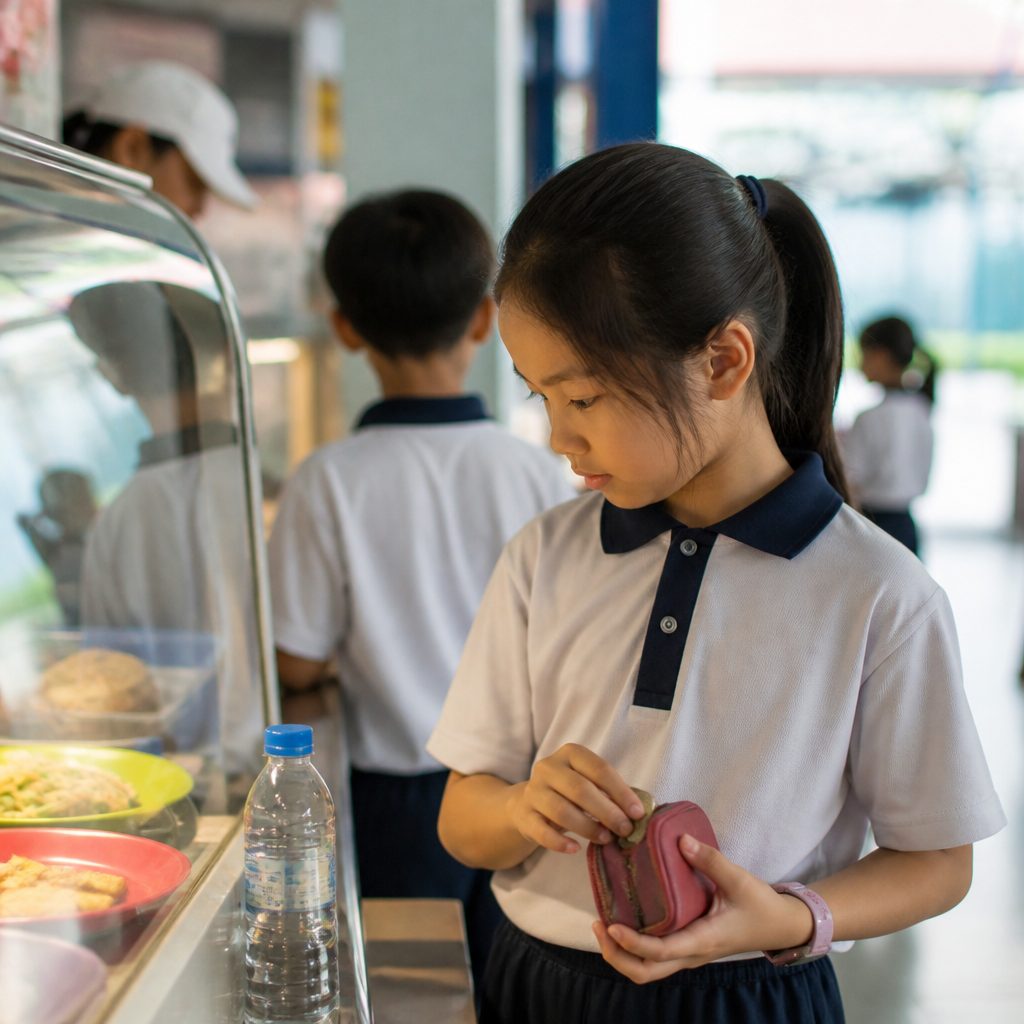
Rather than relying on a national “standard”, check the prices at your child’s canteen. Add up the cost of a suitable meal and any necessary drink, then include a modest buffer. Review the amount when prices, portions, or your child’s schedule change.
Keep transport separate when possible
Transport can make the question of how much allowance a primary school child needs more complicated. If your child uses a card topped up by you, there may be no reason to include bus or MRT fares in their daily cash.
Keeping transport separate also makes the purpose of the money easier to understand. “Your card is for bus rides; your cash is for recess” is clearer than one lump sum meant to cover everything.
If your child may occasionally need emergency fare, explain what that money is for and where it should stay. A child who spends it on a drink may not be deliberately careless. They may simply not understand that “emergency” does not mean “available to spend”.
Match the Allowance to Their Stage of Primary School
Pocket money should gradually reflect maturity, not only age. A child’s schedule, ability to handle cash, and awareness of spending all matter.
P1 to P2: Keep money simple and visible
For younger children, the daily amount should cover a basic meal and any necessary drink, with a modest margin. Handling money is part of the challenge at this age. A child may lose coins, forget where they put a note, or hand over too much at a busy stall.
Many parents find a daily arrangement easier than a weekly one for P1 and P2. Five days’ worth of money on Monday can be difficult to manage. If a child spends too much early in the week, it does not automatically mean they are irresponsible. They are learning how today’s choices affect tomorrow.
Keep instructions concrete: “This is for recess. If you want a snack after your meal, check whether you still have enough first.” A labelled coin pouch may work better than a long lecture.
P3 to P4: Introduce small choices
By the middle primary years, children often become more aware of what their friends buy. They may request extra money because a classmate gets a flavoured drink every day or buys snacks after class. Fitting in can feel important to a child, even when the purchase seems minor to an adult.
This is a useful time to explain that fairness does not mean every family gives the same amount. A larger sum may make sense when school days become longer, but find out what has changed before increasing it.
Is the usual meal more expensive? Are they hungry because they skip breakfast? Do they want to join friends at the snack stall? The request for “more money” may be about one of these underlying concerns.
P5 to P6: Give independence with clear expectations
Older children may have supplementary lessons, school activities, or CCA days that stretch into the afternoon. They may genuinely need additional food on certain days.
A weekly allowance can work for some P5 and P6 children, provided meal money remains protected. One option is to give a set daily amount for food and a small weekly discretionary amount separately. This gives them room to practise planning without turning lunch into a risky experiment.
Decide What the Money Must Cover
Use a needs-and-choices check
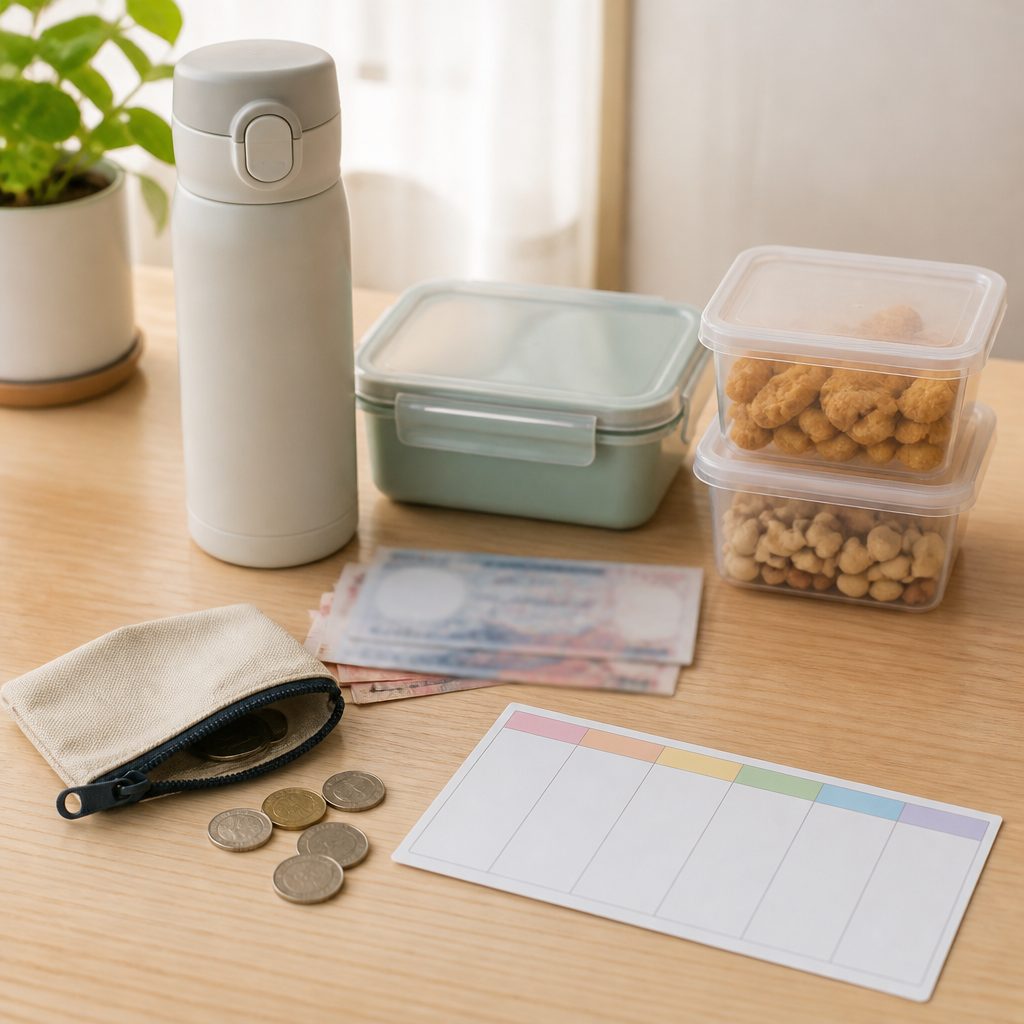
List what the allowance must cover, followed by what is optional. Keep the list tied to your child’s actual routine.
A child who reliably brings home change may be ready for more flexibility than one who cannot remember what they bought. This is not about being “good” or “bad”. It shows the support they need right now.
Avoid using meal money as a reward or punishment
Withholding meal money because of unfinished homework can backfire. It connects food with discipline and may leave a stressed child unable to concentrate. Conversely, providing extra cash after every complaint can teach them that persistence leads to more money.
Keep the basic amount stable, then discuss possible changes at a calm time. A weekend review is usually more productive than a conversation at 7am when everyone is rushing.
Teach Budgeting at the School Canteen
Help children notice small spending patterns
Children rarely see a drink, snack, or extra topping as a major decision. Yet several small purchases can use money intended for a proper meal.
Try a short review for one week. Ask your child to write down or tell you what they bought each day. The purpose is not to catch them out but to notice patterns together.
Perhaps they buy snacks because recess is too short to queue for a full meal. Perhaps friends influence the choice. Perhaps they need more food on PE days. Once you know the reason, you can adjust the amount, routine, or expectations appropriately.
Practise needs versus wants in real situations
Instead of saying, “Stop wasting money,” use a specific example: “You have enough for noodles and water. If you buy chips first, will you still have enough for your meal?” This gives your child a decision they can understand.
A water bottle can reduce the need to buy drinks daily. Still, avoid making a child feel guilty for occasionally buying a drink, especially after outdoor activities. Budgeting is not about denying every small pleasure. It is about knowing which choices fit within the money available.
If after-school lessons are part of the routine, include them in the plan. A child going directly from school to tuition may need a packed snack or a specific amount for food. Planning this in advance keeps academic commitments from leading to repeated last-minute requests for cash.
Respond Calmly to Lost Money and Overspending
Treat early mistakes as learning moments
Learning that your child has lost money can be frustrating, especially after repeated reminders. Before deciding they are careless, ask what happened. A P1 child may have left a pouch in the classroom, while an older child may have removed money and forgotten to put it back.
Replace essential meal money when necessary, then follow up practically. Choose a secure pouch, keep it in one consistent compartment, or practise returning change immediately after a purchase. The lesson is stronger when it addresses the actual problem.
Look beneath repeated requests for extra cash
Frequent requests deserve curiosity, not automatic top-ups. “What did you buy, and what did you plan to buy?” is a more useful opening than “Why are you always wasting money?”
If the pattern involves snacks, consider packing one from home or setting a small weekly treat budget. If your child remains hungry after buying a full meal, reassess the basic amount. Children do not always explain hunger clearly; they may simply say that a friend receives more money.
Families under financial strain do not have to manage alone. The Ministry of Education provides information on financial assistance, and schools can guide parents towards relevant support. School meal arrangements should never become a source of shame for a child.
Frequently Asked Questions
Should I give my child pocket money every day or every week?
Daily pocket money generally suits younger children because it limits the impact of an impulsive purchase. Weekly money may suit an older, organised child, especially when meal money is separated from money for treats.
What if my child says all their friends get more pocket money?
Acknowledge that being different can feel awkward. Then explain that each family decides based on its needs and circumstances. Check that the current allowance covers reasonable food costs, but matching a friend’s spending is not the goal.
Should pocket money include snacks and sweet drinks?
It can, provided the boundary is clear. A meal and water might be the daily expectation, while snacks or sweet drinks come from an occasional treat amount. Schools also encourage balanced choices through the Health Promotion Board’s Healthy Meals in Schools Programme.
My child keeps asking for extra money after CCA. Should I increase the allowance?
First check whether the longer day creates a genuine need for another meal. If it does, provide a planned CCA-day amount or packed food rather than repeated ad hoc top-ups. If the money is mainly for treats with friends, discuss a separate discretionary budget.
Aim for Enough, Then Teach the Choices
There is no single Singapore dollar amount that suits every primary school child. Start with the cost of a proper meal, a necessary drink, transport if it is not handled separately, and food for longer school days. Then adjust for your child’s routine, appetite, age, and readiness to manage choices.
What matters most is that your child feels fed, safe, and able to tell you when something goes wrong. A calm review of spending, a workable canteen routine, and clear expectations will teach more than either overgiving or turning every request into a battle.