


It is easy to feel caught in the middle during K2. One parent mentions a phonics class, another child attends Chinese enrichment and Math twice a week, and suddenly a quiet Saturday can feel like a missed opportunity.
Yet when your child comes home tired, resists another worksheet, or asks simply to play, you may wonder whether the schedule is taking more than it gives. The question is not whether enrichment classes before Primary 1 are good or bad. It is whether they are helping your child feel more ready, confident, and settled.
There is no universal number of classes that suits every child. Good Primary 1 preparation in Singapore is not about filling every afternoon. A child who can listen, ask for help, manage simple belongings, enjoy stories, cope with mistakes, and arrive well-rested may be more ready for school than a child with a packed enrichment timetable. The aim is not to accelerate childhood, but to give support where it is genuinely useful.
Key Takeaways
- Readiness is broader than academics. School readiness includes early literacy and numeracy, independence, communication, emotional regulation, motor skills, curiosity, and the ability to cope with classroom routines.
- More classes do not automatically mean better preparation. A K2 child may complete many worksheets yet become reluctant to learn if every evening feels like another lesson after preschool.
- Choose support based on a clear need. Targeted help can be worthwhile when a child is struggling with sounds, number sense, attention, language confidence, or a specific transition concern.
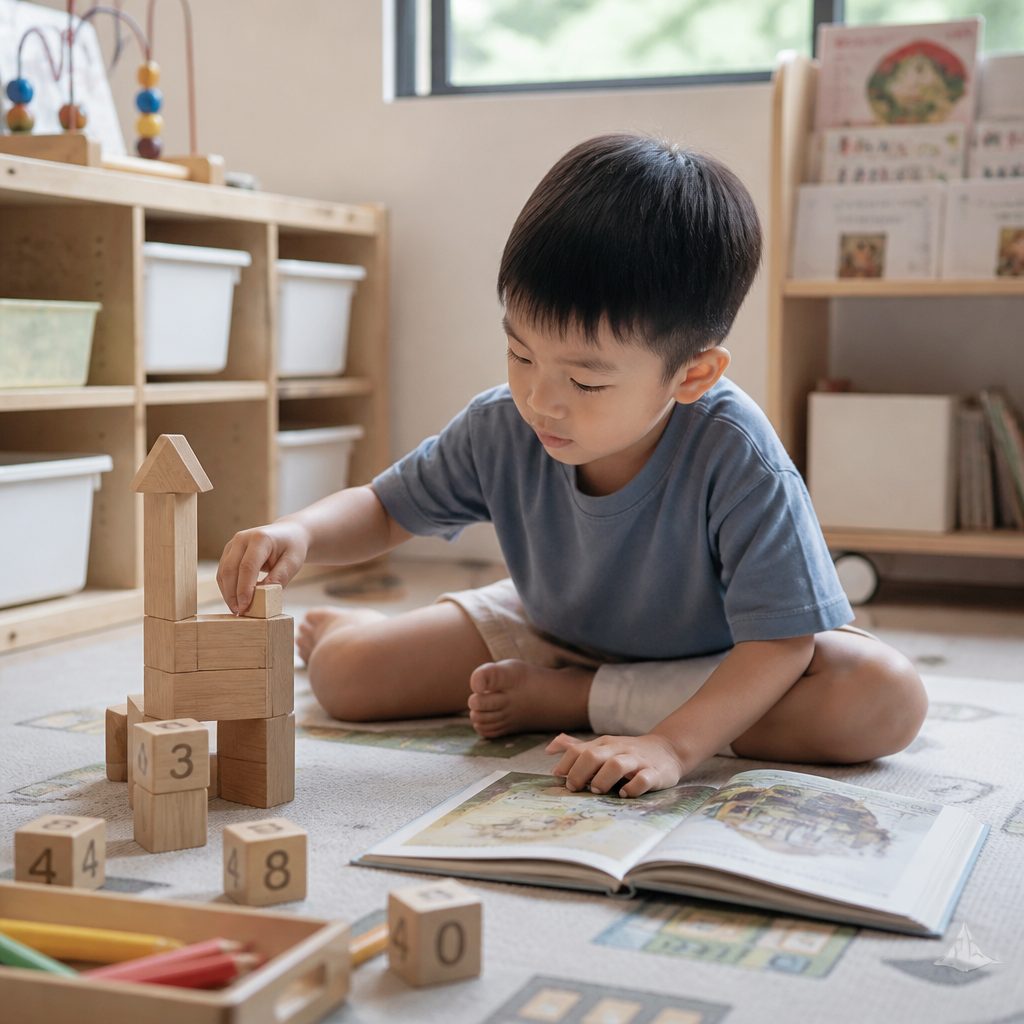
- Protect sleep and unstructured play. Building blocks, pretend play, playground time, drawing, and family conversations develop skills that formal classes cannot fully replace.
- Temperament matters. A child who enjoys structured activities may manage one or two classes comfortably, while a sensitive or easily fatigued child may thrive with lighter support at home.
- Review the schedule regularly. A class that was enjoyable in January may become too much during a busy preschool or family period.
Understand What Primary 1 Readiness Really Looks Like
Academic foundations matter, but they are not the whole picture
To prepare a child for Primary 1, it is reasonable to build familiarity with letters, sounds, books, simple writing, numbers, quantities, and everyday instructions. A child who can recognise some words in a favourite story, count objects while setting the table, or explain a simple idea aloud already has useful foundations.
However, Primary 1 teachers do not need every child to enter school already completing advanced assessment books. Children develop at different rates, especially in K2. Some are confident readers but struggle to hold a pencil comfortably. Others may be slower with phonics, yet ask thoughtful questions and keep trying when something feels difficult.
The Ministry of Education’s preschool curriculum emphasises holistic development, including language, numeracy, motor development, social-emotional learning, and discovery. Parents can refer to MOE’s preschool curriculum information for the broad areas preschool learning is intended to support.
Daily school habits are often the hidden challenge
The first weeks of Primary 1 ask children to manage unfamiliar routines. They may need to follow several instructions, open a water bottle, find a pencil case, line up, ask to use the toilet, and cope when a friend does not want to play.
These are real parts of school readiness that families can overlook while comparing reading levels. Children who appear “behind” academically may sometimes be nervous about speaking up. A child may know the answer but stay silent because she is afraid of being wrong.
On the other hand, a child who knows fewer sight words but can calmly attempt a new task may settle into Primary 1 very well. Confidence, flexibility, and willingness to try often matter just as much as what a child can complete on paper.
Know When Extra Support Is Helpful
Targeted intervention has a specific purpose
Extra support is worth considering when there is a pattern, not just one difficult evening. A child may consistently struggle to hear the difference between beginning sounds, avoid pencil tasks because hand control feels tiring, or become distressed when asked to speak in Mandarin.
In these situations, a carefully chosen literacy, numeracy, mother tongue, or developmental programme may provide focused practice. The useful question is: “What would this class help my child do more comfortably?”
A small-group phonics class may suit a child who needs playful repetition with sounds. A short one-to-one session may help a child who freezes in larger groups. If fine-motor control is the concern, guidance from an appropriate professional may be more relevant than another writing worksheet class.
Optional enrichment should still feel enriching
Not every preschool enrichment class needs to solve a problem. Music, swimming, art, sports, drama, coding play, or social-development activities can be worthwhile when your child enjoys them.
A lively child who needs movement after a desk-based preschool day may benefit more from swimming than from another academic lesson. Optional enrichment should add enjoyment, confidence, or a meaningful interest.
It should not be treated as insurance against falling behind. No programme can guarantee academic success, and a timetable built on anxiety can turn a naturally curious K2 child into one who sees learning as an obligation.
Let Your Child’s Weekly Rhythm Guide You
Look beyond the number of classes
For many families, one regular enrichment class is plenty. Some children cope happily with two, particularly if one is active or interest-based and there is adequate downtime. Others need no formal class at all before Primary 1.
The right amount depends on what happens around the class. Picture a K2 child who finishes preschool at 5pm, travels home, eats dinner, practises writing, attends enrichment until 8pm, and still has to bathe and settle down. Even if the class is excellent, tiredness can stop learning from sticking.
A child who only becomes tearful at bedtime may be showing you that the schedule is too demanding. Rather than focusing only on the number of classes, look at the whole week.
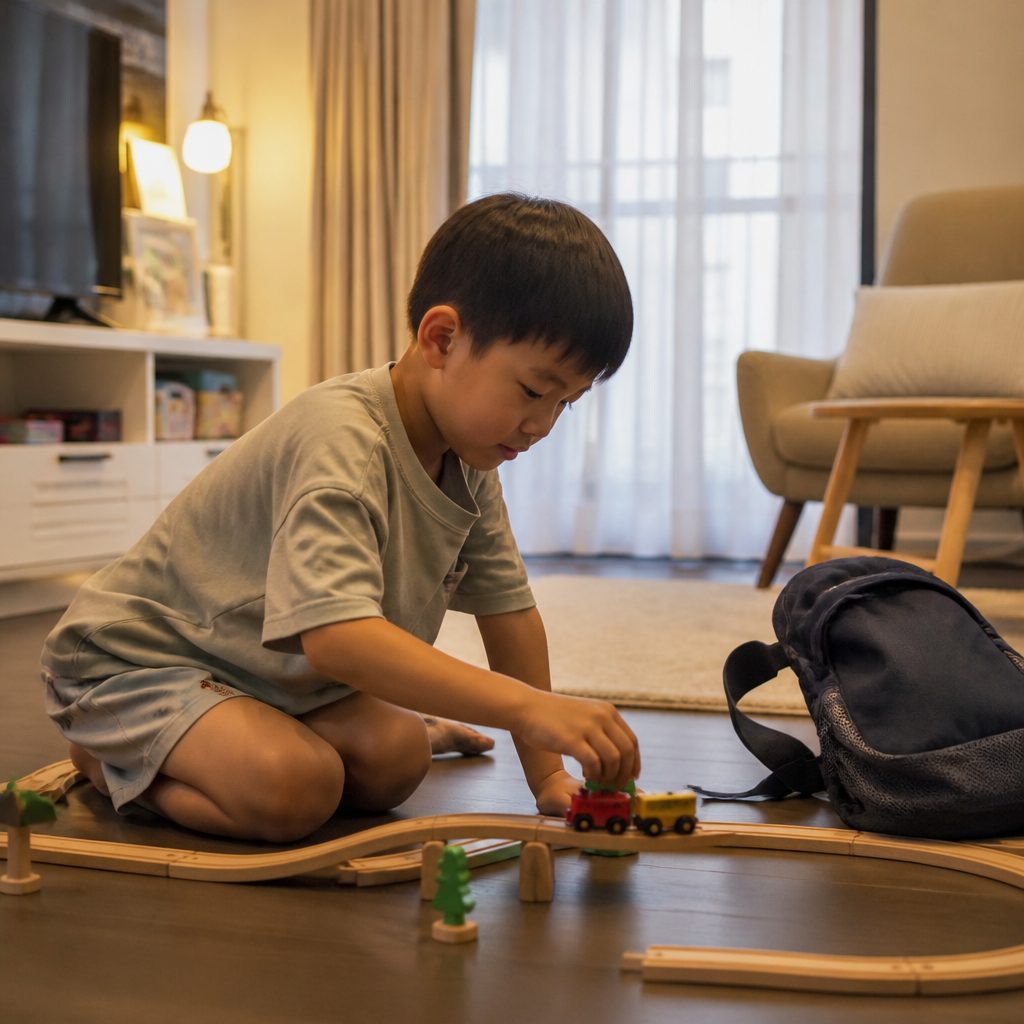
When children build a train track, negotiate roles in pretend play, or invent a playground game, they practise language, problem-solving, self-control, and creativity. Genuine unstructured time is not wasted time.
Try a short review instead of making a permanent commitment
After four to six weeks, ask: Is my child more confident, neutral, or increasingly resistant? Is there still time to play, talk, and rest?
A class does not have to continue just because fees were paid for a term. Adjusting the plan is responsive parenting, not giving up. Children often do better when adults notice early signs of strain rather than waiting until every lesson becomes a battle.
Watch for Signs of Overscheduling
Resistance is information, not always laziness
A child occasionally refusing class is normal. Persistent dread is different. Watch for frequent stomachaches before lessons, crying over small requests, unusually angry reactions after preschool, or a child who says, “I am tired of learning.”
These signs do not prove that enrichment is harmful, but they deserve a calmer look. Another common pattern is the child who performs well in class but melts down at home.
Parents may hear that she is cooperative during enrichment, then wonder why every evening ends with an argument over brushing teeth. Holding it together through a long day takes effort. Home can become the place where exhaustion finally spills out.
Academic progress can hide an unhealthy trade-off
A child may learn to recite word lists or complete pages faster while losing confidence in trying independently. Some children constantly ask, “Is this correct?” before writing a single answer. They have had lots of practice, but little room to make harmless mistakes.
Be careful with the instinct to add a class after one disappointing preschool worksheet. More teaching can backfire if the real issue is fatigue, unclear instructions, or fear of being corrected.
First try reducing pressure: sit beside your child for five minutes, use counters for a number activity, or stop before frustration becomes a power struggle.
Build Readiness Through Everyday Life
Build literacy and numeracy into ordinary family life
Low-pressure practice can be remarkably effective. Read one picture book and let your child retell the funniest part in her own words. At the supermarket, ask him to find three red apples, compare two packet sizes, or spot familiar letters on signs.
These moments strengthen vocabulary, attention, and number sense without making home feel like an additional classroom. Mother tongue exposure can also be woven into daily routines.
Listen to songs, use simple phrases during meals, borrow age-appropriate library books, or invite grandparents to tell familiar stories in the language. For a child who feels shy about speaking, relaxed conversation is often more useful than repeatedly demanding a perfect answer.
Practise independence through real responsibilities
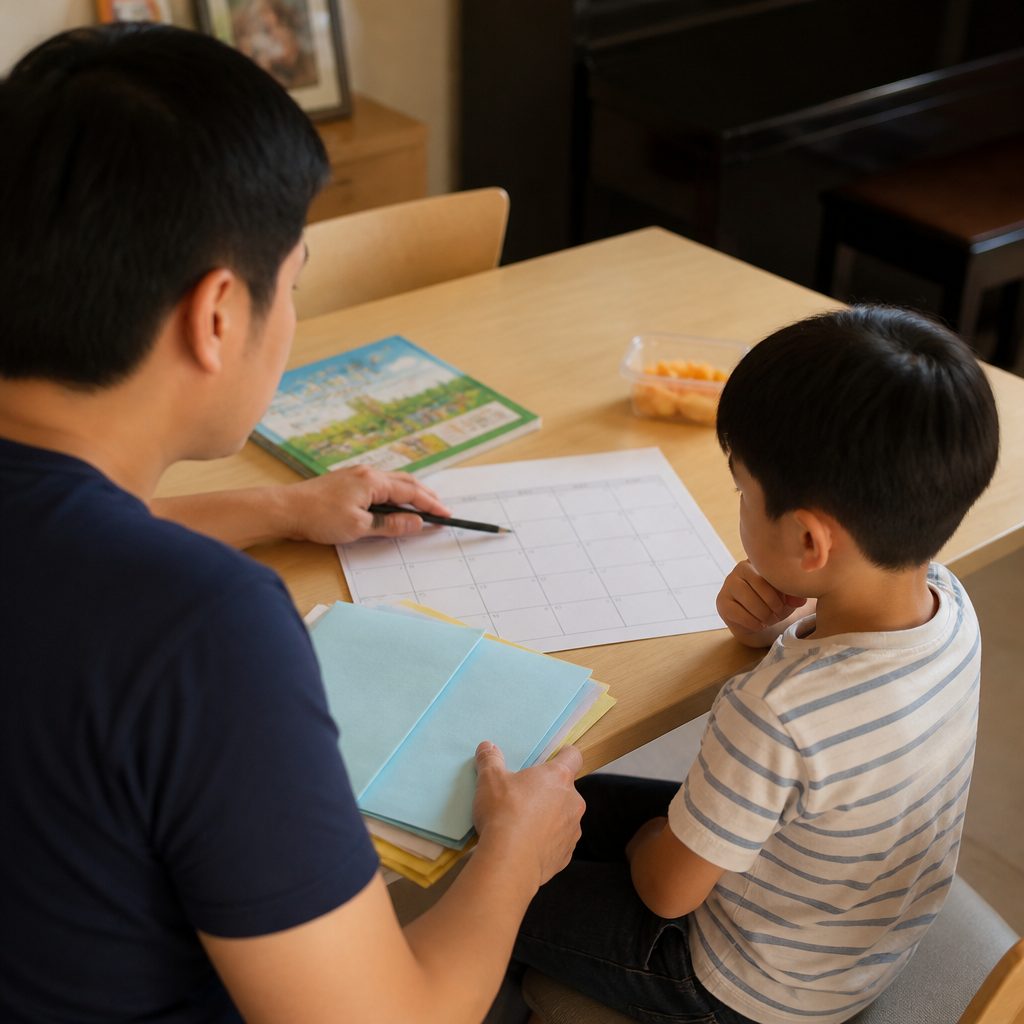
Before Primary 1, let your child pack a simple outing bag, open snack containers, put shoes in the right place, and tell an adult when something is wrong. These small tasks build confidence for school days.
If your child would benefit from gentle, targeted academic support while preparing for Primary 1, explore tutoring options suited to their needs, confidence, and pace. A suitable tutor should work with your child’s starting point, not turn every evening into a race ahead.
Frequently Asked Questions
Does my child need phonics or Math enrichment before Primary 1 if I am worried about falling behind?
Not necessarily. If your child enjoys books, understands basic number ideas, and is progressing steadily at preschool, home activities may be enough. Consider support when there is a clear, ongoing difficulty or when your child would benefit from a different teaching approach.
Is two enrichment classes too much for a K2 child after a full preschool day?
It can be manageable for one child and excessive for another. Look at travel time, preschool hours, bedtime, mood, playtime, and willingness to attend. Two short, enjoyable classes with several free afternoons may be fine. Two late academic classes after full preschool days may not be.
Should I focus on English, Chinese, or Mathematics first when my child needs help?
Start with the area where your child needs the most support rather than trying to cover everything. A child who is comfortable with English and numbers but avoids speaking mother tongue may benefit from a language-focused, confidence-building activity. Balance matters more than having a class for every subject.
Will my child fall behind in Primary 1 without preschool enrichment classes?
Not automatically. Children enter Primary 1 with varied experiences and abilities. Consistent routines, conversation, reading, play, emotional security, and responsive support at home all contribute meaningfully to readiness.
What should I check before Primary 1 starts if I feel unprepared?
Check the latest information from your child’s primary school on orientation, transition arrangements, required items, and communication channels. For registration information and updates, refer to MOE’s Primary 1 registration page.
Enough Means Your Child Is Supported, Not Stretched Thin
Enough is the amount of enrichment that addresses a real need or brings genuine joy while leaving space for sleep, family connection, movement, and play. A confident transition to Primary 1 is not built only through earlier worksheets or extra lessons. It grows when a child feels capable, heard, rested, and safe to try.
Choose K2 enrichment classes selectively, review their impact honestly, and resist comparisons that do not reflect your child’s temperament or circumstances. With thoughtful support, your child can enter Primary 1 ready to learn without feeling that childhood had to be scheduled away.