


It is Wednesday evening. Your child has just returned from school, homework is waiting on the table, music starts at 7pm, and another parent has recommended a coding or Chinese enrichment class. Saying no can feel like letting your child fall behind. Yet watching them become tired, tearful or constantly rushed brings a different kind of guilt.
So, how many enrichment classes should a child attend in Singapore? There is no responsible fixed number. The right balance depends on your child’s age, energy, school workload, interests, sleep, temperament and need to simply be a child.
A class that energises one child may feel like another item to endure for someone else. Rather than copying a peer’s packed timetable, look at whether every activity has a clear purpose while still leaving room for rest, family connection and unstructured play.
Key Takeaways
- There is no ideal number for every child. A preschooler enjoying one weekly class and a secondary student managing two purposeful commitments can both have healthy schedules if they are coping well.
- Look at the entire week, not only lesson hours. Travel, homework, meals, CCA, practice time and the emotional effort of moving between activities all affect whether a schedule is manageable.
- Quality matters more than quantity. One class your child enjoys and applies meaningfully is generally more valuable than several they attend reluctantly.
- Sleep and downtime are essential indicators. A child who regularly sleeps late to finish work is not truly coping, even if they attend every lesson.
- Exam years may require temporary changes. PSLE, O-Level and A-Level preparation can call for fewer non-essential commitments, rather than automatically adding more tuition.
- Review the timetable each term. School demands, friendships, CCAs and your child’s maturity change, so a schedule that worked in January may not work by August.
Start With Purpose, Not a Number
When parents ask how many enrichment classes a child should take, the more useful question is: “What is this particular class for?” Enrichment may include phonics, speech and drama, robotics, swimming, ballet, art, coding, abacus, language lessons, sport, music or academic tuition. These are not interchangeable boxes to tick.
A weekly swimming class may build confidence and offer physical release after a classroom-heavy week. A second English writing class may help only when it addresses a genuine need, such as weak idea development or difficulty planning compositions. Adding it simply because classmates attend can turn an already full week into an anxious race.
Tutors often notice children with many worksheets but very little time to process feedback. They may memorise a composition model or complete a difficult Maths paper, yet struggle to explain why an answer was wrong. More lessons are not always the missing ingredient. Sometimes the missing piece is time to revise calmly, practise independently and ask questions.
For many children, one or two regular enrichment commitments outside school can be a reasonable starting point. This is not a target to reach. It is simply a manageable baseline from which to observe your child.
A child with one sport and one music class may thrive. Another may be happiest with only swimming on Saturday morning, especially when school, commuting and family routines already take a lot out of them. An older teenager with strong self-management may comfortably continue a CCA and one academic support lesson.
The deciding factor is not whether the timetable looks impressive. It is whether your child still has breathing space.
Choose Activities That Fit Your Child’s Stage
Keep preschool enrichment playful
For preschool children, enrichment classes should feel playful, social and age-appropriate. One or two short weekly sessions is often plenty. A four-year-old moving every weekend from phonics to Chinese to gym may appear occupied, but may have little time for imaginative play, family outings or even boredom.
That open time matters too. It gives young children room for curiosity, language and emotional regulation without every hour being planned by adults.
Build around primary school routines
In primary school, children begin juggling spelling, homework, tests and sometimes longer school days. One non-academic interest plus one targeted academic class may suit many families. A Primary 3 child who loves football but struggles with Chinese oral could attend football weekly and receive focused Chinese support, rather than broad tuition for every subject.
Weekday lessons deserve particular scrutiny. A 90-minute class can become a three-hour commitment once travel, dinner and settling down are included. If homework is routinely completed at 10pm with everyone frustrated, the issue is not necessarily poor discipline. The schedule may simply be too tight.
Protect consolidation time for older students
Secondary school brings CCAs, projects, increased travel and more demanding content. Being selective matters. A student in a demanding sports CCA may need targeted help in one subject, not three separate weekend academic programmes.
At JC level, lessons should protect time for independent revision. During A-Level preparation, piling on classes can create the illusion of productivity while leaving no time to consolidate lecture notes, practise essays or recover after a long school day.
Let Temperament Shape the Timetable
Some children recharge through activity and enjoy rehearsals, sport or music. Others need quiet transition time after school before they can cope with anything else. Neither response reflects laziness or a lack of ambition.
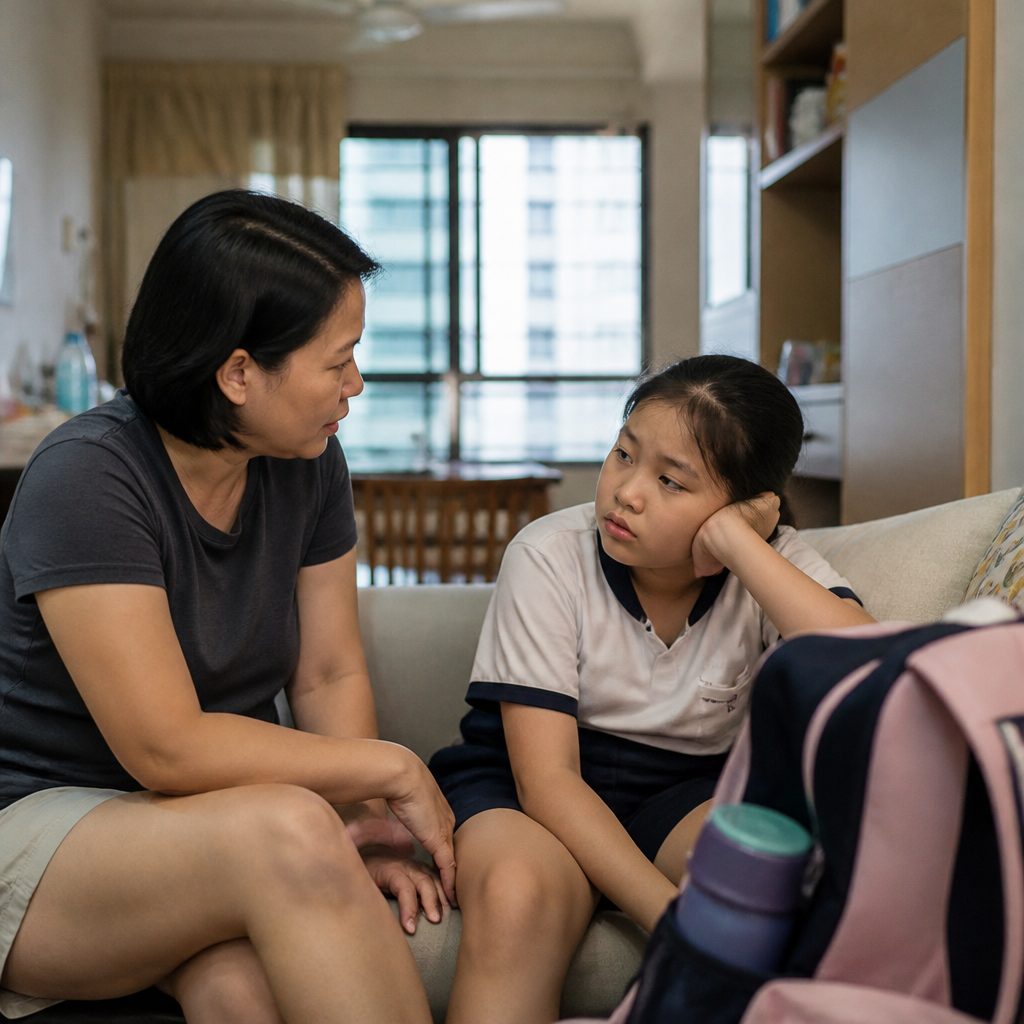
Notice the child who becomes unusually irritable in the car, delays leaving for class, or says “I don’t know” whenever asked about a lesson. These may be signs of overload, but they can also show that an activity is simply a poor fit. A calm conversation is usually more helpful than immediately telling them to persevere.
For parents balancing enrichment classes and school, the aim is not to remove every challenge. It is to make sure challenge remains constructive rather than exhausting.
Make Thoughtful Changes During Exam Years
Exam pressure can make parents feel that every available hour must become academic preparation. Yet an exhausted child may attend tuition faithfully without retaining much. PSLE preparation requires sustained work across subjects, while O-Level and A-Level students need time for content mastery, timed practice and correcting mistakes.
A better approach is to identify the bottleneck. Is your child weak in a specific topic? Do they freeze during oral examinations? Are they writing essays without analysing the question? Targeted support can help when it creates clarity and a workable revision routine.
It may be sensible to pause a low-priority activity for a term before major examinations, especially if your child agrees it will reduce stress. Avoid cancelling every joy in their week, however. Sport, music or a relaxed weekly activity can protect mood and offer a reset.
If your child would benefit from patient, personalised subject support that fits around school, rest and other interests, learn more about our tutors.
Recognise When the Schedule Is Working
A healthy timetable does not mean your child never complains. Even a loved activity can feel difficult before a performance, competition or test. Look instead at the overall pattern.
Your child is likely coping when they can usually:
- Sleep at a reasonable hour. A Primary 5 child who finishes homework, has a wind-down routine and is not regularly falling asleep in the car is managing better than one who is up late every week.
- Talk about some activities with interest. They may say training was tiring, but still mention a teammate, a new skill or a piece they want to improve.
- Recover after busy periods. A packed exam week may be tiring, yet they return to their usual mood after a quieter weekend.
- Have unscheduled time. Even an hour to read, draw, chat or do nothing after school can prevent every moment from feeling adult-directed.
Warning signs often emerge gradually. Dinner becomes rushed. Tears over small homework tasks become common. Your child starts asking to skip a class they once enjoyed, or schoolwork becomes careless despite spending more hours on it.
Be especially alert when weekends have become more exhausting than school days. An overscheduled child may stop seeing friends casually, give up reading for pleasure, or become dependent on adults to manage every task because there is no time to build independence.
Sleep is a useful reality check. HealthHub offers guidance on children’s sleep needs at HealthHub’s Better Sleep resources. If late nights are routine, do not treat sleep as the item that must be sacrificed to preserve every class.
Ask These Questions Before Adding a Class
Before enrolling, renewing or adding an activity, discuss these questions together:
A common pattern among students is that every interest slowly becomes a performance. A child enjoys drawing, then attends art class, portfolio coaching and competitions. Some children genuinely want this path; others lose the pleasure once every hobby becomes another measure of achievement.
The same applies to devices. A coding class can be meaningful, but it should not become an excuse for unlimited screen exposure outside class. HealthHub’s guidance on healthy screen use can help families set realistic boundaries.
Sample Schedules That Leave Room to Breathe
A primary school example
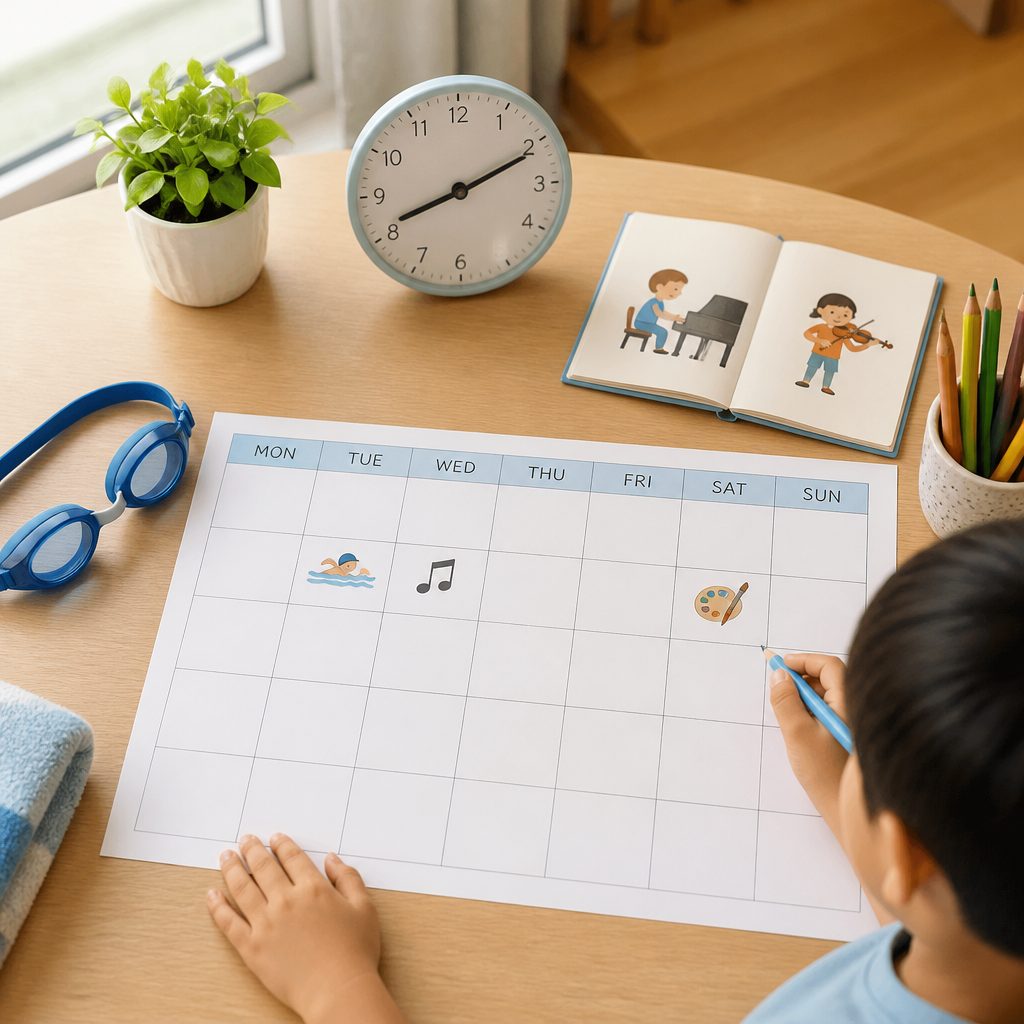
A Primary 4 child with a manageable schedule might have school and homework on weekdays, swimming on Saturday morning and a targeted English lesson on Sunday afternoon. Friday evening and part of Sunday remain open for rest, relatives, playdates or catching up on work without panic.
If that child begins a new CCA commitment or enters a demanding school term, the Sunday lesson could be paused or moved. The point is not to fill every available gap.
A secondary school example
A Secondary 3 student with CCA twice weekly might have one Maths tuition lesson on Saturday and piano practice at home on two short evenings, rather than adding another academic class after school. During assessment periods, piano practice can become lighter while revision takes priority.
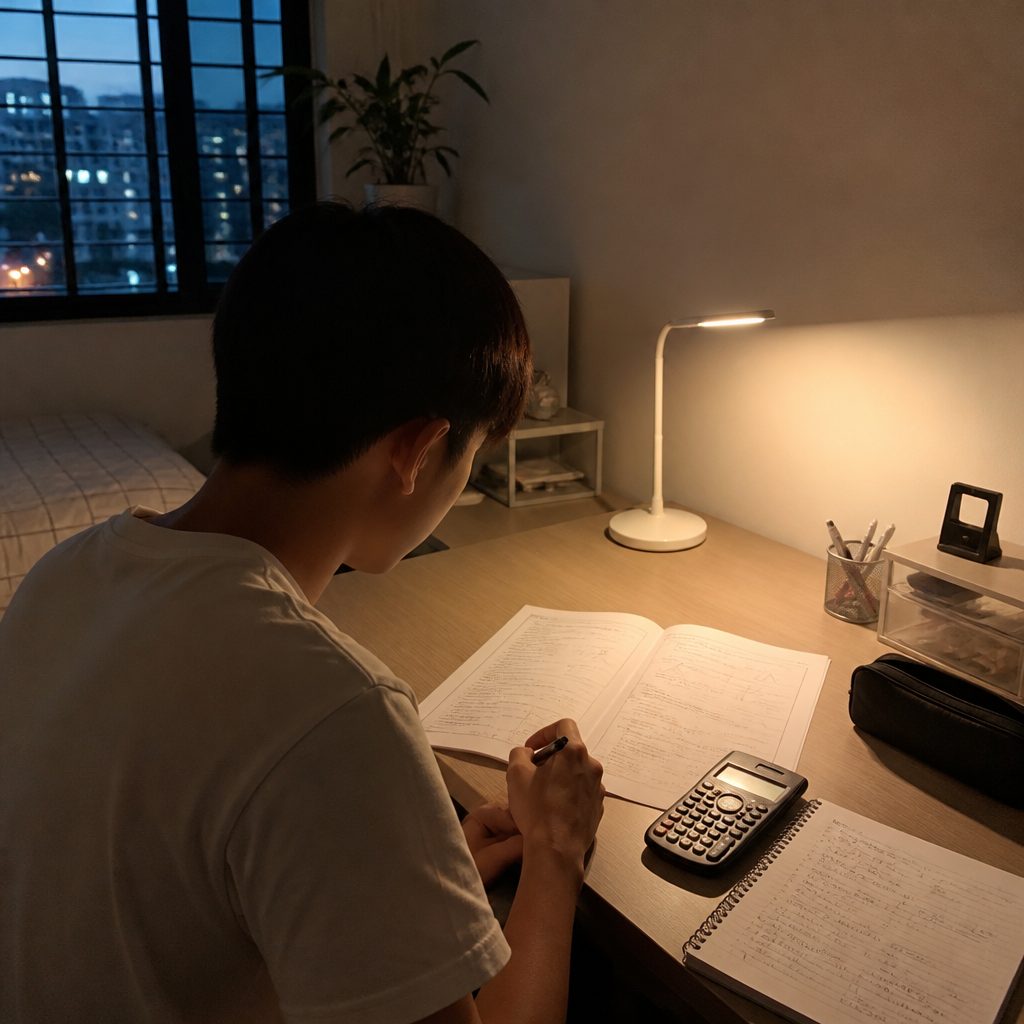
For a Secondary 4 student preparing for O-Levels, one or two focused support lessons may be appropriate, but there should still be a half-day with no tuition. That buffer is where students correct papers, rest or complete school assignments that would otherwise spill into midnight.
Frequently Asked Questions
Is two enrichment classes too many for a primary school child?
Not necessarily. Two classes can be perfectly manageable when they are spaced out, your child sleeps well and schoolwork is not constantly rushed. However, two demanding weekday classes alongside a heavy CCA and frequent weekend commitments may be too much. Consider the full weekly load, not just the number of lessons.
Should I stop enrichment during PSLE or O-Level year?
Consider reducing activities that are no longer meaningful or create regular stress. There is no need to remove every non-academic interest. A weekly sport or music lesson may help your child decompress, provided it does not crowd out sleep and revision.
My child wants to quit enrichment. Should I let them?
First, find out why. They may be tired, struggling with the teacher, anxious about peers or simply losing interest. A short break, a different class format or finishing the current term may be appropriate. Forcing a child to continue indefinitely can turn a once-loved interest into resentment.
How often should we reassess our child’s enrichment schedule?
Review it at least once each school term, and sooner after major changes such as a new CCA, examination period, illness or a noticeable drop in mood. A 15-minute family check-in can prevent a small strain from becoming burnout.
Choose Enough, Not More
The best answer to how many enrichment classes a child should attend is not a number that looks competitive beside another family’s timetable. It is enough to support your child’s growth, interests and confidence without squeezing out sleep, schoolwork, play and connection.
Singapore parents often face loud comparison pressure around enrichment classes. Step back from it. Watch your own child at the end of an ordinary weekday. Are they still curious, rested and able to enjoy parts of their life? That answer is more valuable than a packed calendar.
Keep what has purpose. Adjust what creates persistent strain. Reassess each term, especially during PSLE, O-Level and A-Level years. With thoughtful balance, your child can build skills without feeling that childhood has become one long race.