


It is a familiar scene for many Singapore parents. Your child can explain a Maths method perfectly at the dining table, yet the returned worksheet shows marks lost for copying 36 instead of 63, missing the word “remaining”, or writing cm when the answer should be cm².
After school, CCA, tuition and homework, everyone is tired. It is natural to wonder whether you should push harder, remind them again, or simply stop bringing up Maths for the night. The good news is that careless Maths mistakes are not usually about laziness. They often point to rushed reading, uneven confidence, weak checking habits, exam anxiety, or a gap in one specific skill.
With calm observation and a few targeted routines, your child can improve Maths accuracy without every revision session becoming a battle.
Key Takeaways
- Look for a pattern before correcting. A misunderstood fraction needs different support from a correct method with one copied digit.
- Make checking visible. Estimating, showing working clearly, checking units and using inverse operations help children catch slips.
- Treat question reading as part of Maths. Underlining words such as “difference”, “total” and “remaining” prevents mistakes before calculation begins.
- Match the routine to your child’s age and workload. A Primary pupil may need a short checklist, while a Secondary student may need support with time and presentation under test pressure.
- Use corrected papers, not vague reminders. “Let’s find where the number changed” is more helpful than “Be more careful”.
- Protect confidence while building accuracy. Focus on one or two recurring error types at a time instead of highlighting every slip.
Find the Real Cause Behind Repeated Errors
Read returned work like evidence, not a verdict
Before adding more practice, collect two or three corrected worksheets, topical tests or exam papers. Choose a quiet moment, not immediately after a disappointing result, and label each lost mark simply: reading, method, calculation, copying, unit, working or checking.
A Primary 5 child may solve a volume question correctly but write “cm” instead of “cm³”. That points to a unit habit. A Secondary 2 student may understand algebraic expansion but lose a negative sign when moving a term to the next line. That is often a presentation or attention issue, rather than an algebra gap.
Once the same label keeps appearing, the conversation changes. Instead of, “Why are there so many mistakes?”, you can say, “We have found the part to practise.” Finding the pattern before adding more work is one of the most practical ways to reduce careless Maths mistakes.

Separate a knowledge gap from a performance slip
Ask your child to redo one question slowly, without time pressure, after looking away from the correction. If they still cannot choose the method, they may need the concept explained again. If they can solve it correctly but slip mainly in tests, look at pace, anxiety, handwriting, question reading or checking.
Tutors often notice that children labelled “careless” are sometimes actually uncertain. They rush because pausing makes them feel exposed, especially when they think everyone else is finishing faster. On the other hand, a child who gets everything right slowly may need time-management practice, not harder questions.
Naming the real obstacle matters. It helps you support the right habit instead of treating every lost mark as the same problem.
Build Reading and Working Habits That Prevent Errors
Pause for the words that change the answer
Many mistakes begin before any calculation. Encourage your child to underline what the question is asking for and circle words that affect the operation or unit.
In “How many more stickers does Mei have than Ali?”, the phrase “how many more” signals a difference. If the question asks for the amount left, the final answer cannot simply be the original total.
At home, cover the numbers in a word problem and ask, “What is this question asking us to find?” Reveal the numbers only after they answer. It is a small habit, but it stops children from choosing an operation simply because the figures look familiar.
For younger pupils, one underline and one circle are enough. Covering every line in highlighter can become another distraction. Older students dealing with lengthy contextual questions can make a short note before they start, such as “find speed, km/h”.
Make working easy to audit
Skipping steps may feel faster, but it makes it much harder to see where a digit or sign changed. Encourage one operation per line, aligned equal signs and enough space between questions. This becomes especially important after a long school day or evening tuition.
A useful home rule is simple: if your child cannot point to the step where an answer came from, the working is too compressed. Fraction operations should show the common-denominator step separately. In algebra, a minus sign needs to travel visibly with its term, rather than being squeezed into a crowded line.
Clear working is not about making the page look pretty. It supports the problem-solving and reasoning expected across the MOE Mathematics syllabuses, while making avoidable slips easier to spot.
Teach Checking Strategies That Children Can Use
Choose a check that fits the question
“Check your work” is too broad if a child has never been shown what checking looks like. Give them one specific check that matches the question type.
For example, an area answer of 13 cm² for a rectangle measuring 8 cm by 5 cm should make a child pause. A correct calculation can still lose marks if the question asks for millilitres and the answer remains in litres.
Use a realistic final scan
At first, asking your child to redo every question can double the workload and create more fatigue. Instead, teach a short final scan: reread the question, inspect the most error-prone line, then ask whether the answer is reasonable.
During untimed practice, they can check more fully. In a test, selective checking is more realistic. A common pattern among students is that they know how to check, but spend too long checking easy questions and have no time left for the ones most likely to contain a slip.
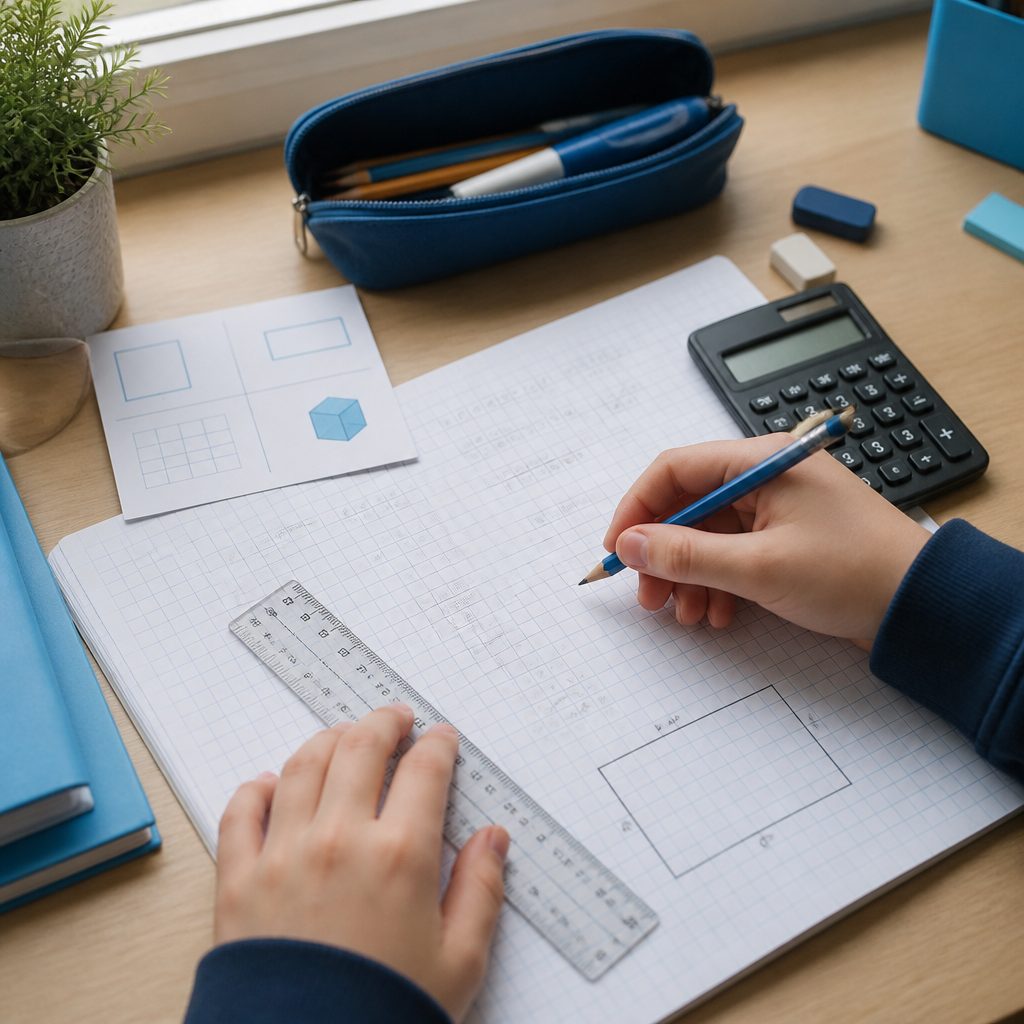
For PSLE preparation, pupils need to apply concepts in short-answer and longer problem-solving questions. Careful reading, method marks and suitable units all matter, not only the final answer. Refer to the latest SEAB PSLE examination information and your child’s school guidance for current formats and requirements.
Create an Error Log Without Making Maths Feel Punitive
Keep it short, specific, and useful
An error log should not become a notebook full of shame. Keep it to one page and review only three to five mistakes each week.
The aim is to turn a vague problem into an action your child can remember. “What will I do next time?” is far more useful than repeatedly revisiting what went wrong.
Use mini-practice instead of endless papers
If the pattern is missed key words, give three short word problems and ask your child to identify only what must be found. If decimal subtraction is the issue, practise six carefully chosen questions with aligned decimal points instead of assigning a whole assessment-book chapter.
This approach works because it practises the exact moment where the error occurs. Full papers can be useful nearer an exam, but they may hide the pattern when a child already feels overwhelmed.
Respond in a Way That Builds Accuracy and Confidence
Replace blame with precise feedback
When marks are lost repeatedly, parents can feel helpless, especially after buying assessment books or arranging tuition. Your child may already be embarrassed. “You knew this, why didn’t you check?” can make the next paper feel even more threatening.
Try feedback that directs attention without judging effort:
- “Your method was sound. Let’s trace where the 6 became a 9.”
- “You answered a different question from the one asked. Which word should we underline next time?”
- “This happened in the last two tests too. What check would catch it?”
- “Let’s fix one pattern this week, not every mistake tonight.”
These phrases make it safer for a child to say, “I was rushing,” or “I did not know what ‘at least’ meant.” That honesty is much more useful than a forced promise to be more careful.
Watch for fatigue, pressure, and avoidance
It is 10pm, there are still two pages of Maths homework, and your child starts making errors they would not make at 6pm. More drilling is unlikely to help. A shorter session the next morning, or stopping after reviewing one mistake clearly, may protect both accuracy and the parent-child relationship.
For Secondary students, timed practice matters, but it should be introduced gradually. Build correct habits without a clock first, then time a small set of questions, before moving to full papers. Starting with high-pressure timing can make a student skip working and reinforce the very mistakes you are trying to reduce.
Know When to Ask for More Support
Speak with the teacher when patterns affect school performance
Contact the Maths teacher with examples rather than simply saying your child is careless. Ask whether the same pattern appears in class, whether it is more obvious in timed work, and which one habit the teacher recommends reinforcing at home.
This can be especially helpful if errors occur across subjects, instructions are regularly misread, or your child seems unusually distressed during tests. The school can provide context that a home worksheet cannot.
Consider personalised support when feedback is not sticking
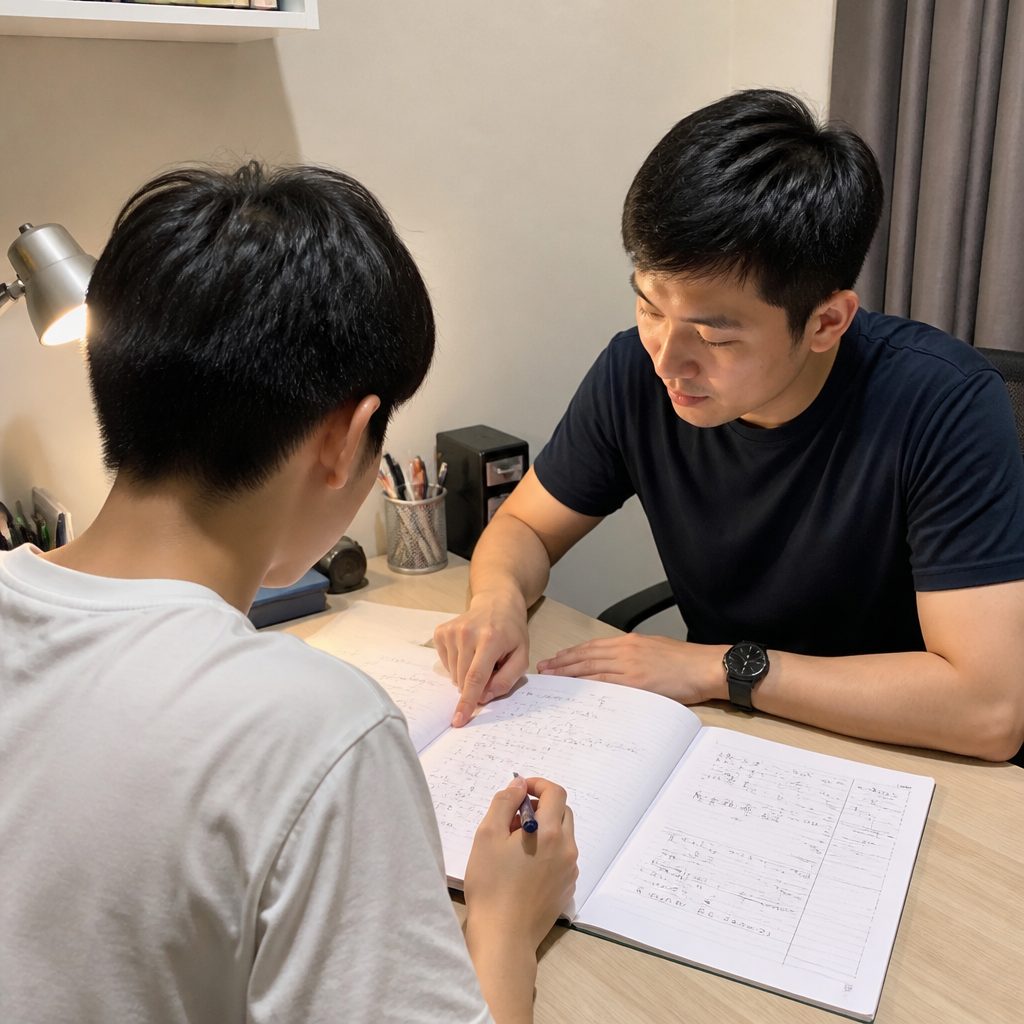
Extra help is not automatically the answer to every lost mark. Independent practice can work well for a pupil who responds to routines. However, a child who understands explanations but repeats the same mistakes may benefit from someone patiently reviewing their working process, rather than simply assigning more questions.
If your child would benefit from patient, personalised support to strengthen Maths accuracy and confidence, learn more about our tutors. The right support should identify error patterns, adjust pacing and build independent checking habits rather than promise instant results. You can also explore available options through Singapore Tuition Teachers.
Frequently Asked Questions
My child understands Maths at home but loses marks in tests. What should I do?
Compare untimed work with timed papers. If accuracy drops mainly under time pressure, begin with short timed sets and teach a realistic final-check routine. If the same error appears in both settings, focus on the underlying concept or presentation habit.
Should I make my child redo every wrong Maths question?
Not always. Redo questions that reveal a recurring pattern, then add two or three similar examples. Redoing an entire paper can be exhausting and may turn reflection into punishment.
How can I help a Primary school child check answers independently?
Start with one routine: underline what is asked, estimate, then check the unit. Place it on a small card beside the worksheet. Once it feels automatic, introduce inverse operations for suitable sums.
Are careless Maths mistakes a sign that my child needs tuition?
Not necessarily. Some children improve with better sleep, clearer working and targeted practice. Consider additional support when a pattern persists despite consistent home routines, when confidence is falling, or when you need help identifying whether the issue is conceptual or exam-related.
Progress Comes From Fewer Repeated Errors
Careless Maths mistakes are discouraging because they can hide what your child genuinely knows. Yet they are usually manageable once you look beyond the label. Review corrected work for patterns, make reading and working visible, teach one practical checking method at a time, and respond to slips with calm precision.
The goal is not a child who never makes an error. It is a child who notices when something looks wrong, knows how to check it, and feels steady enough to try again.