


After a long school day, CCA and homework, it can be frustrating to sit down with an English comprehension passage and still wonder which details actually matter. Your child may understand what they have read, yet lose marks because their summary includes too much, misses the focus or copies the passage too closely.
The reassuring part is that O-Level English summary writing is not about impressive vocabulary or memorising model answers. It is about reading with a clear purpose.
This guide explains how to select and paraphrase key points for O-Level English Paper 2. Your child will learn how to unpack the question, identify relevant ideas, leave out examples and rewrite accurately within the required word limit. Check the latest syllabus and examination information through MOE and SEAB, as requirements may be updated.
Key Takeaways
- Read the question before the passage. Its wording tells your child what to look for, such as causes, benefits, difficulties or solutions, so they do not collect details that will not earn content marks.
- A key point answers the question directly. Names, figures, anecdotes and repeated explanations may support an idea, but they are usually not the essential point needed in the summary.
- Combine related ideas carefully. Details can be grouped when they express the same main point, but separate ideas should stay separate when they answer the question in different ways.
- Paraphrase meaning, not individual words. Change vocabulary and sentence structure while keeping the writer’s meaning accurate. An unsuitable synonym can alter the idea and cost marks.
- Keep the response neutral. Personal opinions may be sensible, but summary writing assesses understanding of the passage, not a student’s views on the topic.
- Practise within the word limit. Even strong content becomes less effective when too much space is used on copied examples or lengthy phrases from the text.
Understand What Summary Writing Tests
What happens in the summary question
In O-Level English Paper 2, the summary task asks students to draw relevant information from a given text and present it concisely. While it is always wise to check the current official requirements, the core skills remain familiar: understanding the passage, selecting relevant points, organising them logically and expressing them clearly in their own words where appropriate.
This is why a student who reads widely can still find English comprehension difficult. Reading casually and reading with an examiner’s question in mind are not quite the same. If the question asks for “the challenges faced by volunteers”, a sentence about why a charity was founded may be interesting, but it does not necessarily answer the task.
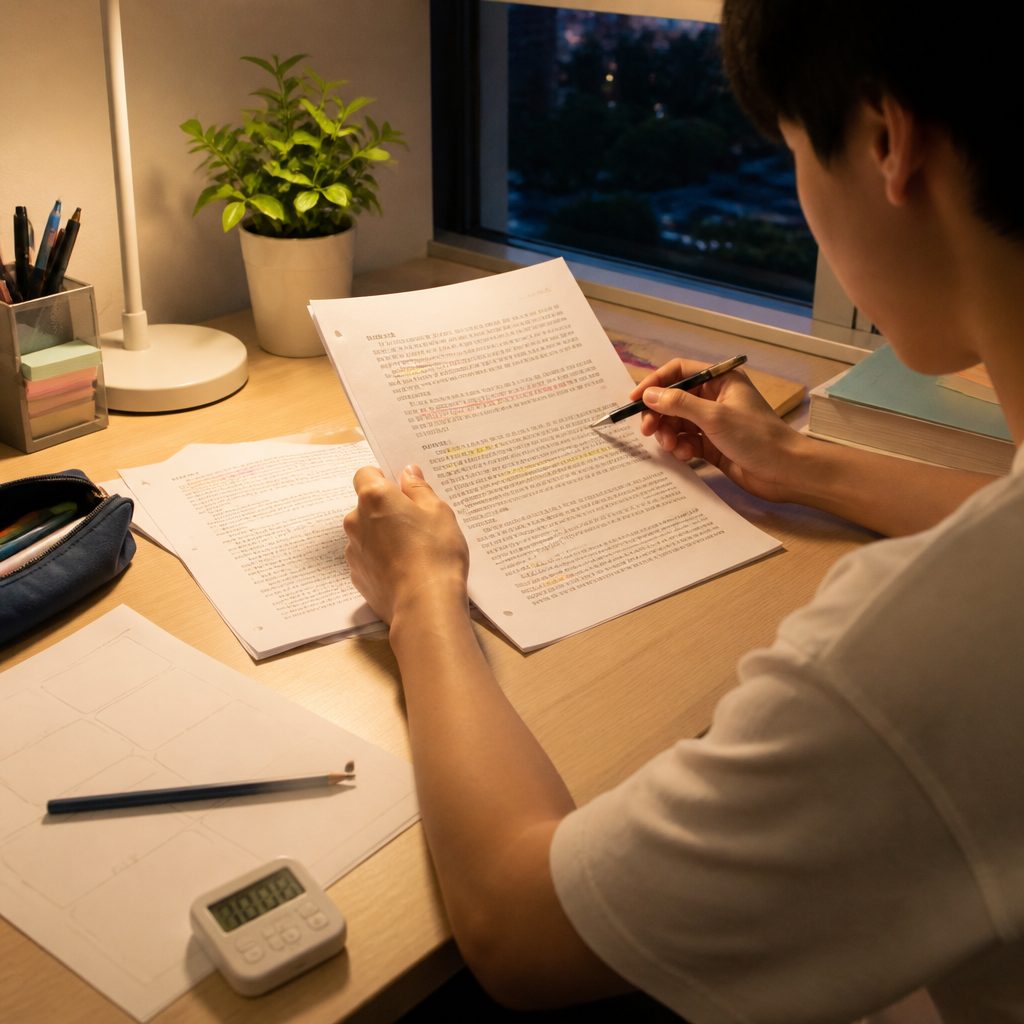
Tutors often notice one repeated pattern: students highlight almost every sentence because every detail feels important. Usually, the problem starts before they have decided what the question is asking for. A summary is meant to be selective. Knowing what to leave out is part of the skill.
The three areas your child is balancing
For example, “lack of time” and “difficulty travelling” may be separate challenges if the passage presents them as different obstacles. At the same time, trying to impress with difficult words often backfires. Clear and accurate English is safer than a dramatic synonym that changes the writer’s point.
Start With the Question, Then Identify Key Ideas
Unpack the focus before highlighting
Before reading closely, underline the focus words in the question. Two questions help: “Whose ideas or experiences am I looking for?” and “What type of information is required?”
Imagine a question asking for the reasons teenagers struggle to get enough sleep. The answer needs causes of insufficient sleep, not consequences such as poor concentration, and not advice such as putting phones away earlier. These ideas are related, but they are not interchangeable.
A common pattern among students is selecting sentences that are about the topic but do not answer the exact question. A brief margin note, such as “reasons for poor sleep”, gives the reading a target. In a timed paper, this simple habit can stop a dense passage from making every paragraph seem equally urgent.
Find ideas, not sentences
As your child reads, they should look for the smallest complete idea that answers the question. Highlighting whole lines may feel safer, but it often makes the planning stage harder. A useful test is whether they can complete the sentence: “One reason is that…”
“Many students remain awake because they keep checking group-chat messages and feel anxious about missing a discussion.”
The key point is that students stay awake because they repeatedly check messages due to fear of missing out.
Not every word in the original sentence needs to appear in the summary. “Group-chat messages” may be an example of the wider behaviour. Keep it only when it is necessary for precision. This is how students select key points without filling their response with passage details.
Separate Essential Points From Examples and Repetition
What to leave out
A passage may develop one idea through a story, statistic or quotation. Those details make the original text persuasive, but they can use up valuable words in a summary.
“At Riverside Park, volunteers spent three humid Saturday mornings clearing plastic bottles, food wrappers and abandoned fishing lines from the canal.”
If the question asks about the work volunteers carried out, the essential point is that they removed litter from the canal.
The three mornings, humid weather and itemised rubbish are supporting details. Copying them makes the response longer without making it more complete.
Combine ideas without flattening meaning
Combining points saves words, but over-combining can erase meaning. If a passage says commuters avoided cycling because roads felt unsafe and because they had nowhere to shower at work, these are two different barriers. Calling both “cycling is inconvenient” is too vague.
A stronger sentence would be: “Commuters avoided cycling because they considered the roads dangerous and lacked workplace facilities to freshen up.”
It is concise but still preserves two valid points. During summary writing practice, encourage your child to label each point in a few words first. If two labels mean the same thing, merge them. If they answer the question differently, keep both.
Paraphrase Clearly Without Changing Meaning
Change structure as well as vocabulary
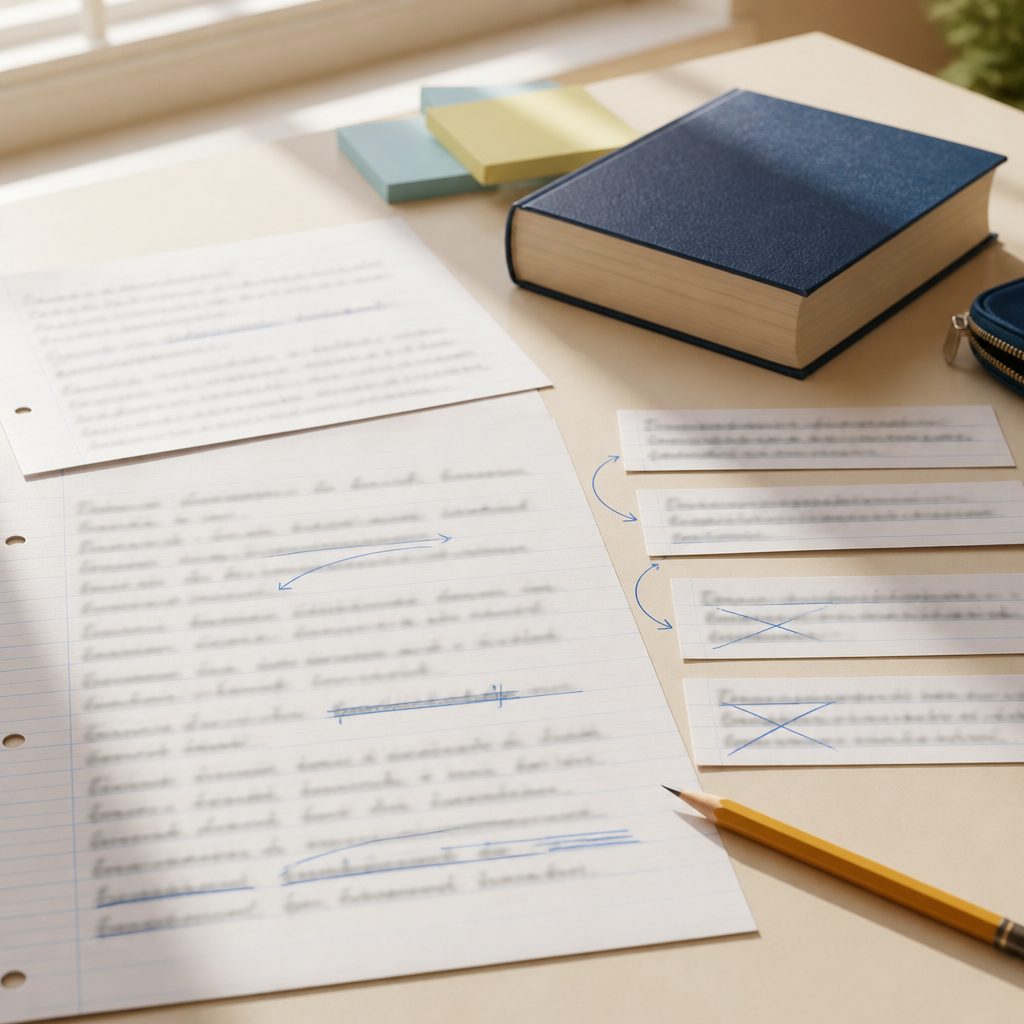
Knowing how to paraphrase a summary does not mean replacing every word with a thesaurus alternative. Good paraphrasing keeps the original meaning while changing the expression.
Original: “The residents were reluctant to report faults because they assumed nothing would be done.”
Weak rewrite: “The residents were unwilling to report defects because they presumed nothing would be accomplished.”
Better rewrite: “Believing their complaints would be ignored, residents did not report problems.”
The weak version has changed individual words, but it sounds forced and keeps the same structure. The better version changes the order of ideas, uses natural language and remains faithful to the meaning. It is also shorter, which matters when the word limit is tight.
Protect the writer’s meaning
Some words carry an important degree of meaning. “Rarely”, “never”, “may”, “must”, “some” and “all” cannot be changed carelessly. If the passage says a method “may reduce waste”, writing that it “eliminates waste” makes the claim stronger and inaccurate.
Cause and effect need the same care. “The pupils were tired because they trained late” is not the same as “the pupils trained late because they were tired.”
When a safe synonym does not come quickly, changing the grammar is often the better choice. Turn a noun into a verb, reorder clauses or combine short phrases. Accuracy matters more than sounding sophisticated.
If paraphrasing remains a persistent struggle, personalised feedback can reveal whether the issue is vocabulary, sentence control or misreading the passage. Learn more about our English tutors for support focused on recurring mistakes.
Write, Count and Check Under Exam Conditions
Build one controlled paragraph
Once the points are selected, arrange them logically, usually following the passage where possible. A simple linking phrase is enough. There is no need to force elaborate connectors into every sentence.
Start with the clearest point, then move through the remaining ideas. Keep the tone factual. Summary writing is not a persuasive essay, so comments such as “This is clearly unfair” or “People should be more responsible” take up words without answering the comprehension question.
Use a final checklist
Before moving on, a quick but deliberate check can make a real difference:
- Question focus: Every point must answer the exact task. If the question asks for benefits, remove causes or consequences that slipped into the draft.
- Coverage: Count distinct ideas. One long sentence may contain only one point, while two short clauses may contain two valid points.
- Own words: Keep unavoidable technical terms, but revise longer copied chunks when a clear paraphrase is possible.
- Word count: Use the counting method required by the school or examination instructions. Check early enough to trim safely without losing a key point.
- Grammar: Check verbs, pronouns and punctuation. A rushed paraphrase can leave a sentence without a clear subject or connection.
At 10pm, after tuition and a pile of worksheets, it is tempting to finish quickly. Yet two calm minutes for this check can prevent avoidable losses from copied phrases, missing words or unclear grammar.
Frequently Asked Questions
How many key points should I include in my O-Level English summary?
Include as many relevant, distinct points as the passage and current task require while staying within the stated word limit. Do not chase a target number blindly. A point only counts when it answers the question directly and does not repeat another idea.
Can my child copy important terms from the passage in summary writing?
Yes, when a technical term or exact name cannot be replaced without becoming vague. The concern is copying full clauses or whole sentences when a clear paraphrase is possible. Keep the essential term, then rebuild the rest in your child’s own words.
My child understands the passage but cannot paraphrase it. What should they do?
Start by writing the idea in simple spoken English. “They feared nobody would listen” may be easier to produce than a complicated alternative for “anticipated official inaction”. Then check that the simpler version still keeps the original meaning.
Should my child write an introduction for the summary?
Usually, it is better not to spend precious words on a broad opening such as “There are many reasons for this issue.” Begin with a relevant point instead. The task is to summarise the passage, not introduce a new essay topic.
Conclusion
O-Level English summary writing becomes much more manageable when students stop treating it as a vocabulary test. Read the question first, select only ideas that answer it, strip away examples and repetition, then paraphrase accurately rather than reaching for flashy language. Finish by checking word count, grammar and relevance.
Regular practice is most useful when students review why each selected point was valid and why each rejected detail was unnecessary. With focused correction and steady practice, key points become easier to spot and paraphrasing feels far less intimidating. For more targeted support, explore personalised English tuition and build stronger exam confidence.