


It is a familiar scene in many Singapore homes. Your child can explain the passage after dinner, perhaps in English or simple Chinese, but the marked script still comes back with disappointing comprehension marks. After CCA, homework and revision, it is easy to think they simply need to complete more papers.
Often, the issue is more precise. They may miss what the question is asking, copy a line without explaining it, or understand the idea but struggle to express it accurately in Chinese.
Scoring well in O-Level Chinese comprehension is not about reading faster or memorising model answers. It is about turning an understanding of the passage into an answer that meets the examiner’s question directly. With a steady reading routine, better evidence selection and thoughtful error review, students can become more accurate and confident.
Key Takeaways
- Preview questions before reading closely. A quick scan shows which people, events and ideas deserve extra attention.
- Answer the exact task. If a question asks for a reason, give the reason instead of retelling the paragraph.
- Use evidence and explanation together. Finding the right phrase is only the start. Show what it reveals about an attitude, motive or effect.
- Paraphrase when interpretation is needed. Repeating difficult words from the passage does not always show understanding.
- Build vocabulary through steady exposure. News articles, school texts and short commentaries are more manageable than cramming word lists.
- Review mistakes by pattern. Missing a keyword needs a different fix from weak expression, incomplete explanation or careless copying.
What Examiners Actually Look For
Comprehension is more than finding a matching line
In the Singapore O-Level Chinese examination, comprehension questions assess whether students can understand information, infer meaning, recognise viewpoints and respond clearly in Chinese. Paper formats and requirements can change, so families should check the latest SEAB O-Level Chinese syllabus and school candidate information before relying on a revision plan.
Not every question tests the same skill. Some ask for a stated detail. Others require students to explain why a character acted in a certain way, interpret a phrase, compare ideas or identify an effect on the reader.
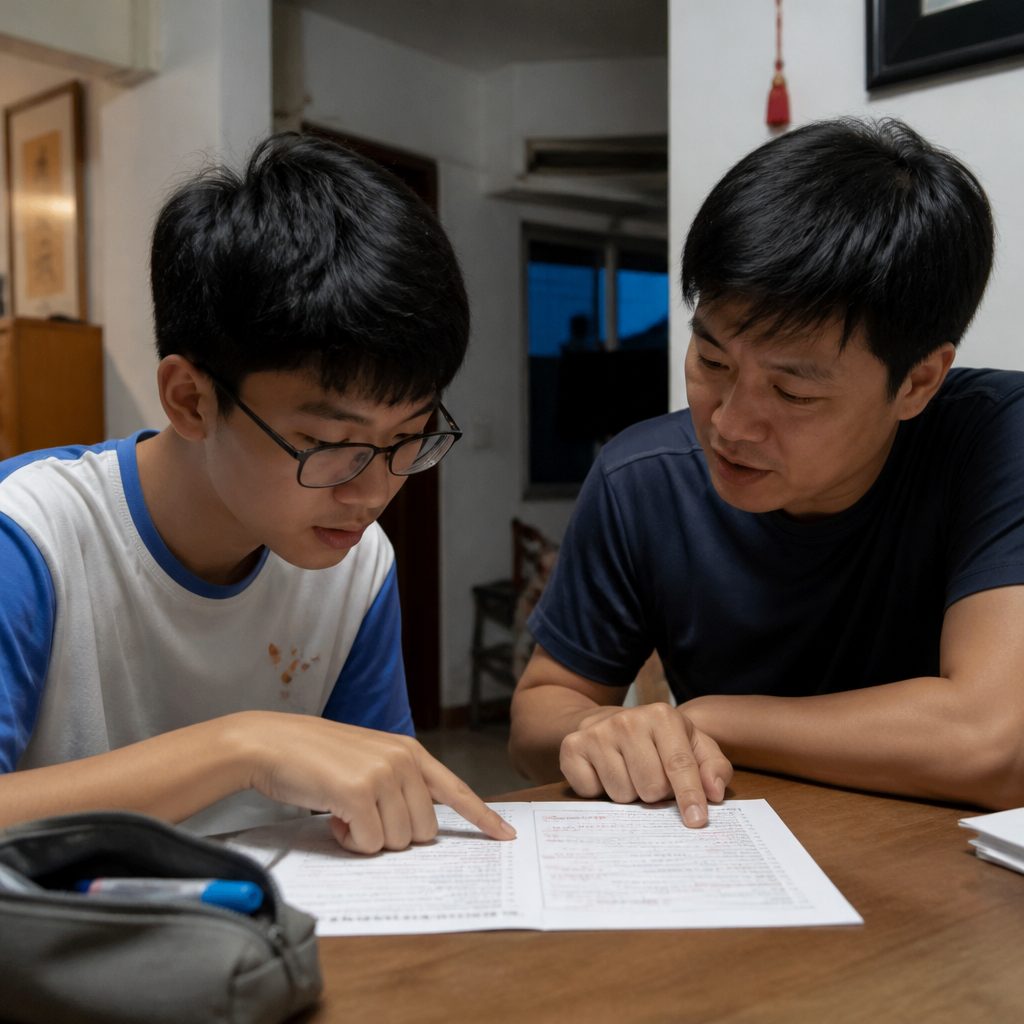
Many students treat every question as a copying exercise. They may locate the correct paragraph yet lose marks because their answer does not respond to the command word. The problem is often weak question reading rather than weak Chinese.
Notice the demand words before answering
Before writing, note words such as 原因, 目的, 态度, 感受, 作用, 启示, 说明 and 具体表现. Then ask: “What kind of answer would prove this?”
If a passage says a student stayed back after school to arrange books, a weak answer to a question about her character might be: “她放学后整理书本。” It repeats the action but does not interpret it.
她放学后仍留下整理书本,表现出她有责任感,也愿意为班级付出。
The evidence remains, but the reasoning is now clear. That shift is central to strong Chinese comprehension answering technique.
Read With a Clear Purpose
Preview the questions before reading deeply
There is no need to answer questions before reading. A brief preview is enough to spot names, events and recurring ideas. If several questions mention a father’s reaction, a community project or a turning point, those details deserve closer attention.
Read once for the overall storyline or argument. On the second pass, mark useful signals: emotional changes, contrast words such as 但是 or 原来, causes and results, and sentences revealing the writer’s view.
Over-highlighting makes revision harder. When every line is marked, nothing stands out. A margin note such as “失望”, “转变”, “原因” or “结果” is often enough, especially when tired students find themselves rereading the same paragraph.
Follow the passage’s movement, not isolated words
Some students hunt for the exact word from the question and stop at the first match. This may work for direct-retrieval questions, but it fails when the answer sits in the sentence before or after it.
Read the surrounding two or three sentences before deciding. If an elderly neighbour first declines help and later quietly accepts it, a question about feelings may require both moments. The first action may suggest pride or hesitation, while the later one may reveal trust or appreciation.
Lifting only “接受帮助” misses the change. Follow the paragraph’s logic: what changed, why did it change, and what does the writer want readers to notice?
Match Your Answer to the Question Type
Different question types need different answer habits. Recognising the difference prevents students from giving a correct idea in the wrong form.
Handle direct details and cause-and-effect clearly
For a direct-detail question, locate the relevant information and answer in a complete sentence. Avoid adding nearby details simply because they appear in the same paragraph.
When the question asks why something happened, make the cause explicit with 因为, 由于 or 为了. “社区举办了活动。” does not answer a question about purpose. “社区举办这项活动,是为了让居民认识环保的重要性,并鼓励他们减少浪费。” does.
Support inferences about attitude and character
Inference questions need a bridge between evidence and conclusion. Start with the conclusion, then support it with an action, phrase or contrast.
Instead of writing “他很孝顺”, a stronger answer is: “他虽然工作忙碌,仍每周抽时间陪母亲看医生,说明他关心母亲,也很有孝心。”
Do not jump too quickly to a label. A polite gesture does not automatically prove that someone is completely selfless. Precise reading matters more than dramatic descriptions.
Explain how language creates an effect
For questions about the effect of a word, description or comparison, explain both meaning and impact. “这个比喻很生动” is too broad.
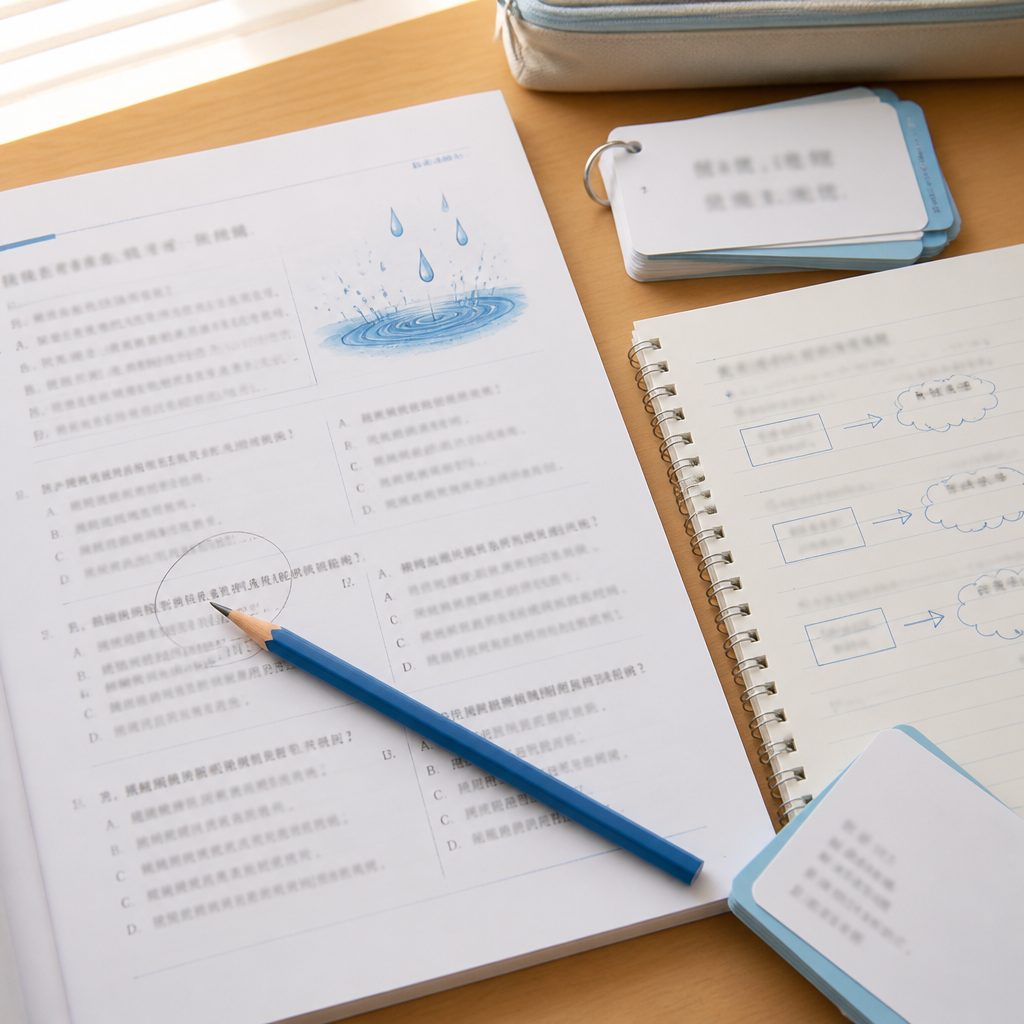
If rain is described as “needles”, an improved response could be: “把雨形容成针,突出了雨点又密又刺人的感觉,让读者感受到人物在雨中的不适。” This explains how the language works, not merely that it is vivid.
Express Your Ideas in Clear Chinese
Paraphrase without changing the meaning
Many students avoid paraphrasing because they fear choosing the wrong word. Yet copying a long sentence may fail to show understanding. Keep essential factual terms but restate the idea in simpler Chinese.
If a passage says someone “因一时的挫折而意志消沉”, a response can say “他因为遇到困难而失去信心”. The meaning remains intact, while the student demonstrates comprehension.
Paraphrasing does not mean forcing in complicated vocabulary. Clear, correct Chinese is more reliable than an impressive phrase used inaccurately.
Make every answer self-contained
Read the response as though the question were hidden. Would a teacher understand who “他” refers to, what “这样做” means and why it matters? Repeat the key noun when vague pronouns could create confusion.
For questions worth more than a simple fact, a compact point, evidence, explanation structure works well: “作者感到欣慰,因为孩子们主动收拾垃圾,显示他们已把环保观念付诸行动。”
Longer answers are not automatically safer. Extra details can introduce errors or distract from the task. Precision makes an answer convincing.
Catch small errors that quietly cost marks
Reserve a few minutes to check that the response has not reversed a meaning, missed a required point or copied a key character wrongly. Pay close attention to negative words such as 不, 未 and 并非.
Where vocabulary, interpretation or written expression remains a consistent struggle, targeted guidance can help. A tutor can identify whether the gap lies in reading, answer technique or language use, then practise that weakness directly. Families can learn more about targeted Chinese tutoring support, while remembering that progress still depends on regular practice.
Build Exam Readiness Through Better Practice
Practise under realistic conditions
Untimed practice is useful while learning a technique. Gradually introduce timed practices using suitable school papers or legitimate past-year materials, then identify where time disappeared.
After each practice, categorise mistakes. Did the student misunderstand the passage, miss the question word, use too little evidence, fail to paraphrase or make expression errors? Calling a mistake “careless” rarely provides a useful next step.
A mistake log containing the question type, weak answer and corrected answer can reveal patterns. If several practices show incomplete explanations for “why” questions, train specifically by adding “说明” or “因为” after each selected piece of evidence. This is more useful than completing another paper without reviewing it.
Build vocabulary in manageable daily doses
A vocabulary bank should record language a student can use, not a random list to memorise. Include the word, its meaning, an original sentence, a related word and the passage where it appeared.
A student who sees 反映 in a news article can write: “这项调查反映了居民对公共空间的看法。” This makes vocabulary easier to recall in context.
Ten to fifteen minutes of age-appropriate Chinese news, commentary or school reading material a few times a week exposes students to how ideas are linked. Summarising one paragraph in two sentences also builds the habit of identifying main ideas.
Do not turn every family dinner into a vocabulary test. Students balancing CCA, assessments and oral preparation can become resistant when Chinese feels like constant correction. Calm consistency tends to last longer.
Frequently Asked Questions
My child understands the passage but still scores poorly. What should we check first?
Examine marked scripts for the exact reason marks were lost. Many students understand the content but answer only half the question, fail to explain evidence or use vague Chinese. Ask whether the main issue is interpretation, relevance or expression, then practise that weakness.
Should students memorise model answers for Singapore O-Level Chinese?
Model answers can demonstrate useful phrasing and the expected detail, but memorising them word for word is risky. A new passage requires fresh interpretation. Use model answers to notice how they answer the question, support the point and explain the evidence.
How many comprehension papers should a Secondary 4 student complete each week?
Quality matters more than volume. One carefully reviewed paper, or a selected set of questions, can be more useful than several rushed papers. During busy periods, practise a few question types and review mistakes. Closer to examinations, add timed papers if the student can still analyse errors afterwards.
Can tuition help with Chinese comprehension?
It can help when lessons target a clear need, such as vocabulary gaps, weak inference skills or imprecise answers. It cannot replace reading, correction and independent practice. Look for feedback that explains why an answer loses marks rather than lessons focused only on completing worksheets.
Build Confidence Through Better Habits, Not Last-Minute Panic
Higher marks in O-Level Chinese comprehension come from small, reliable decisions: previewing questions, tracking the passage’s logic, choosing relevant evidence, explaining what it shows and checking the final response. These are learnable habits, even for students who find comprehension unpredictable.
For parents, the most helpful support is often specific and calm. Instead of asking, “Why did you lose so many marks again?”, try, “Was this a question-reading problem or a vocabulary problem?” That turns a discouraging script into a practical next step.
Use the official SEAB information for O-Level school candidates to verify the latest syllabus and examination arrangements. With steady reading, focused correction and, where suitable, targeted tutor support, students can approach Chinese comprehension with greater clarity and confidence.