


It is late, homework is still on the table after CCA, and your child stares at a cloze passage with growing frustration. “I know the words, but I do not know which one to write.” For many Singapore parents, this is a familiar moment.
A cloze passage can make even a capable child doubt every answer. Doing well in primary school English cloze passages is not mainly about memorising longer word lists. It is about noticing the clues already present, then choosing a word that fits both the meaning and the grammar.
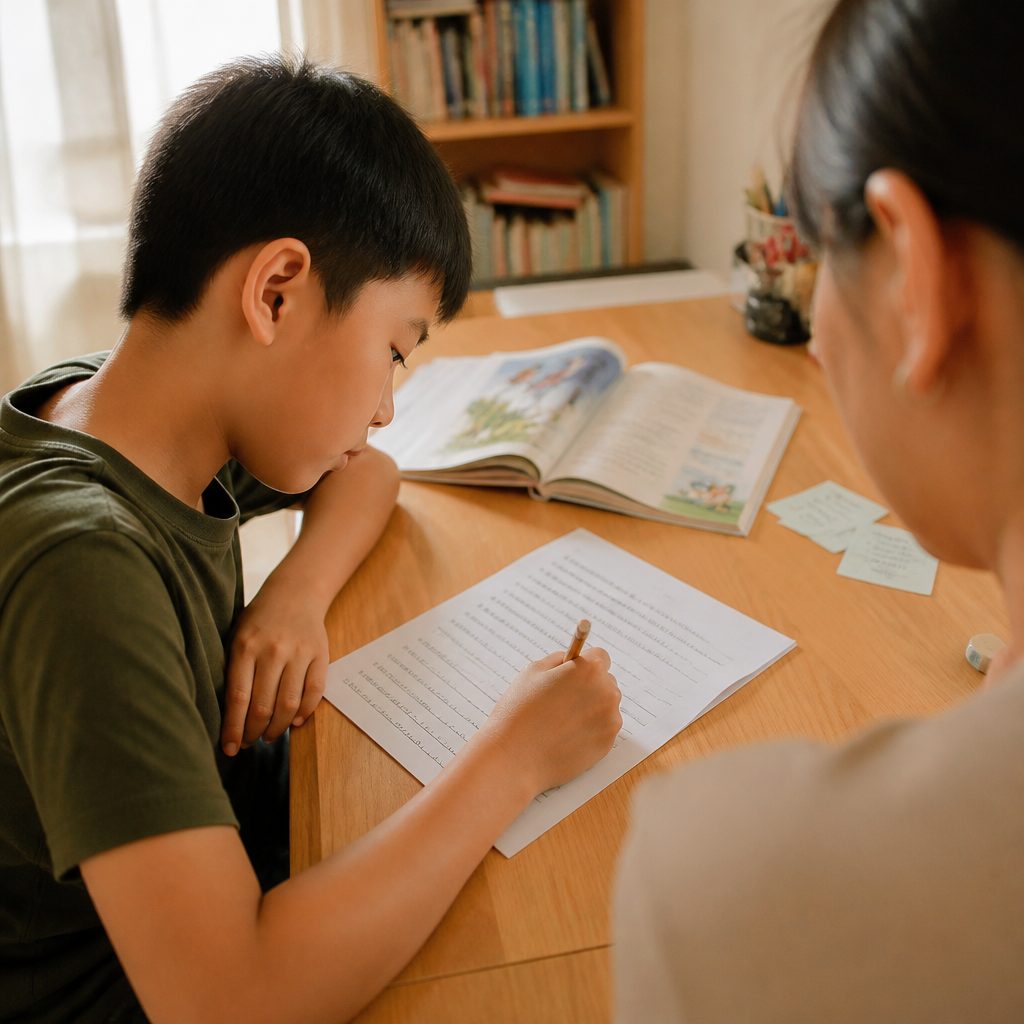
With a repeatable approach, Primary 3 to Primary 6 pupils can stop treating each blank as a guessing game. Cloze work also supports broader English exam preparation because it brings together reading, vocabulary, grammar, spelling and sentence awareness. Formats and assessment requirements may vary by school and over time, so check the latest information from MOE, your child’s school and, for PSLE-related information, SEAB.
Key Takeaways
- Read before filling blanks. Reading the whole passage first helps a child understand who is involved, what happened and the overall mood. This makes individual answers easier to predict.
- Use meaning and grammar together. “Yesterday” may point to past tense, while “a” or “the” may signal that a noun is needed. The best answer must satisfy both clues.
- Predict before choosing. Even a rough prediction, such as “an action word about moving quickly”, stops pupils from picking a familiar word that does not fit.
- Check open-ended answers more closely. Several words may sound possible, but the strongest answer must match the exact context, grammar, word form and spelling.
- Review errors by reason. Instead of repeatedly copying a model answer, identify whether the mistake came from vocabulary, tense, word form, meaning or spelling.
- Practise little and often. Two carefully reviewed English cloze exercises each week are usually more useful than rushing through a large worksheet without discussion.
Understand What Each Cloze Format Tests
Vocabulary and grammar cloze
Some cloze passages provide options, while others ask pupils to supply words independently. Vocabulary cloze checks whether a child can choose a word with the right meaning. In “The puppy was _____ when it heard thunder,” “frightened” fits the situation better than “excited”.
Grammar cloze focuses more directly on language accuracy. In “Maya _____ to school every day”, the phrase “every day” suggests “walks”, not “walked” or “walking”. These short questions may look simple, but they test whether pupils notice subject-verb agreement, tenses, prepositions, pronouns, articles and conjunctions.
Why open-ended cloze needs closer checking
Open-ended cloze questions can feel harder because there are no answer choices to narrow the field. A child may write a sensible word but still lose the mark because it does not fit the sentence precisely.
Consider: “The children hid _____ the table when the thunderstorm began.” “Near” may sound possible in everyday speech, but “under” is more accurate for the intended meaning. Tutors often notice pupils rushing at this point because they recognise the scene and write the first word that comes to mind.
Tell your child that an open-ended blank is like a jigsaw piece. The word must match the picture, but it must also have the correct shape.
Use a Repeatable Method for Every Blank
Read the whole passage first
One of the most useful cloze passage strategies is simple, yet often skipped: read from beginning to end without writing anything. A pupil who sees that a passage is about a lost wallet, a school camp or a rainy afternoon has useful context for every blank.
If the final sentence says, “Father was relieved when I returned home safely,” earlier blanks are likely connected to a problem, search or journey. Filling the first blank immediately can send a child down the wrong path.
Look left, right and beyond the sentence
At each blank, pause and inspect the nearby words. What happened before this sentence, and what happens after it? In “She was tired, _____ she completed her project,” the contrast points towards “but” or “yet”, rather than “because”.
Then ask what kind of word is needed. In “The boys _____ loudly,” the blank needs a verb. In “a _____ idea”, it needs an adjective. Naming the word type helps pupils eliminate choices that may sound familiar but cannot work in that sentence.
Grammar signals are equally valuable. “Two cats” needs a plural noun, while “has” may require a past participle, as in “has eaten”. A child may know the word “careful” but need “carefully” in “He carried the glass _____.” That is a word-form issue, not necessarily a lack of vocabulary.
Predict, write, then check tense and spelling
Before writing, encourage a quiet prediction: “This blank probably needs a past-tense action word.” Then test the chosen answer against the sentence and the paragraph.
Read the completed sentence aloud naturally. Does it sound right? Does the tense match the rest of the passage? Finally, inspect spelling. Small errors such as “becos”, “recieve” or missing “-ed” endings can undo otherwise good thinking.
Recognise Common Mistakes and Their Causes
Choosing a familiar word instead of the fitting word
Children sometimes select the first word they recognise. In “The soup was so hot that I could not _____ it,” “eat” is understandable, but “drink” may fit better if the passage describes soup in a bowl. The answer depends on the passage, not simply on whether the word is known.
Memorising model answers can make this worse. A child remembers that “rushed” appeared in one worksheet and starts inserting it whenever someone is late. Build the habit of asking, “Which words in this passage prove your answer?” A reasoned answer is more reliable than a remembered one.
Missing the small grammar words
Prepositions, articles and conjunctions are easy to overlook because they seem less impressive than long vocabulary words. Yet blanks involving “in”, “on”, “at”, “for”, “a”, “an”, “the”, “because” and “although” can separate a nearly correct response from an actually correct one.
Take “We arrived _____ the library at 3pm.” The place clue calls for “at”, while “We read _____ the library” calls for “in”. During revision, discuss the whole phrase rather than drilling isolated prepositions.
Changing correct work repeatedly
Some pupils, especially conscientious ones, erase an answer several times because they feel nervous. This can be particularly common before a weighted assessment or PSLE practice paper. Excessive second-guessing can create new mistakes.
A better rule is to change an answer only when the child can identify a stronger clue, such as a tense signal or a word that makes the paragraph more logical. Confidence should come from checking, not from guessing harder.
Tailor Practice for Your Child’s Stage
Primary 3 and Primary 4: build sentence awareness
For younger pupils, begin with short passages and a small number of blanks. A five-minute exercise after dinner can be enough, especially on days when they return tired from CCA or student care.
Focus on simple patterns: singular and plural nouns, present and past tense, basic prepositions and common linking words. If the sentence reads, “Yesterday, Ben _____ his grandmother,” ask what “yesterday” tells us before asking for the answer. This helps the child learn to spot clues independently.
Reading storybooks, news articles written for children and school library books also matters. A child who regularly sees phrases such as “looked after”, “waited for” and “afraid of” will recognise them more naturally in cloze passages.
Primary 5 and Primary 6: improve precision for PSLE preparation
Upper-primary pupils need wider vocabulary, but accuracy remains central. During PSLE English preparation, move beyond “What is the answer?” to “Why is this answer better than the other possible word?”
Keep an error notebook so that revision stays focused rather than overwhelming.
After each practice passage, revisit only two or three errors. Asking a child to correct every mistake in one long sitting can make review feel like punishment. Targeted review is more likely to stick.
Make Practice Useful Without Turning Home into Another Exam Room
Use a short, calm weekly routine
Parents often feel torn between pushing harder and stepping back. When English marks dip, it is tempting to assign several cloze worksheets over the weekend. Yet a child who completes them mechanically may become faster at guessing, not better at reasoning.
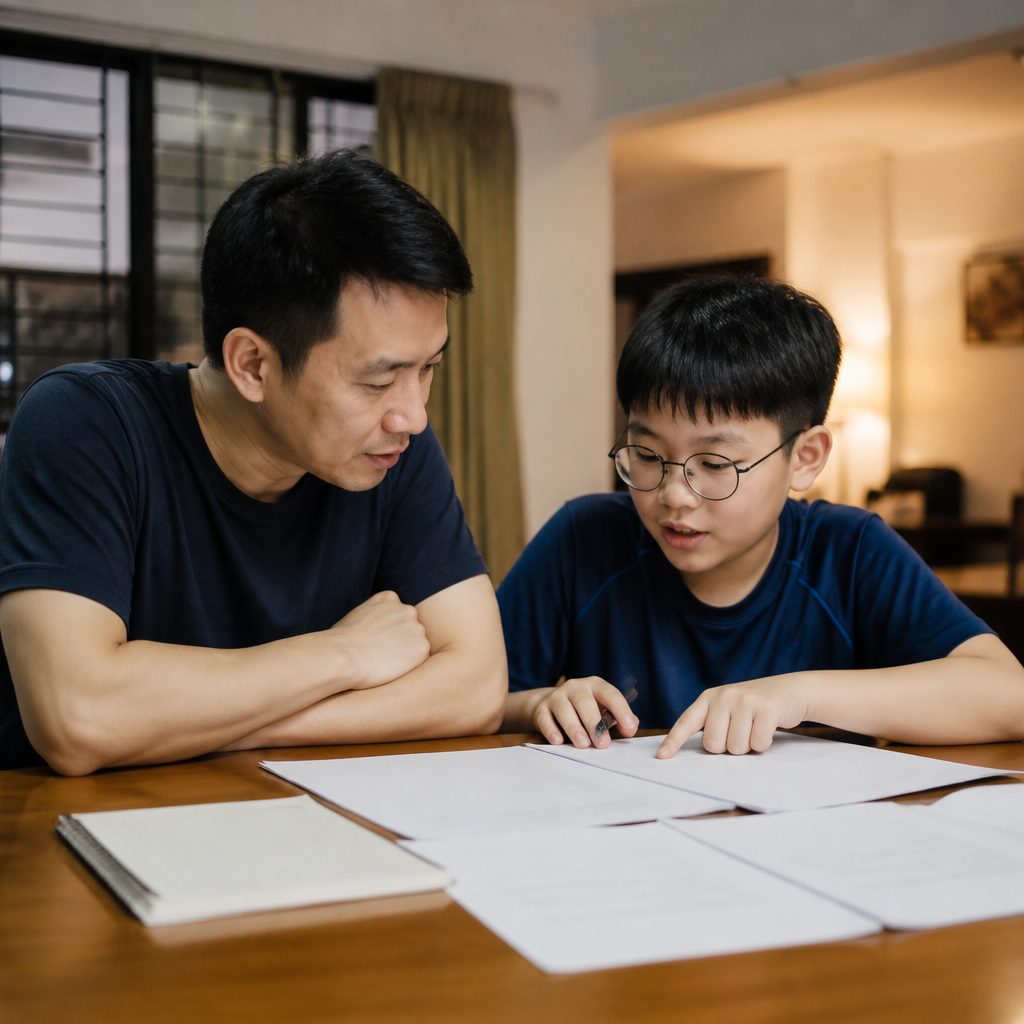
Try one short passage on a weekday and one longer passage at the weekend. Sit together for the first few blanks, then let your child explain one answer aloud: “I chose ‘through’ because they walked from one side of the tunnel to the other.” That explanation shows whether the answer came from understanding or luck.
Get support when the pattern is unclear
If your child repeatedly struggles despite regular practice, the issue may be more specific than “weak English”. Some pupils read fluently but miss grammar clues. Others understand the passage but have limited vocabulary, or become anxious and rush.
A focused tutor can observe these patterns and tailor practice instead of simply giving more worksheets. If you would like support with English comprehension, revision habits and confidence, learn more about our Primary English tutors. Tuition is most helpful when it builds a child’s thinking process and does not promise instant results.
Frequently Asked Questions
How much cloze practice should my child do each week if they are already tired from school?
For most pupils, two thoughtfully reviewed passages are enough to start. A Primary 3 child may work on shorter sections, while a Primary 6 pupil can complete timed practice occasionally. Quality matters more than completing ten passages without understanding the corrections.
Should my child memorise vocabulary lists when cloze passages keep going wrong?
Vocabulary lists can help when words are learned in phrases and contexts. Memorising “reluctant” alone is less useful than noticing, “She was reluctant to join the game because she felt shy.” Cloze passages test whether pupils can use words appropriately, not merely recognise them.
What should I do when my child’s open-ended cloze answer seems reasonable but is marked wrong?
Ask whether the word fits the full paragraph, the grammar and the exact phrase expected. Sometimes an answer is sensible but too broad, uses the wrong form or does not collocate naturally with the words around it. Review it without saying the child “should have known”.
Is cloze passage work important for PSLE English preparation?
It develops skills useful across English assessment, including grammar control, vocabulary in context and careful reading. However, it should sit alongside reading, writing, oral practice and comprehension, rather than taking over the entire revision schedule.
Build Cloze Confidence One Clue at a Time
The most effective way to help a child with English cloze passages is not a secret word list. It is a dependable sequence: read the whole passage, notice context and grammar clues, predict the missing word, check tense and word form, reread for meaning, then review spelling.
When a child learns to explain why a word belongs in a blank, cloze work becomes less intimidating and more manageable. Keep practice regular, calm and specific, especially during busy school weeks. With targeted error review, consistent reading and the right support, pupils can move from guessing at blanks to making confident, well-reasoned choices.