


Introduction
If you have ever sat beside your child during revision and heard, “This one is just MCQ,” only to see tears or frustration appear a few questions later, you are not alone. For many Singapore parents, MCQ sounds simple at first, until those “easy” marks start slipping away in class tests, weighted assessments, and school exam papers.

MCQ stands for multiple-choice question. In this exam format, students are given a question and several answer options, then they choose the correct one. It sounds straightforward, but in Singapore school exams, MCQs often test more than content knowledge. They also reveal how carefully a child reads, how clearly they understand a concept, and how well they manage pressure and time.
For lower-primary families, MCQ can feel like a new piece of exam language. For upper-primary and secondary students, it often becomes a regular part of papers in English, Math, Science, and sometimes Humanities. Once parents understand how multiple-choice questions work, revision tends to feel less mysterious and more purposeful.
Key Takeaways
- MCQ means multiple-choice question. Students choose the best answer from several options in worksheets, class tests, weighted assessments, and exam papers.
- MCQs appear across many Singapore subjects. English, Math, Science, and some Humanities papers may include objective questions, although the exact format varies by level and school.
- MCQ tests more than memory. A child may know the topic but still lose marks through careless reading, weak elimination skills, or rushing.
- MCQ and open-ended questions are different. MCQs require recognition and comparison of options, while open-ended questions require students to generate and explain answers.
- Good MCQ technique matters. Knowing how to answer multiple-choice questions effectively can help students manage time, spot clues, and make better choices when unsure.
- Parents can help without adding pressure. Short, focused practice and calm review usually work better than late-night drilling.
- Exam formats can change. Always check the latest school instructions and official information from MOE and SEAB.
What MCQ Means In Simple Terms
When people ask what MCQ is, the simplest answer is this: it is a question where the student selects an answer from a list of choices. Usually there is one correct answer, while the other options, often called distractors, are designed to look believable.
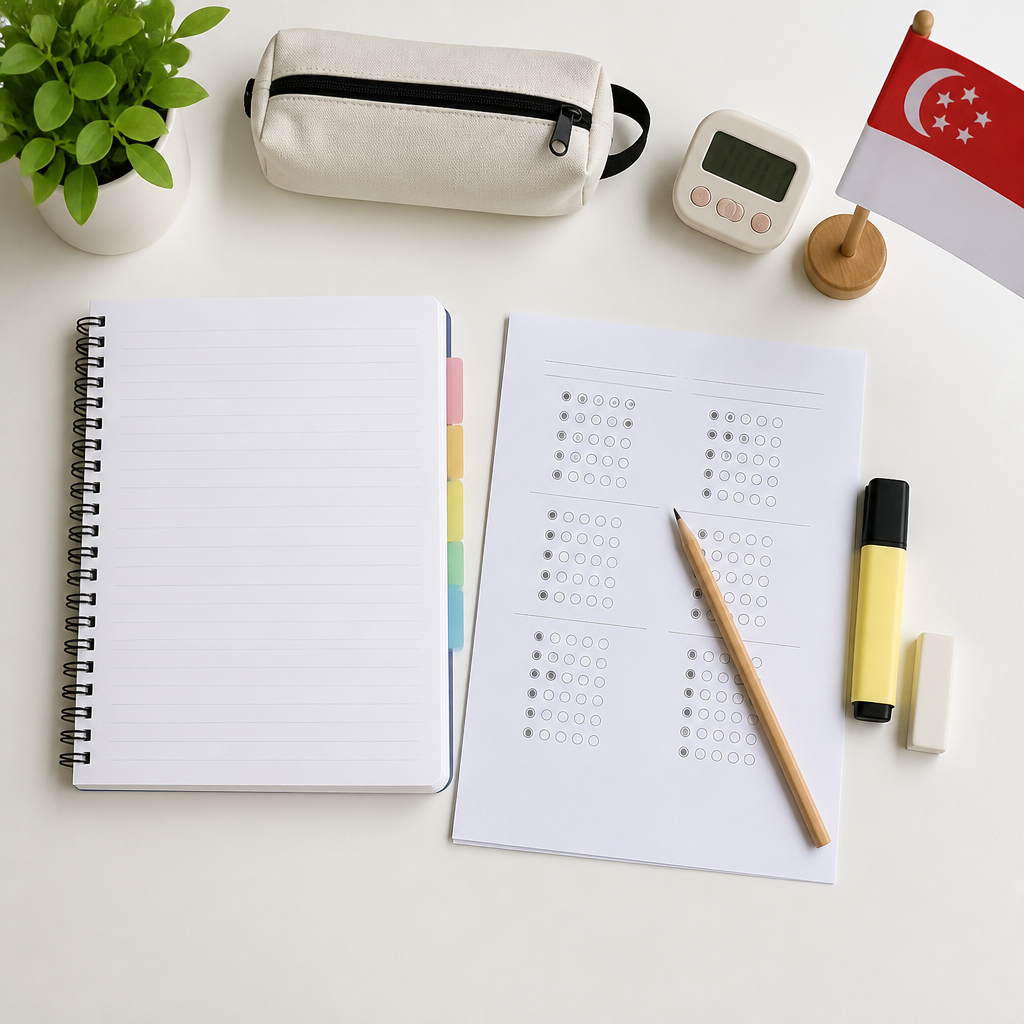
What multiple-choice questions look like
A typical MCQ may look something like this:
Which fraction is equivalent to 1/2?
A. 2/3
B. 3/6
C. 4/10
D. 5/12
The student must pick B. At first glance, this seems easy enough. But in a real exam setting, some children choose too quickly because one option “looks familiar”. That is why MCQ skill is not just about knowing the topic. It also involves comparing the options properly.
Why schools use MCQs
Schools use MCQs because they can assess understanding efficiently. In one paper, teachers can cover many topics, from vocabulary and grammar to scientific concepts or historical facts. It gives a quick picture of whether students can recognise the correct answer and distinguish it from common misconceptions.
For parents, this explains why a child who says, “I studied already,” may still underperform in the MCQ section. Often, the problem is not effort alone. It may be weak question analysis, poor focus, or a habit of guessing before thinking through all the choices.
Where Students See MCQs In Singapore Exams
If you are wondering where MCQs appear in Singapore school exams, the answer depends on the subject and level. Multiple-choice questions are common in many school-based assessments, but not always in the same proportion.
MCQ in primary school
The MCQ format for primary students often appears in English, Mathematics, and Science. In lower primary, the questions are usually shorter and more direct. By upper primary, especially closer to major exams, the questions can become more layered and much less forgiving.
For example, in Primary Science, a child may be asked to choose the best explanation for an observed result. In Math, MCQs may check concepts quickly, but the options often reflect common mistakes, such as wrong units, skipped steps, or place value confusion.
MCQ in secondary school
At secondary level, MCQs may appear in school tests and selected papers depending on the subject. English comprehension tasks may include objective items. Science subjects may test concepts, application, and interpretation of data. Humanities-related papers in some school contexts may use multiple-choice questions in topical tests or revision papers.
Secondary students can underestimate MCQs because they seem faster than structured questions. Then they lose marks because they rush through details, especially when they are already tired from CCA, tuition, and homework.
Why checking the latest format matters
Exam formats can vary by school, level, and subject. Even within the same level, the weight given to MCQs may differ. That is why families should check school circulars, paper guidelines, and official updates from MOE and SEAB.
Preparing for the wrong format can waste effort. A parent who relies only on older practice books or hearsay from other families may end up focusing on the wrong thing.
What MCQs Actually Test
One reason students get confused about MCQs is that they look easier than they are. Choosing from four options feels less demanding than writing a full answer, but multiple-choice questions can still test several important exam skills.
Here is a quick way to see what is really being assessed:
Content knowledge and concept clarity
A student must know the topic well enough to recognise the correct answer. In Science, this could mean understanding evaporation versus condensation. In English, it may mean choosing the word that best fits the sentence meaning. In Math, it may involve identifying the correct method quickly.
Still, content knowledge alone does not guarantee success. Some students memorise definitions but cannot apply them when the question is phrased differently. That is why MCQ performance often shows whether understanding is shallow or secure.
Careful reading and interpretation
Many wrong answers happen because the child did not notice one key word. “Not”, “except”, “best”, “most likely”, and “always” can completely change what the question is asking.
A child may come home saying, “I knew the answer.” Sometimes that is true. They knew the topic, but they answered a different question from the one on the page.
Elimination and decision-making
Knowing how to answer MCQ questions effectively often comes down to eliminating wrong choices. Even when unsure of the exact answer, a student who can remove two clearly unsuitable options improves the chance of getting it right.
A common pattern among students is staring at four options as if all are equally possible. Once they learn to ask, “Which option contradicts the topic?” or “Which one uses the wrong unit?” they become much more accurate and less panicky.
MCQ vs Open-Ended Questions
Parents often ask about the difference between MCQ and open-ended questions because both may appear in the same subject paper, but they demand different thinking habits.
The contrast is easier to see when placed side by side:
How MCQ works differently
In MCQ, the answer is already on the page. The challenge is to identify it correctly. This means students need strong recognition skills, attention to detail, and the ability to compare options carefully.
That sounds easier, but it can create false confidence. A child may think, “I will know it when I see it,” then get trapped by a plausible wrong answer.
How open-ended questions work differently
With open-ended questions, students must produce the answer themselves. In English, they may write a response in their own words. In Science, they may need to explain a process clearly. In Math, they usually show working. This tests not just understanding, but also expression, organisation, and accuracy.
A student who does well in MCQ may still struggle in open-ended work because recognising the answer is different from explaining it.
Why both formats matter
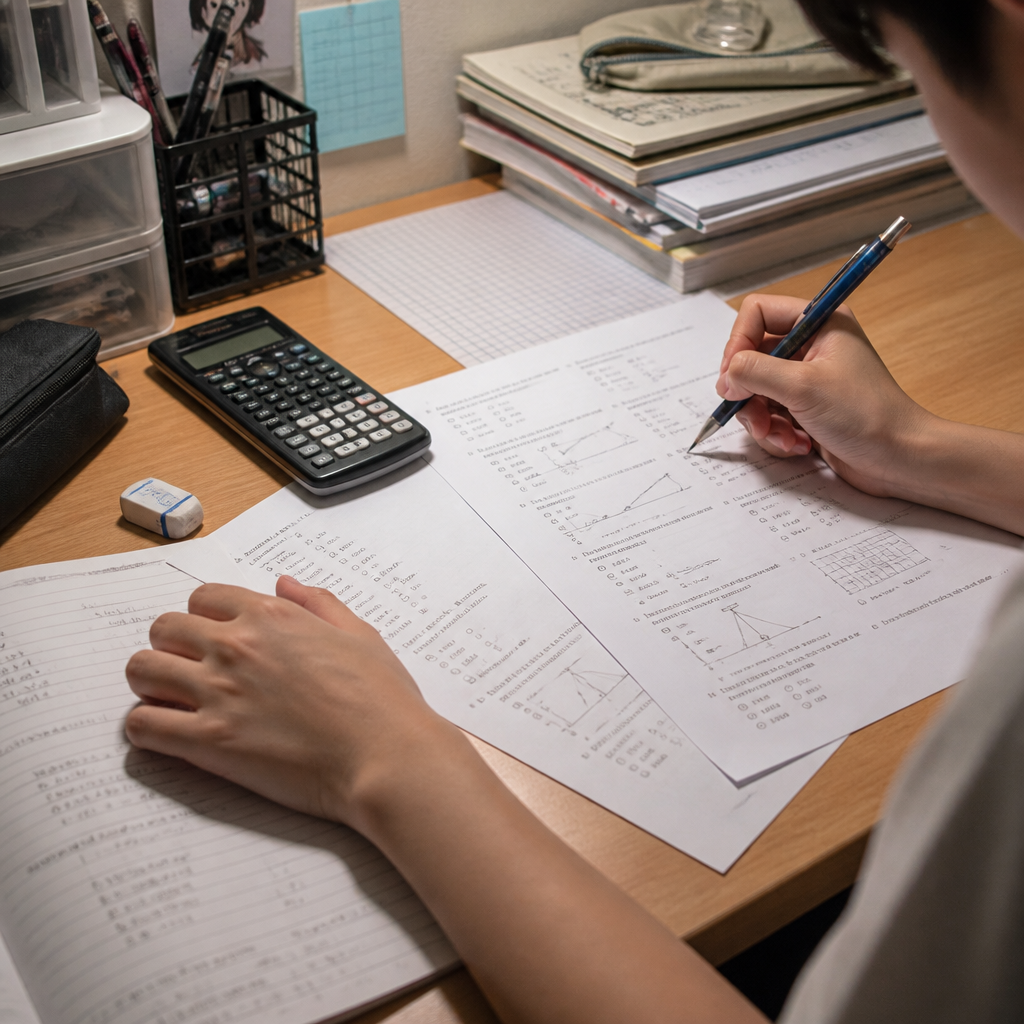
Schools use both formats because they reveal different weaknesses. MCQs can expose carelessness, shaky concepts, and weak exam technique. Open-ended questions reveal gaps in explanation, method, and written expression.
That is why revision should not focus only on one type. If your child is scoring well in worksheets but dropping marks in objective sections, the issue may not be content revision alone. It may be exam technique, pacing, or reading accuracy.
Common MCQ Mistakes Students Make
A lot of frustration around MCQs comes from avoidable errors. You may see your child revise for hours, then come home upset over marks lost to “careless mistakes”.
Reading too quickly
This is probably the most common issue. In English, a student may choose the option that sounds nice rather than the one that best fits context. In Science, they may miss a diagram label. In Math, they may read cm as m.
These are not always lazy mistakes. Sometimes they happen because the child is mentally tired and rushing.
Guessing without elimination
When students feel unsure, many jump straight to guessing. The problem is that random guessing teaches nothing. Better guessing comes after eliminating choices that are clearly wrong.
That small shift matters. It turns panic into reasoning, and reasoning is what helps marks improve over time.
Spending too long on one question
Some students freeze on difficult MCQs because they feel they must solve each one perfectly before moving on. Then easier questions later are rushed.
Learning to mark and return later is often one of the fastest practical improvements.
Overconfidence
Because MCQs look short, some students answer from instinct and skip checking. Stronger students can lose marks not from lack of knowledge, but from assuming the first answer that comes to mind must be right.
If your child needs extra support with exam skills, question analysis, or subject revision, you can learn more about suitable help at Singapore Tuition Teachers.
How To Answer MCQ Questions More Effectively
For families searching for ways to improve MCQ performance, the goal is not to turn every child into a test-taking machine. It is to build calm, reliable habits that reduce unnecessary mark loss.
Read the whole question first
Students sometimes scan the options before understanding the question. That increases the chance of being influenced by familiar-looking words. Reading the full question first helps the brain know what to look for.
Use elimination actively
Crossing out wrong choices is often more effective than trying to “feel” which answer is right. In Math, remove options with impossible values. In Science, eliminate statements that contradict the concept.
This is especially helpful for students who may not know the answer immediately but can still reason their way closer.
Mark and move when stuck
If a question is taking too long, mark it and continue. Coming back later with a clearer mind often helps. This habit also protects confidence and time management.
Check for common traps
Words like “best”, “most accurate”, or “except” matter. Sometimes more than one answer looks partly correct, but only one fully fits the question. A nearly correct answer is still wrong in an MCQ.
Weak MCQ Habits vs Better MCQ Habits
How Parents Can Help With MCQ Practice At Home
Home support can help a lot, but it can also become a source of tension.
Keep practice short and targeted
Ten well-reviewed questions can be better than fifty done mechanically. If your child keeps missing inference questions in Science or vocabulary-in-context items in English, focus there.
Discuss mistakes calmly
Instead of asking, “Why did you get this wrong again?” try, “What were you thinking when you chose this option?” That small shift often reveals whether the problem was misunderstanding, rushing, or confusion between two concepts.
Avoid turning every mistake into a lecture
Some children become so afraid of being wrong that they stop thinking independently. A better approach is to help them notice patterns. If they often miss keywords, train that habit. If they rush, work on pacing.
Match support to your child’s level
The MCQ format for primary students should be introduced gently. Older students may need more support with timing, elimination, and checking patterns of error.
If home revision keeps ending in stress, outside support can sometimes protect both learning and the parent-child relationship. You can explore suitable help at Singapore Tuition Teachers.
Frequently Asked Questions
Is MCQ easier than open-ended questions?
Not always. MCQ can feel easier because the answers are provided, but many students lose marks through misreading, overthinking, or choosing a tempting wrong option.
What does MCQ mean in Singapore school exams for younger children?
For younger children, MCQ usually means choosing the correct answer from several options in subjects like English, Math, or Science. The format is often simpler in lower primary, but students still need to read carefully and avoid rushing.
How can my child improve in MCQ without doing endless practice papers?
Focus on reviewing mistakes, not just increasing quantity. If your child keeps making the same kind of error, such as missing keywords or skipping elimination, targeted correction usually works better than more pages of random questions. Quality of review matters more than volume.
Do all Singapore school exams use MCQ?
No. Some papers include MCQs, while others use short-answer, structured, or open-ended formats. The exact exam structure varies by subject, level, and school.
Should children guess if they do not know the answer?
Blind guessing is not ideal, but educated guessing after eliminating wrong options can be useful. A student who can rule out two bad choices is making a reasoned attempt rather than choosing randomly.
Conclusion
So, what is MCQ? In simple terms, it means multiple-choice questions, a common exam format where students choose the correct answer from several options. In Singapore school settings, MCQs appear across different subjects and levels, and they do more than test memory. They also reveal how well a student reads, interprets, eliminates, manages time, and stays calm under pressure.
Understanding the difference between MCQ and open-ended questions can help families revise more wisely. So can recognising the real reasons children lose marks, from careless reading to weak elimination habits. For parents, the most helpful support is usually calm, targeted, and realistic.
Because exam formats can vary, do check the latest school instructions and official updates from MOE and SEAB. If your child needs extra support with exam skills, question analysis, or subject revision, you can find suitable help for steady, confidence-building practice at Singapore Tuition Teachers.