


You may have seen this before: your child understands the story, can explain why a character is upset, and even has sensible ideas during discussion. Then the essay question appears, and suddenly those ideas feel difficult to turn into convincing paragraphs.
That gap is exactly what this guide addresses. Learning how to write an O-Level Literature prose essay is not about memorising impressive phrases or forcing literary techniques into every sentence. For Singapore O-Level Literature, a strong essay shows that a student can follow the question closely, choose precise evidence and explain why the writer’s choices matter.
Key Takeaways
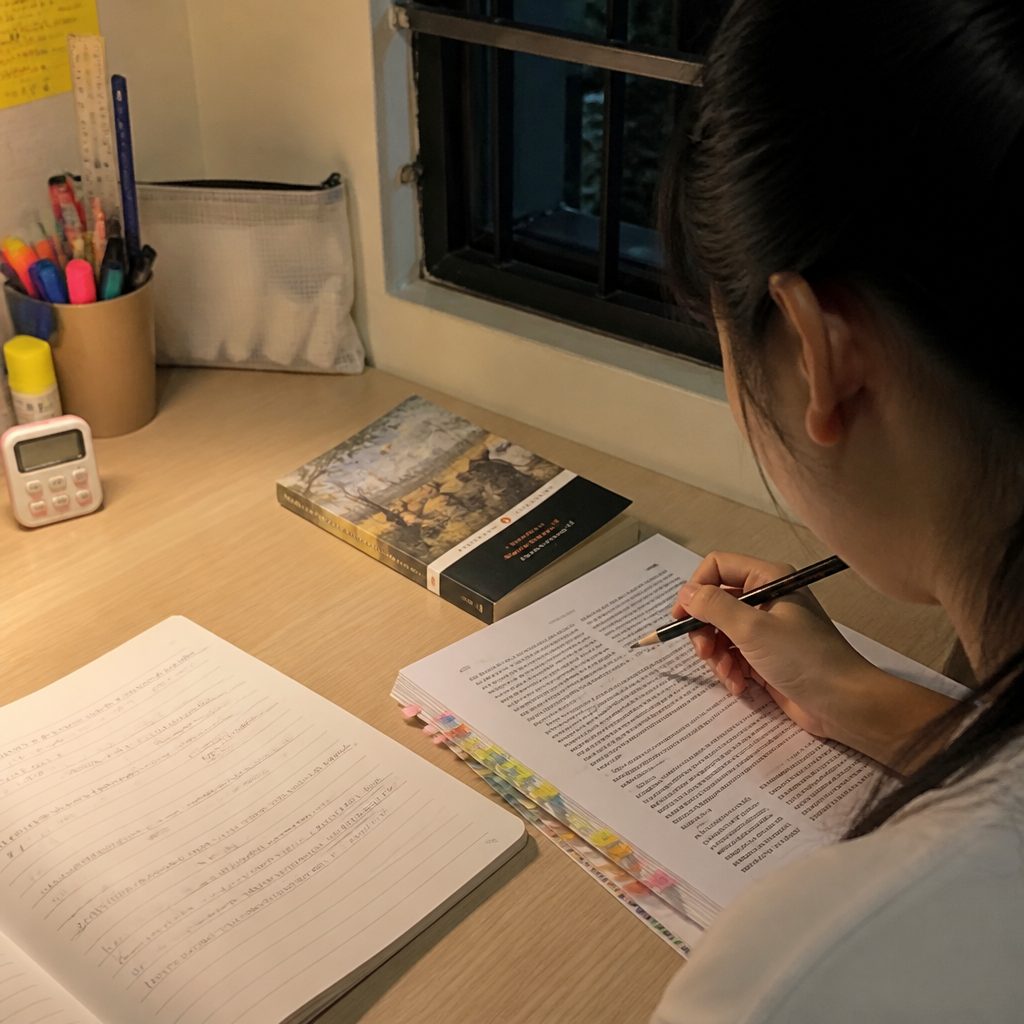
- Answer the exact question first. Before analysing any quotation, identify the key focus, such as tension, relationships or a character’s changing emotions. This keeps every paragraph relevant.
- Annotate for patterns, not random techniques. Notice repeated images, contrasts, word choices and shifts in mood. Repeated references to silence, for instance, may reveal fear, distance or suppressed conflict.
- Build a thesis with an argument. Instead of saying the writer makes a scene sad, explain how the writing moves from quiet discomfort to emotional isolation.
- Use short quotations purposefully. A few well-chosen words are easier to analyse than a long copied sentence. Zoom in on a verb, image or contrast that supports your point.
- Explain effects with precision. Do not stop at “this makes the reader want to read on”. Link the writer’s language to the character, situation and exact focus of the question.
- Plan before writing under timed conditions. A five-minute plan can prevent three paragraphs from repeating the same idea with different quotations.
Understand What the Question Is Really Asking
For Singapore O-Level Literature, prose questions test more than whether students remember the plot. They need to show an informed response to the text, close analysis of the writer’s language and structure, and an argument that stays focused on the question.
The current Literature in English syllabus is published by SEAB under subject code 2065. Paper formats, set texts and assessment details can change, so check the latest SEAB O-Level syllabus page and your school’s instructions. Your teacher remains the best guide for the specific set text and question types your child is preparing for.
What prose essay questions usually ask you to do
A question may ask how a writer makes a moment “striking”, a character “sympathetic”, or a relationship “disturbing”. These are not decorative words. They tell the student exactly what to explore.
How does the writer make this moment of disagreement between the father and daughter so tense?
The essay should not become a general character profile of either person. It needs to show how the disagreement develops tension in this moment. Perhaps the father’s clipped replies create pressure, the daughter avoids answering, and the setting feels unusually still. Those observations become useful evidence.
Why students lose marks despite knowing the text
Tutors often notice that students memorise model answers, then try to fit them into every question. The quotations may be accurate, yet the essay still feels disconnected because it is answering a prepared topic rather than the question on the page.
Another common pattern among students is technique-hunting. Labelling something as a metaphor or alliteration earns little on its own. In prose analysis, the more important question is: why does this particular choice matter here?
Read the Passage With a Clear Purpose
When the clock is running, it is tempting to start writing immediately. Yet that often leads to a vague first paragraph and an essay that drifts. A few minutes spent making the question and passage manageable can save much more time later.
Turn the question into a working focus
Underline the central task word and the part of the text that must be addressed. Then rephrase the question in simple language.
For the disagreement question, a useful working focus could be: “How does the writer make the argument feel increasingly uncomfortable and emotionally dangerous?”
That simple rewording gives the essay direction. It also helps students avoid merely retelling who said what.
Annotate what changes
Effective prose analysis begins with noticing movement. Rather than underlining half the passage, look for details that answer the question.
After CCA or a long day of school, annotation can feel like extra work. But it makes the writing stage easier because the quotations are already grouped by idea.
Build an Argument That Guides the Reader
A reliable O-Level Literature prose essay structure has an introduction, several analytical body paragraphs and a focused conclusion. It should not feel like a rigid template. Think of it as a clear route through the student’s argument.
Write a thesis that shows development
The introduction can be brief, but it needs a real argument. Avoid a broad statement such as:
The writer uses many techniques to make the disagreement tense.
A stronger thesis is:
The writer makes the disagreement tense by showing the father’s controlled anger, the daughter’s increasingly evasive responses and the suffocating silence that follows their exchange.
This answers “how”, offers clear paragraph directions and shows that the tension builds rather than remaining flat.
Plan distinct paragraphs
Before writing, list two or three points in the order they appear in the passage.
This is stronger than writing one paragraph on “language”, one on “imagery” and one on “tone”. Techniques are tools, not paragraph topics. Each paragraph needs a different claim about the question.
Turn Evidence Into Insightful Analysis
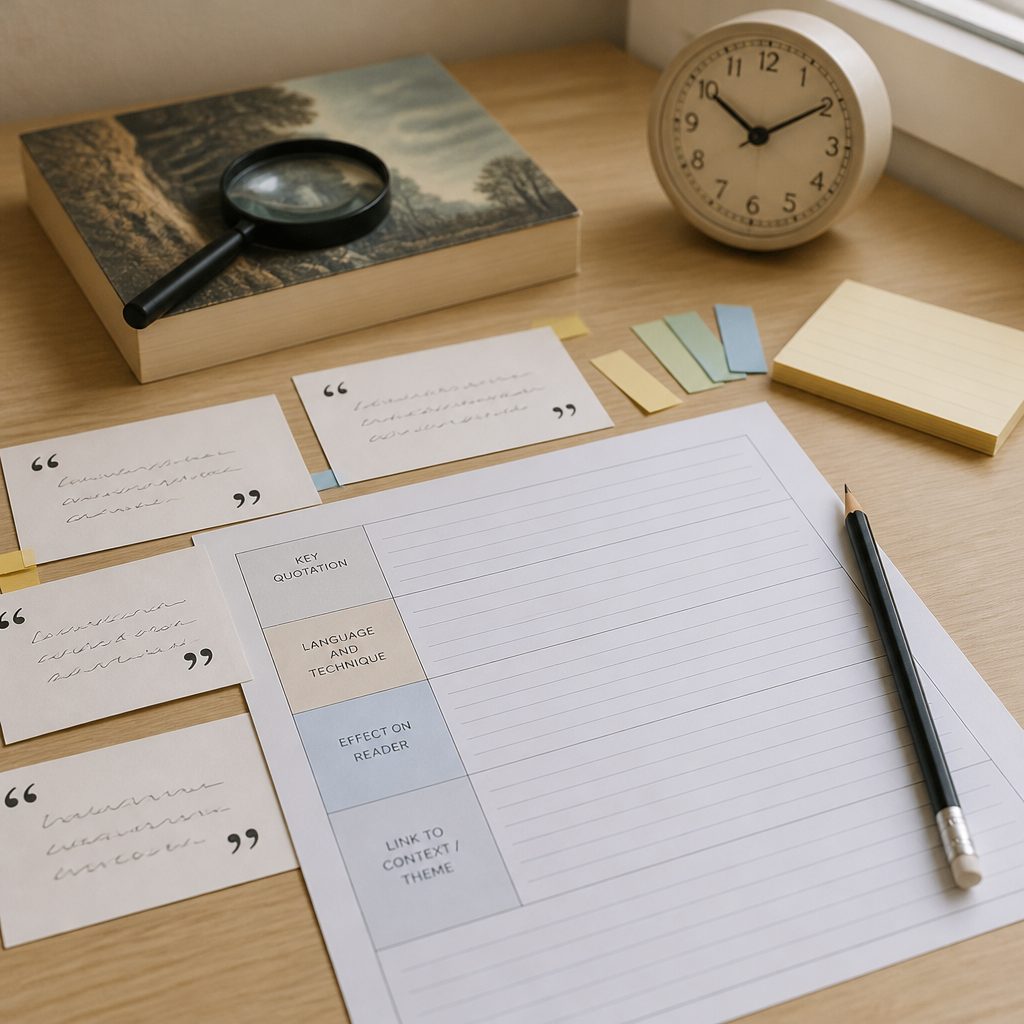
A strong paragraph moves from claim to evidence to explanation, then returns to the question. The explanation should take up more space than the quotation.
Use a practical paragraph framework
When a student is unsure how to begin, this sequence can keep the paragraph moving.
The father’s speech makes the disagreement tense because his anger is controlled rather than openly explosive. His command, “Sit down”, is brief and uncompromising. The imperative leaves the daughter with no room to respond as an equal, suggesting that he is using authority to silence her. His restraint is unsettling because it makes the reader anticipate a stronger outburst, intensifying the pressure in the room.
Notice that “imperative” is not the main point. The analysis explains how the command affects the power balance and builds tension.
Analyse prose without overclaiming
When learning how to analyse prose, students sometimes push an interpretation further than the words can support. A creative reading is welcome, but it must remain grounded in the passage.
If a character “clutches” a bag, the verb may suggest nervousness, protectiveness or a need for control. Saying it proves she has “a traumatic childhood” goes too far unless the wider text supports that claim.
Words such as “suggests”, “implies”, “perhaps reflects” and “reinforces” are not weak. They show that literary interpretation needs evidence, not guesswork.
See the Method in a Short Example
Consider this invented extract:
“You promised,” Mara said. Her father kept his eyes on the newspaper. “Did I?” he replied. The clock ticked loudly between them.
Question: How does the writer make this exchange uncomfortable?
Move from annotation to argument
The student might notice Mara’s direct accusation, the father’s refusal to look at her, his dismissive reply and the loud clock in the silence between them.
A possible thesis is that the writer makes the exchange uncomfortable through Mara’s hurt accusation, the father’s deliberate avoidance and the oppressive silence around them.

Read closely without losing the main point
The father makes the exchange uncomfortable because he refuses to meet Mara’s accusation directly. He “kept his eyes on the newspaper”, a detail that suggests deliberate avoidance rather than simple distraction. By focusing on an object instead of his daughter, he appears unwilling to acknowledge her hurt. His curt response, “Did I?”, further dismisses her claim and makes the reader feel the imbalance between Mara’s emotional openness and his cold control.
This is the level of detail to aim for. It does not list every possible technique. It chooses evidence, explains it clearly and stays focused on discomfort.
If quotations still blur together during revision, targeted feedback can be useful. Literature tutors and personalised subject support can help students turn observations into sharper analysis rather than simply giving them more notes to memorise.
Avoid Habits That Weaken Good Ideas
The most useful O-Level Literature essay tips are often about avoiding habits that seem productive but weaken the answer.
Common mistakes to correct
A final checklist for timed practice
- Have I answered every key word in the question?
- Does my introduction give a real argument, not a topic announcement?
- Does each paragraph make a distinct point?
- Have I used short, accurate quotations?
- Have I explained specific words and their effects?
- Have I linked my analysis back to the question?
- Have I left time to check names, quotation accuracy and paragraph clarity?
Frequently Asked Questions
How many quotations should I use in an O-Level Literature prose essay when I panic and start copying whole lines?
Use enough to prove each point, usually several short quotations across the essay. Quality matters more than quantity. One carefully analysed verb can be stronger than three copied sentences with no explanation.
Must I identify literary devices in every paragraph to score well?
No. Name a technique only when it helps explain the writer’s effect. Clear analysis of dialogue, contrast, a verb or narrative description is often more persuasive than a long list of labels.
What if I cannot think of a sophisticated interpretation during the exam?
Start with what the words literally show, then ask why the writer may have chosen them. A precise observation about silence or body language is stronger than an unsupported complicated claim.
Should I memorise model essays for Singapore O-Level Literature?
Memorise useful quotations and practise analytical habits, not entire essays. Model essays can show what a strong paragraph looks like, but a memorised answer may not fit the exam question and can leave the writing unfocused.
Conclusion
To write an O-Level Literature prose essay well, begin with the exact question, annotate patterns that support it and build a thesis with clear, separate points. Then use short quotations to show how language, dialogue, description and structure shape the reader’s response.
The goal is not to sound complicated. It is to make each observation convincing. With regular timed practice, prose analysis becomes far less mysterious. Build stronger prose-analysis skills and greater confidence for Literature revision by exploring Literature tutors and personalised subject support.