


Introduction
You read through your child’s English work and think, “The ideas are there, so why are the marks still slipping?” It is a familiar frustration for many Singapore parents. Your child may understand the passage, know the vocabulary, and even have something meaningful to say, but grammar mistakes keep getting in the way.
If you are wondering how to improve grammar in English for your primary school child, you are not alone. Many parents notice the same pattern. Their child can recognise vocabulary, understands the passage quite well, and even has ideas for composition, but the marks keep dropping because of grammar mistakes, weak sentence structure, tense errors, or careless slips in subject-verb agreement.
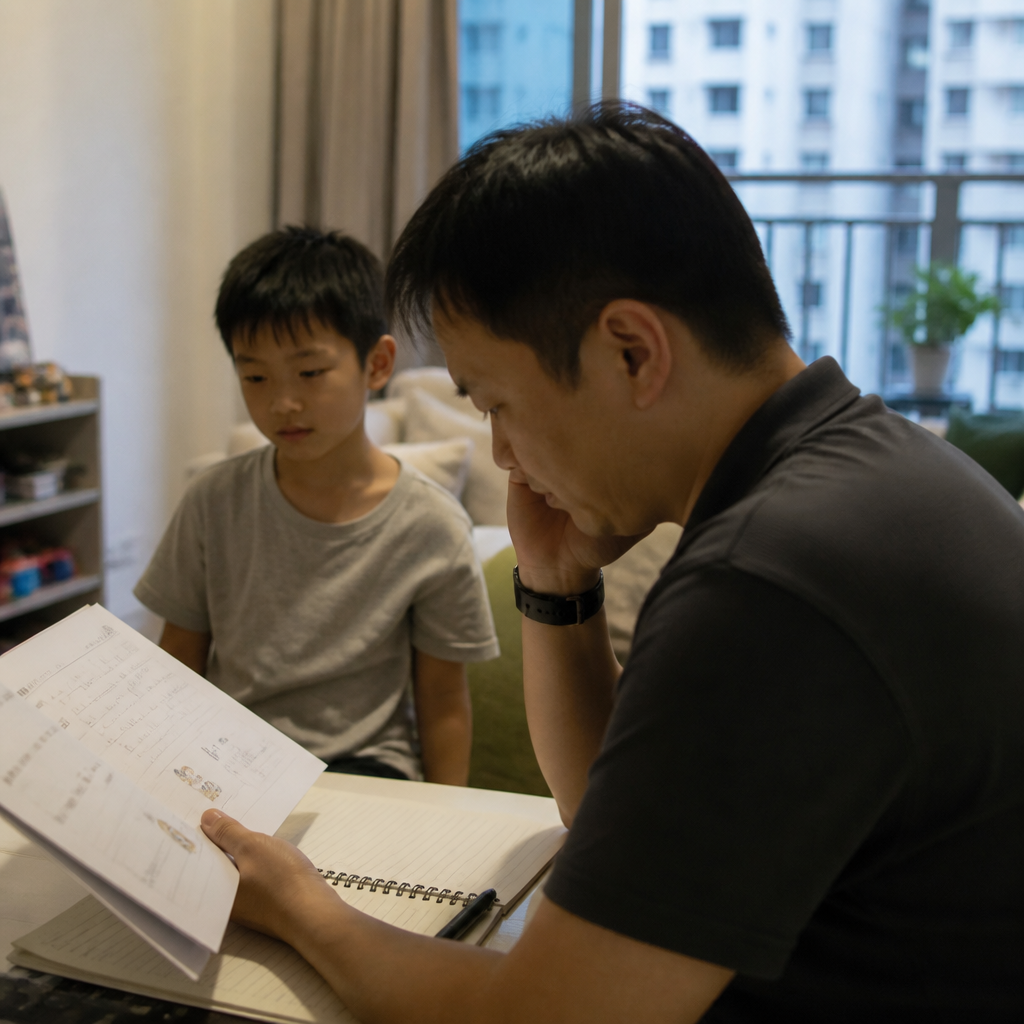
This can feel especially frustrating when your child seems to be trying. It is common to see a Primary 3 child mixing up is and are, or a Primary 6 child writing a decent composition but losing marks for inconsistent tenses and clumsy sentences. In Singapore schools, grammar affects more than just one small section. It can influence editing, synthesis and transformation, comprehension, situational writing, and composition quality. Under the MOE Primary English syllabus, grammar is part of building strong language use, not just memorising rules. For parents trying to improve primary school English grammar in Singapore, the key is to work on grammar in daily, manageable ways that match your child’s age and school demands.
Key Takeaways
- Grammar improves best through patterns, not just correction. Children learn faster when they repeatedly see and use correct sentence structures in reading, speaking, and writing, instead of only being told what is wrong.
- Lower primary and upper primary need different support. A Primary 1 child may need help forming complete sentences, while a Primary 5 or 6 child often needs work on tense control, sentence variety, and exam accuracy.
- Too much correcting can backfire. If every sentence becomes a scolding session, children may shut down or rush through work in fear, which often creates even more careless grammar mistakes.
- Short, targeted practice works better than long drilling sessions. Ten to fifteen minutes on one grammar point is usually more effective than an hour of random worksheets.
- Grammar affects major exam components. In primary English, grammar matters in editing, synthesis and transformation, comprehension, situational writing, and composition.
- Reading aloud and sentence discussion are powerful home tools. Some of the best ways to teach English grammar at home are simple, consistent habits like noticing sentence patterns during reading and fixing one or two errors together.
- Extra support may be useful when mistakes are persistent. If your child keeps repeating the same errors despite practice, a primary English tutor for grammar improvement in Singapore can provide more personalised guidance.
Why Grammar Matters In Primary English Exams
Parents sometimes think grammar is just about worksheets with blanks to fill in. In reality, grammar shows up across almost every part of primary English. That is why children can work hard and still not see strong results if their grammar remains shaky.
Grammar affects more than one section
In lower primary, grammar shows up in sentence construction, basic writing, and classroom worksheets. By upper primary, the impact becomes much bigger. Editing tests a child’s ability to spot errors quickly. Synthesis and transformation require control of sentence structure. Composition marks are affected when ideas are good but the writing is grammatically awkward or inaccurate.
A common scene many parents know well is this. Your child finishes a composition and says, “I already wrote a lot.” Then you read it and find three tense shifts in one paragraph, missing articles, and sentences that sound incomplete. The content may be there, but the grammar weakens the overall impression.
PSLE makes grammar weaknesses more obvious
For upper primary pupils, especially those approaching PSLE, grammar errors become more costly. Under exam pressure, children often fall back on their weakest habits. A child who knows the rule may still write “She walk to school yesterday” because they are rushing or because the pattern is not secure yet.
If you want to understand the broader curriculum expectations, it is useful to check the official syllabus at MOE and PSLE exam information at SEAB. These references show that grammar is part of language application, not isolated memorisation.
How To Improve English Grammar At Home Without Daily Battles
Most parents asking how they can help with English grammar are not looking for more stress at home. They want something realistic. After school, CCA, dinner, spelling, and homework, many children are already stretched. If grammar practice feels like punishment, resistance usually starts very quickly.
Keep practice short and specific
The most helpful home practice is often narrow and focused. Pick one area at a time.
- Subject-verb agreement. Work on simple contrasts like “The boys are running” versus “The boy is running”.
- Tense consistency. Ask your child to change a short paragraph into past tense or present tense.
- Articles. Practise a, an, and the in short sentences.
- Sentence completion. Give a short phrase and ask your child to turn it into a full sentence.
Instead of making your child do three pages of mixed questions, spend 10 minutes on one error pattern. If your Primary 4 child always writes “He go”, prepare six short sentences only on singular subjects and present tense verbs. Focused practice is easier to absorb than random drilling.
Correct selectively, not aggressively
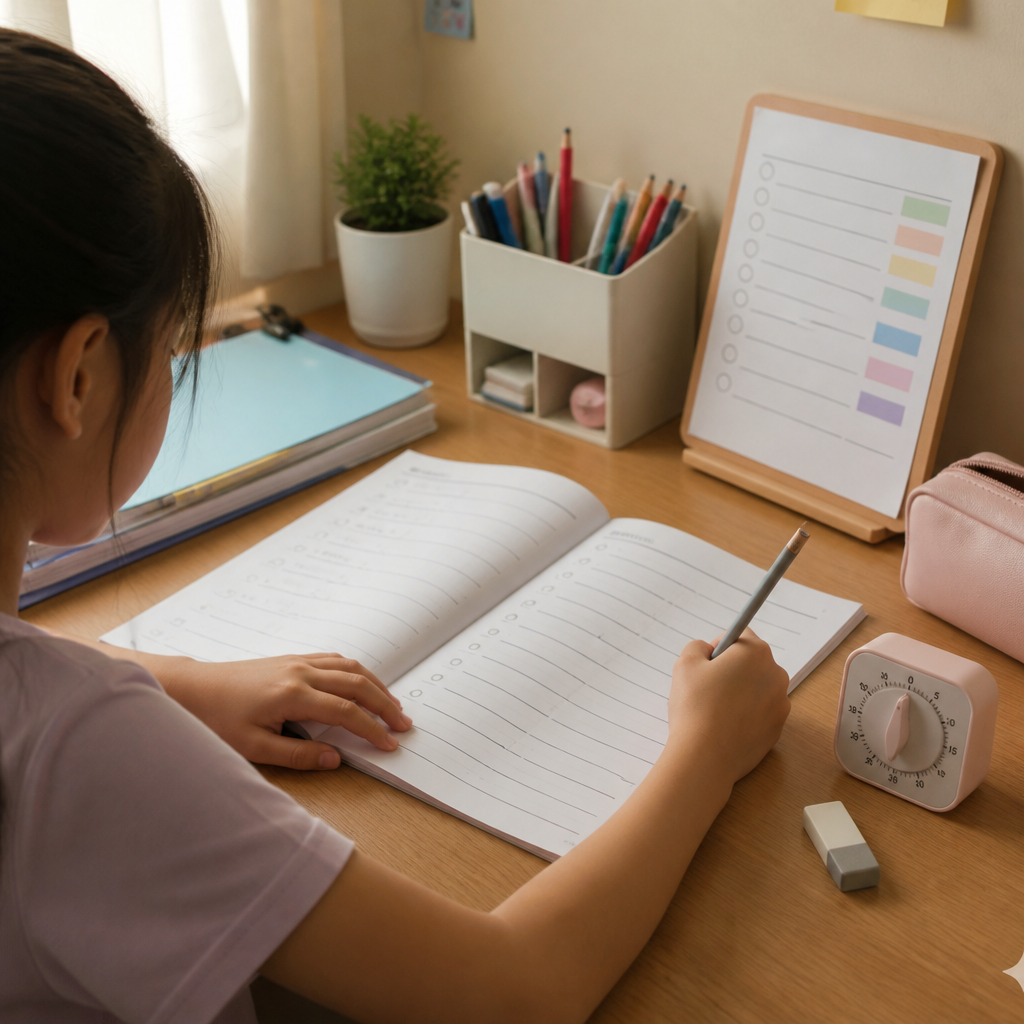
Some children stop trying when every line is marked wrong. That is why one of the best ways to teach English grammar at home is to choose one or two correction targets at a time. If your child’s composition has many errors, do not attack all of them at once. Focus on the most repeated issue.
A calmer line like “Today let’s only look at past tense,” often works better.
That usually lands much better than turning the whole piece into a long list of mistakes. Selective correction protects confidence while still building accuracy.
Let your child explain the correction
After correcting a sentence, ask, “Why is it walked and not walk?” Even a simple answer like “because it already happened” shows understanding.
If your child cannot explain it, the rule is probably not secure yet. That tells you more than whether they got one worksheet question right.
Helping Lower Primary Children Build Grammar Basics
Lower primary children need a gentler, more concrete approach. If a Primary 1 or Primary 2 child is still learning to read fluently, abstract grammar explanations often do not work well. At this stage, grammar should feel connected to speaking, reading, and building complete sentences.
Focus on complete sentences first
For younger children, grammar often breaks down because their sentence sense is still developing. They may write fragments like “Went to the park” or “Because he was tired.” Before drilling complex rules, help them build full thoughts.
You can do this orally. If your child says, “Playing at playground,” reply with, “Can you say it as a full sentence?” Guide them towards “I am playing at the playground.” It sounds simple, but it builds sentence structure naturally.
Use reading aloud to build grammar instinct
One effective form of English grammar practice for primary students in Singapore is reading aloud and pausing to notice sentence patterns. Choose short storybooks or school readers. Read one sentence, then ask a simple question like, “Why do we say ‘she is’ and not ‘she are’?”
You are not aiming for a mini lecture. You are helping your child hear what sounds right.
Practise with tiny rewrites
Take one short sentence and change one part. This makes grammar feel manageable.
This is often more useful than handing over a thick assessment book and hoping for the best.
Helping Upper Primary Children Apply Grammar in Exams
Upper primary children usually know some grammar rules already. The challenge is applying them consistently in exams, especially when they are juggling comprehension, vocabulary, and writing under time pressure.
Target the most common grammar problems
If you are trying to improve primary school English grammar in Singapore, these are recurring upper primary trouble spots seen in many school papers.
A practical way to help is to keep an error notebook. Every time your child gets back a worksheet, composition, or test, write down repeated mistakes by category. After two or three weeks, patterns usually appear.
Connect grammar practice to composition and comprehension
Upper primary grammar should not be isolated from exam tasks. If your child is working on composition, check one paragraph just for tense consistency. If they are doing comprehension open-ended questions, review whether they copied the answer into a grammatically complete sentence.
This matters because some children lose marks not from misunderstanding the passage, but from answering in broken English.
Be careful with memorised model writing
Some pupils sound polished only because they memorised fancy phrases. Under pressure, the grammar collapses around those phrases. Clear, accurate grammar is better than overdecorated writing.
Best Ways To Teach English Grammar Through Reading, Speaking, And Writing
Parents often picture grammar improvement as worksheet drilling. Worksheets can help, but they are not enough on their own. Children need to see grammar working in real language.
Use reading as a grammar lesson without making it feel like one
When reading with your child, point out one useful pattern only. For example, if a story says, “The children were laughing loudly,” ask, “Why do we use were here?” Keep it light. The point is to help your child notice how correct English sounds and looks.
Build oral grammar through casual conversation
Many grammar issues appear in speech first. If your child often says “Yesterday I go”, there is a good chance the same mistake appears in writing. Gentle recasting works well. Instead of saying “Wrong”, reply naturally, “Oh, yesterday you went to Grandma’s house?”
This is one of the most overlooked ways parents can help with English grammar. It is low stress, frequent, and especially useful for younger children.
Make writing corrections active
Do not simply circle mistakes and give the correct answer. Ask your child to rewrite the sentence. For example, if they wrote “The girls was happy,” ask, “Can you fix this sentence and read it aloud?” Active correction is more memorable than passive copying.
If home revision is becoming tense, especially before weighted assessments or PSLE prelims, some families find it helpful to get outside support. A tutor can reduce parent-child friction while giving focused grammar help. You can learn more about our tutors if your child needs personalised support.
When Grammar Drills Help And When They Backfire
Grammar drills do have a place. The trouble starts when drilling becomes random, excessive, or disconnected from actual mistakes.
Good drills are targeted and brief
Useful English grammar practice for primary students often includes editing exercises, sentence transformation, cloze passages, and short correction tasks. These work best when linked to real errors your child is making.
For instance, if your Primary 5 child keeps missing subject-verb agreement in editing, let them do five editing sentences a day with that exact focus. That is more efficient than making them complete a full mixed-practice paper every night.
Too much drilling can create careless habits
Some children do so many grammar worksheets that they start working on autopilot. They rush, guess, and treat grammar as a speed task. A better approach is slower review. After each drill, ask your child to explain two answers. If they cannot, the worksheet may be training guessing more than understanding.
School fatigue is real
By the time your child gets home after a long school day, grammar drilling late at night may not produce good learning. Timing matters. Weekend morning revision is often more effective than tired weekday-night drilling.
When To Consider Extra Grammar Support
Not every child with grammar mistakes needs tuition. Some improve well with steady home support and school feedback. But there are situations where extra help makes sense.
Signs your child may need more personalised support
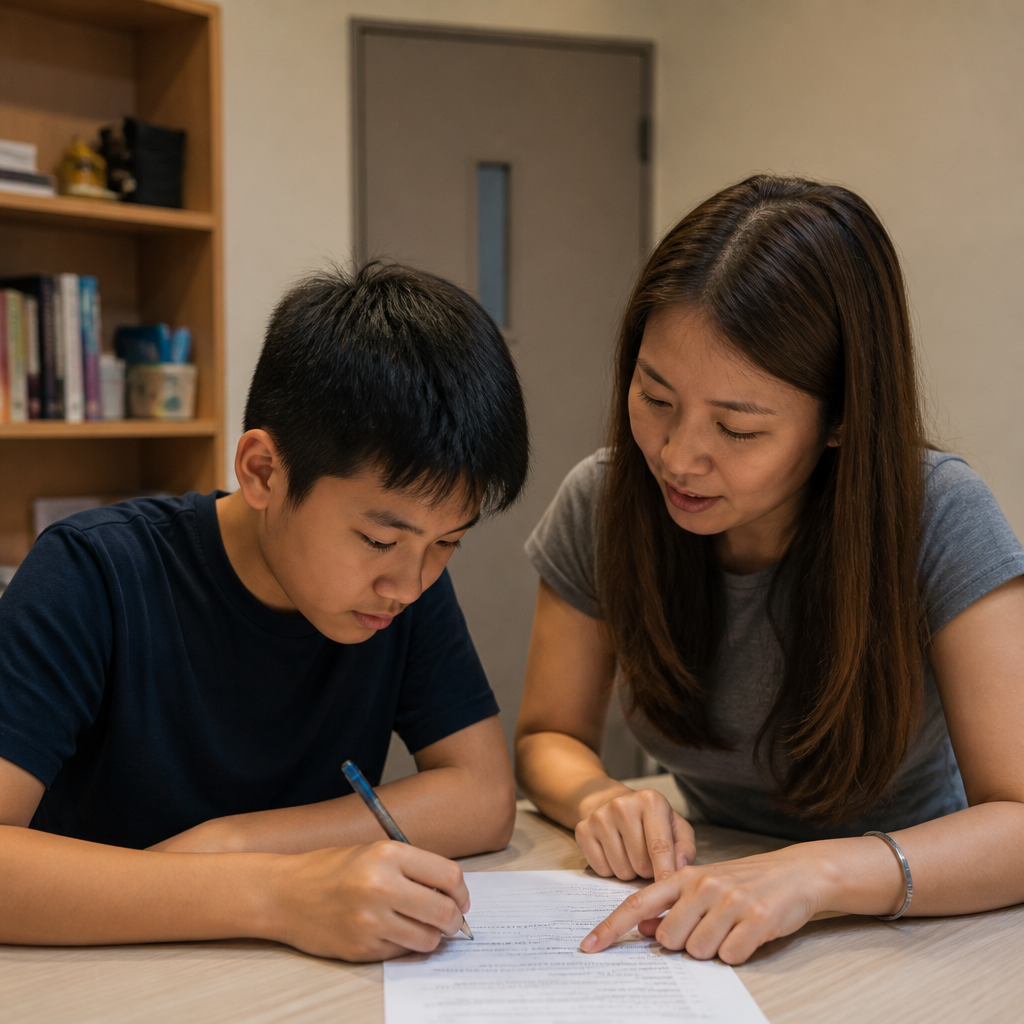
A good primary English tutor for grammar improvement in Singapore should not just assign more worksheets. The right tutor identifies recurring patterns, explains them clearly, and gives guided practice at the child’s level.
Tuition is support, not a magic fix
It helps to stay realistic. A tutor can clarify weak areas and provide structure, but grammar improvement still depends on repetition and application. If a child attends class once a week but never reads, writes, or reviews corrections, progress may stay slow.
That said, some families do notice a real difference when grammar support becomes less emotional. If you would like that kind of support, you can explore English tuition options here.
Frequently Asked Questions
How long does it take to improve grammar in English for a primary school child?
It depends on the depth of the problem. If the issue is mostly careless mistakes, improvement can happen within a few weeks of focused correction. If your child has weak sentence foundations or long-standing tense confusion, progress may take a few months of regular practice.
Should my child memorise grammar rules, or is that not enough for exams?
Some rules are worth knowing, especially in upper primary, but memorisation alone is not enough. A child may recite the rule for subject-verb agreement and still write the wrong form during composition. What matters more is repeated usage in reading, speaking, and writing.
What can I do if my child hates grammar practice and shuts down every time?
Start smaller. Use short oral corrections, quick sentence rewrites, or reading-based noticing instead of long worksheets. Children who dislike grammar often respond better when the practice feels achievable and not like punishment.
Why is my child still making grammar mistakes after doing so many assessment books?
This is very common. Many children complete exercises without fully understanding the pattern, or they do mixed practice without enough focus on their weakest areas. Quality of correction matters more than quantity of worksheets.
Can a tutor help if grammar is affecting both composition and comprehension marks?
Yes, especially if the tutor works on grammar in context rather than isolated drills only. When grammar support is linked to editing, comprehension answers, and composition writing, children usually see more meaningful improvement.
Conclusion
Figuring out how to improve grammar in English for primary kids is rarely about finding one perfect worksheet or one strict rule. In most cases, improvement comes from noticing patterns, correcting the right mistakes, and making practice consistent without making home revision miserable.
Lower primary children need simple sentence-building and lots of exposure to correct English. Upper primary pupils need more focused work on tense control, sentence structure, and exam application in editing, comprehension, and writing.
If your child is making repeated grammar mistakes, do not panic, and do not assume they are careless or not trying. Very often, they need clearer practice, calmer correction, and support that matches their level. If you feel they would benefit from more personalised help, you can learn more about our tutors.