


Introduction
You know the scene. A child sits down on Sunday night, draws up a neat revision timetable, colour-codes everything, and feels very motivated. By Wednesday, homework has piled up, tuition has run late, CCA has drained whatever energy was left, and that “perfect” plan is already being ignored.
If you are trying to figure out how to make a study schedule that your child, or you, can actually follow, the struggle is very real. Many students start with good intentions, then give up not because they do not care, but because the schedule was never built for real school life in the first place.
In Singapore, this gets even more intense during weighted assessments, PSLE, O-Levels, and prelims. A study timetable that works on paper but ignores real routines usually collapses fast. The goal is not to create the most impressive revision plan. The goal is to create one that survives busy weekdays, tired evenings, and changing school demands.

This guide shows you how to make a study schedule that is realistic, flexible, and exam-focused. We will cover how to list subjects, prioritise weak topics, break revision into weekly blocks, balance tuition and homework, build in rest, and adjust the schedule closer to exams.
Key Takeaways
- Start with real time, not ideal time. A workable study plan begins with the hours you genuinely have after school, tuition, CCA, dinner, and rest, not the hours you wish you had.
- Plan by subject and topic, not just by day. “Study Science” is too vague. “Revise electricity open-ended questions” is easier to follow and much more useful when exams are near.
- Weak subjects need more slots, but not all your slots. A better revision timetable gives extra attention to weak areas while keeping other subjects warm.
- Homework and revision must be planned together. If daily school work is not accounted for, the study schedule usually fails by midweek.
- Leave buffer time every week. Catch-up slots make the plan more resilient when there is a surprise test, extra worksheet, project deadline, or late CCA dismissal.
- Exam periods need a different timetable from normal school weeks. The best weekly study timetable for a secondary school student in March may not work during prelim season in August.
- Targeted help can make the schedule more effective. Sometimes the issue is not discipline, but not knowing which topics are weak enough to prioritise.
Start With The Week You Actually Have
A lot of students fail at scheduling before they even begin. They build around fantasy hours, not real ones. Monday to Friday looks full of two-hour revision blocks, but actual life gets in the way very quickly.
Map out fixed commitments first
Before planning revision, write down all non-negotiable weekly commitments:
- School hours, including dismissal times that may vary by day.
- Tuition classes, whether they are online or in person.
- CCA, which often affects both travel time and energy levels.
- Religious classes or enrichment.
- Travel time.
- Meal times.
- Sleep time.
This sounds obvious, but many families skip it. Then they wonder why the timetable keeps failing.
A Secondary 3 student may have school till 2.30pm, CCA on Tuesday and Thursday till 6pm, Math tuition on Wednesday night, and Chinese tuition on Saturday morning. That student does not have six free evenings. They may only have two proper revision evenings and a few short weekday pockets.
A common pattern among students is this, they plan as if every afternoon is equally free, then feel guilty when they cannot keep up. If the timetable ignores fixed commitments, it becomes a guilt chart, not a useful plan.
Count usable energy, not just usable hours
Not every free hour is equally productive. A child coming home at 7pm after CCA is not in the same state as a child revising on Sunday morning.
That is why lighter tasks should go into tired slots, while harder tasks should go into stronger ones.
This is where many parents feel torn. You want your child to do more, but you can also see they are stretched. A realistic study plan respects both academic goals and energy levels.
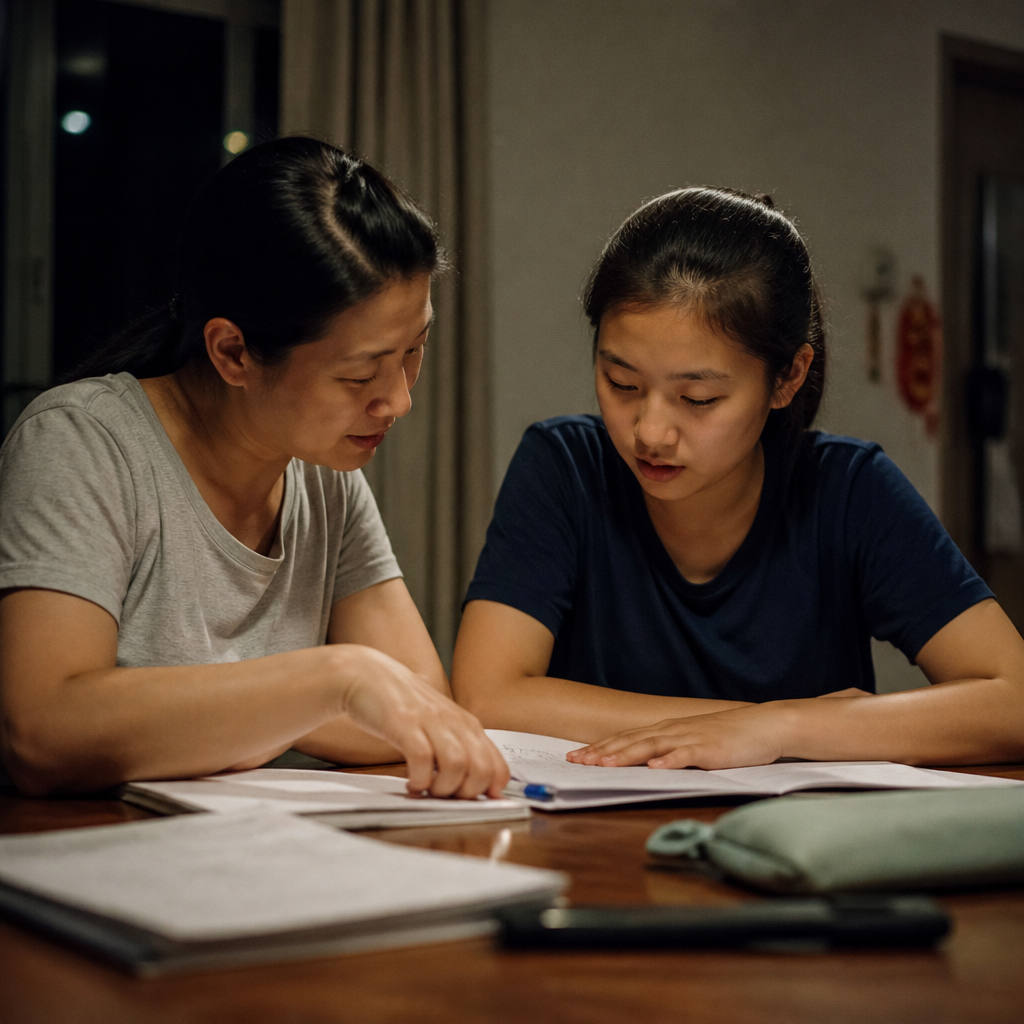
A simple way to test whether a slot is realistic is to ask, “Would my child still be able to start this task on a tiring school day?” If the answer is no, the block is probably too long or too demanding. It is better to schedule one clear 35-minute task that gets done than a 90-minute block that keeps getting postponed.
Fill Each Study Block With Specific Tasks
Once the week is mapped out, the next step is deciding what goes into each block. This is where many timetables start sounding organised, but still stay too vague to be useful.
Break each subject into topics
Do not just write:
- English
- Math
- Science
- Humanities
That may look tidy, but it does not tell the student what to do when the time comes. And when a task feels too broad, procrastination becomes much more likely.
Instead, list the actual topics or task types under each subject.
For a Secondary 4 student preparing for O-Levels:
- English: situational writing, summary, editing.
- E Math: algebra, graphs, vectors.
- Chemistry: mole concept, acids and bases, practical planning.
- Geography: tourism, plate tectonics, data response.
For a Primary 6 student preparing for PSLE:
- English: synthesis, comprehension open-ended, oral reading.
- Math: fractions, speed, heuristics.
- Science: cycles, systems, open-ended keywords.
- Mother Tongue: composition, oral conversation.
Specific tasks are easier to start, easier to measure, and easier to complete. That alone makes a timetable far more workable.
Prioritise weak topics, not just weak subjects
Students often say, “My weak subject is Science.” But usually, the issue is narrower than that. A child may be fine in MCQ but weak in open-ended explanation. Another may know the content but freeze when faced with data-based questions.
Tutors often notice the same pattern. Students spend too much time re-reading entire subjects because it feels productive, while quietly avoiding the exact topics they keep getting wrong.
Instead of giving Science three huge weekly blocks, try this:
- Tuesday, Science open-ended on energy conversion.
- Friday, Science corrections from school worksheet.
- Sunday, Science topical practice on systems.
That is a much better use of time than writing “Science revision” three times and hoping for the best.
One practical method is to review the last three worksheets, tests, or tuition assignments and look for repeated mistakes. If the same type of error appears again and again, that topic deserves a regular slot in the timetable. This makes the schedule evidence-based instead of guess-based.
If your child cannot identify weak topics clearly, this is one area where a tutor can help. A good tutor can pinpoint recurring gaps and build a more targeted weekly plan. If you need extra support with that, you can learn more about our tutors.
Build A Realistic Revision Timetable At Home
The hardest part is not making a schedule. It is making one that still works after school life happens.
Keep weekday sessions short and clear
Weekdays are usually tighter, especially for students juggling school, homework, and tuition. A realistic home study plan often looks like this:
A Secondary 2 student with CCA twice a week may only manage:
- Monday, 40 minutes Math corrections.
- Wednesday, 45 minutes History revision.
- Friday, 30 minutes Science review.
That is still meaningful. Small, consistent study blocks are more sustainable than writing “3 hours revision” on every weekday and skipping all of it.
Leave room for catch-up time
Many families underestimate how often school disrupts routines. There may be surprise class tests, project deadlines, oral practice, or just one bad day where the child comes home overwhelmed.
A good weekly study schedule includes one or two buffer slots:
- Saturday 4pm to 5pm, catch-up slot.
- Sunday evening, unfinished homework or extra revision if needed.
Without buffer time, one missed session can trigger a chain reaction. By Thursday, the student already feels behind and starts avoiding the whole timetable.
Do not force equal time for every subject
Not every subject needs equal time every week. During normal school weeks, revision should follow current school demands, weak areas, and upcoming assessments.
If Literature has no test soon but A Math has a weighted assessment next week, the timetable can lean more heavily towards A Math for that week. Balance matters across a month, not necessarily every single day.
This also helps students avoid a common mistake: spending time on what feels comfortable instead of what is urgent. A flexible timetable should reflect the season of school life, not a rigid idea of fairness.
Balance Homework, Tuition, CCA, And Revision
This is where many Singapore students struggle most. A study schedule for students with tuition can become overloaded because tuition is treated as “extra” instead of part of the real academic week.
Make tuition part of the timetable
If a child already has Math tuition on Wednesday and Science tuition on Saturday, do not automatically schedule heavy revision for those subjects again on the same day.
Instead, use tuition-linked tasks:
- Before tuition, 20 minutes reviewing mistakes or preparing questions.
- After tuition, 15 to 20 minutes filing notes and marking difficult questions.
- The next day, a short follow-up task to reinforce the lesson.
This prevents duplication and reduces fatigue. It also makes tuition more effective because the lesson is connected to the rest of the week.
Separate homework from revision
A very common reason timetables fail is that “study time” actually gets swallowed by school homework. Then revision keeps getting pushed back.
Try planning both explicitly:
- 6.30pm to 7.30pm, school homework.
- 8pm to 8.40pm, exam revision.
That small distinction matters. Homework handles immediate school demands, while revision protects longer-term exam preparation.
Protect one lighter evening
Students who study every night at full intensity usually burn out, especially over a long term. One lighter evening each week can help. That may mean only homework, or just a short review session instead of heavy revision.
This is not laziness. It is pacing. A timetable that can last six weeks is more useful than one that looks impressive for three days.
Parents can help here by watching for signs that the schedule is becoming too heavy: frequent delays, irritability, unfinished tasks, or a child who spends the whole session staring at the page. Those are often signs to simplify the plan, not to add more blocks.
Adjust The Schedule For Exam Periods
A normal school week and an exam season week should not look the same. Many students use the same timetable all year, then wonder why it stops working when pressure rises.
Shift from broad coverage to targeted revision
Closer to weighted assessments, prelims, PSLE, or O-Levels, the timetable should become more focused. Instead of trying to touch every topic equally, group revision by urgency:
- Topics tested soon.
- Topics frequently answered wrongly.
- Subjects with heavier paper demands.
For example, an English paper with comprehension, editing, and composition requires different preparation from a Math paper focused on problem sums and timed practice. A Humanities subject may need more spaced content review before source-based practice.
The school exam timetable matters too. If Chemistry is on Monday and Geography is on Thursday, Sunday night should not be a full Geography session.
Parents and students can check official exam-related information through MOE and SEAB, especially for national exam updates and formats.
Cut low-value activities, not sleep
During exam weeks, some adjustments may be necessary:
- Fewer long screen breaks.
- Shorter social outings.
- Less time spent decorating notes or rewriting entire chapters.
- More time for active revision blocks and proper rest.
Still, do not cut sleep to create “more study time”. In practice, that often leads to careless mistakes, emotional meltdowns, and poor retention.
A realistic exam-period weekday plan
Here is a workable weekday exam-period plan for a Secondary 4 student:
- 4.30pm to 5pm, snack and rest.
- 5pm to 6pm, homework or urgent school tasks.
- 6pm to 7pm, revise next paper’s weak topics.
- 8pm to 8.45pm, timed practice or corrections.
- 9pm to 9.20pm, review summary notes.
- Sleep on time.
It may not look dramatic, but that is exactly why it works.
A useful exam tweak is to shorten planning time and increase doing time. Once exams are near, students usually benefit more from timed questions, corrections, and recall practice than from endlessly redesigning their timetable.
Sample Weekly Study Schedules That Actually Work
A sample timetable helps because many families know they need structure, but struggle to picture what “realistic” actually looks like.
Sample normal school week timetable
For a Secondary 2 student with CCA on Tuesday and Thursday, and tuition on Saturday:
- Monday, 7.30pm to 8.15pm, Math homework. 8.30pm to 9pm, Science topic review.
- Tuesday, after CCA, rest. 8.30pm to 9pm, light English reading or vocabulary review.
- Wednesday, 7.30pm to 8.15pm, History homework. 8.30pm to 9.15pm, Math revision on a weak topic.
- Thursday, after CCA, homework only if urgent.
- Friday, 7.30pm to 8pm, file notes and review mistakes. 8pm to 8.45pm, Science practice questions.
- Saturday, morning tuition. 2pm to 3pm, follow-up revision from tuition. 4pm to 5pm, buffer slot.
- Sunday, 10am to 11.30am, main weekly revision block. 4pm to 5pm, prepare for the school week.
This is a realistic study plan at home. It is not overloaded, but it still keeps revision moving.
Sample exam-period weekly timetable
For a Primary 6 student approaching PSLE prelims:
- Monday to Thursday, 1 short homework block, 1 focused revision block on tested subjects, and 1 short correction or review block.
- Friday, lighter session, mainly corrections and packing materials.
- Saturday, 9am to 10.30am, Math. 11am to 12pm, Science open-ended. 3pm to 4pm, English comprehension.
- Sunday, 9am to 10am, Mother Tongue review. 10.30am to 11.30am, weak topic catch-up. Evening, early rest.
Notice what is missing. There are no endless six-hour marathons. Those often look hardworking, but they are hard to sustain and easy to waste.
Frequently Asked Questions
How many hours a day should a student study for exams?
There is no single number that fits everyone. A student with heavy CCA and tuition may only manage 45 to 90 minutes of focused revision on weekdays, while weekends can support longer blocks. What matters more is whether the study schedule is consistent, specific, and realistic for the student’s energy level.
What if my child keeps making a schedule but never follows it?
Usually the problem is not laziness alone. The timetable may be too packed, too vague, or disconnected from the child’s real week. If every slot says “revise Science” or “study Math” without clear tasks, procrastination becomes much more likely. Start by reducing the number of blocks and making each one more specific.
Should weak subjects get most of the timetable?
They should get more attention, but not all the attention. Overloading weak subjects can create frustration and cause stronger subjects to slip. A better revision plan gives weak topics more frequent slots while still maintaining the rest of the subjects across the week.
How do we handle revision if tuition already takes up many evenings?
Treat tuition as part of the study timetable. Build small before-and-after tuition tasks instead of stacking extra full revision blocks on the same day. This usually works better for families trying to manage school, tuition, and home revision without burning the child out.
When should the schedule change before major exams like PSLE or O-Levels?
Start adjusting once school assessment dates are confirmed and the exam period is near enough to affect priorities. Usually, revision becomes more targeted in the weeks leading up to weighted assessments, prelims, and national exams. Use the school exam timetable as the guide, not a fixed generic template.
What should I do if my child gives up on the timetable after a few days?
Do not restart with an even stricter timetable immediately. First, check whether the plan was too packed, too vague, or placed difficult tasks at low-energy times. A timetable that keeps failing usually needs to be simplified, not made harsher. Start again with fewer blocks, clearer tasks, and one or two buffer slots.
Conclusion
Learning how to make a study schedule that actually works for exams is less about discipline slogans and more about honest planning. Start with the real week, not an ideal one. List subjects by topic, not by broad labels. Give more time to weak areas without neglecting the rest. Keep weekday blocks manageable, protect buffer time, and plan homework and revision together. Then adjust the timetable again when exams get closer.
A good study schedule should reduce panic, not create more of it. It should tell the student exactly what to do, when to do it, and what can wait. That clarity is often what turns revision from something stressful into something manageable.
If your child is trying hard but still cannot identify weak topics, keeps overplanning, or struggles to turn tuition and school feedback into a targeted revision routine, extra guidance can help. You can learn more about our tutors if your child needs support building a manageable study routine, strengthening weak subjects, and staying consistent during revision periods.