


Introduction
If you have ever stood in a toy shop, or scrolled endlessly online after the kids are asleep, wondering what are the best educational toys for kids?, you are definitely not alone. For many parents in Singapore, this is not just about buying something that looks “smart” on the box. It is about finding something that actually helps your child learn, without making home feel like an extra classroom.
That can be harder than it sounds. Between homework, spelling, Chinese oral practice, CCA, and the usual evening tiredness, most parents are not looking for another battle. A good educational toy should spark curiosity, conversation, and confidence. It should feel usable in real family life, not just impressive in a product photo.
The best choices usually come down to two things, your child’s age and the learning skill you want to build. Some toys support language and communication. Others strengthen problem solving, motor control, memory, creativity, or independent thinking. In this guide, we will look at the best educational toys by age and learning goal, so Singapore parents can choose more clearly, spend more wisely, and avoid buying toys that end up untouched after three days.
Key Takeaways
- Match toys to your child’s current stage, not just the age printed on the box. A Primary 1 child who loves stories may benefit more from language games than from a complicated coding set that feels overwhelming. The most useful toy is one your child can actually engage with confidently.
- Choose by learning skill, not marketing labels. The best learning toys for kids are often the ones that build a clear skill, such as communication, memory, problem solving, or creativity, through repeated play. A toy does not become educational just because the packaging says so.
- Open-ended toys usually last longer. Building sets, pretend play materials, art tools, and board games can grow with your child and stay useful beyond one school term. They also allow children to revisit the same toy in different ways as they mature.
- Do not confuse “educational” with “academic drilling”. Good toys support child development through exploration, conversation, and interaction, not just worksheet-style practice in plastic form. Many children learn more deeply when they do not feel they are being tested.
- Budget options can work very well. Many affordable educational toys in Singapore, such as puzzles, card games, magnetic letters, and craft materials, can be just as effective as expensive branded products. What matters more is fit, replay value, and how naturally the toy enters family life.
- Educational toys support learning, but they are not a full solution. They can build curiosity and stronger home learning habits, but they should not replace reading, conversation, outdoor play, school support, or extra academic help when deeper learning gaps are present.
Start With Age And Real Learning Needs
The simplest answer to what are the best educational toys for kids? is this, the best toy is one your child can use meaningfully, repeatedly, and with some level of joy. It sounds obvious, but many parents still end up buying based on packaging claims rather than real fit.
A common pattern among children is easy to spot. The toy looks enriching, maybe even very advanced, but the child loses interest quickly because it is too easy, too hard, or too dependent on adult help. What follows is familiar, frustration for the child, wasted money for the parent, and one more item sitting untouched on a shelf.
Look at what your child struggles with in daily life
The best educational toys for primary school children often connect directly to the small friction points parents already see at home.
Tutors often notice that the right toy works not because it is the most advanced option, but because it meets the child where they are.
Think beyond marks
Parents in Singapore often feel pressure to make every purchase “academically useful”. That concern is very real, especially when school assessments keep coming. But not every useful toy has to look like textbook practice. According to Singapore’s Ministry of Education, broader competencies such as communication, collaboration, and adaptive thinking matter too, not just content recall, MOE’s 21st Century Competencies framework.
Sometimes a board game that teaches turn-taking, planning, and frustration tolerance gives more long-term value than another stack of assessment books. A child who learns to explain a strategy, recover from mistakes, and stay engaged through challenge is building skills that carry back into school.
Another useful question is whether the toy encourages your child to do something actively. Press-button toys can entertain, but they often have limited replay value once the novelty fades. Toys that ask children to build, explain, sort, imagine, test, or create usually support deeper learning because the child is doing the thinking.
Educational Toys For Ages 5 To 7
For younger primary-age children, interest and stamina can shift very quickly. Many are still learning how to sit with a task, follow multi-step instructions, and express ideas clearly. At this stage, educational toys by age should support school readiness without becoming too formal.
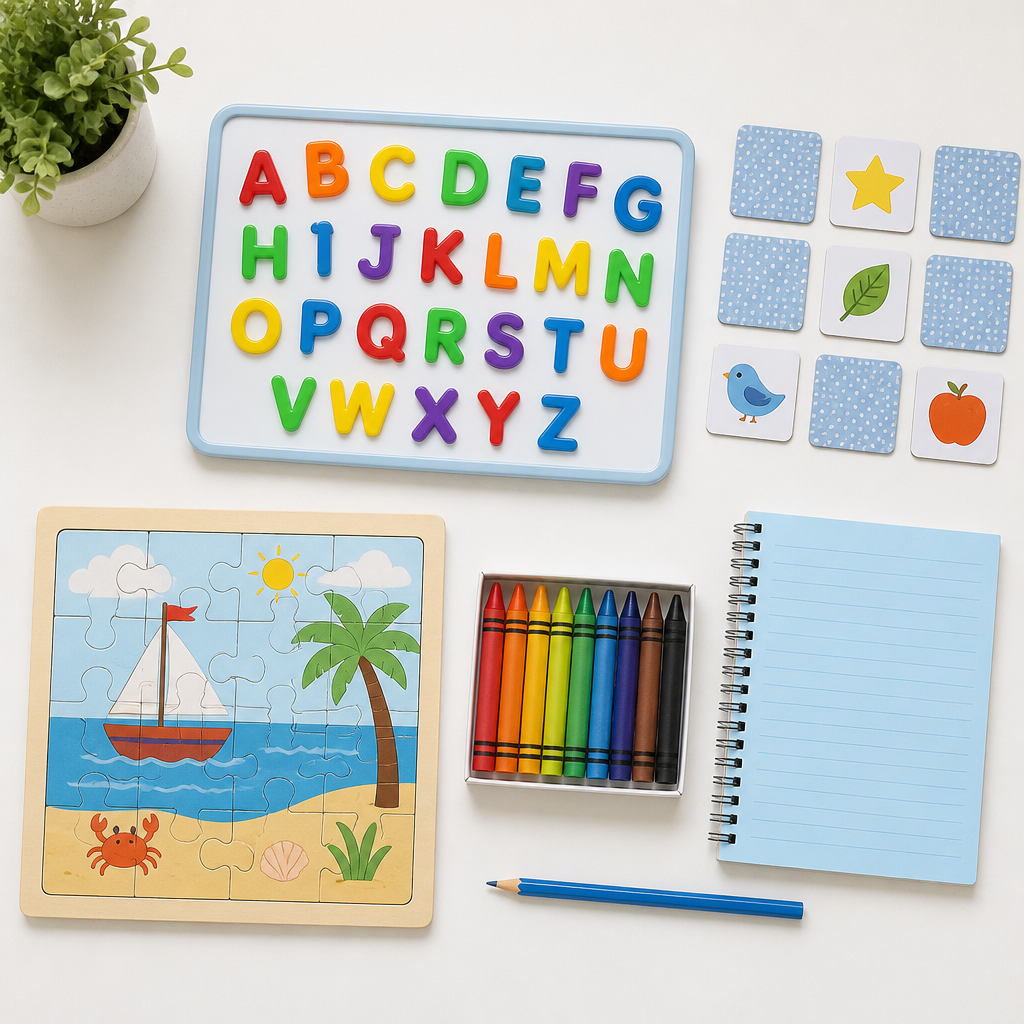
Best toy types for ages 5 to 7
- Language toys and storytelling tools
Magnetic letters, sight-word games, flashcard storytelling prompts, puppets, and simple word-building sets are excellent for language development. A child who resists composition writing may happily invent a story if it starts with character cards and funny picture prompts.
- Puzzles and memory games
Jigsaw puzzles, matching games, visual memory cards, and sequencing activities build focus and pattern recognition. These are especially useful for children who are bright but easily distracted, because they train attention in short, manageable bursts.
- Pretend play sets
Shop sets, doctor kits, cooking sets, and mini-world play encourage communication and imagination. They also reveal how much vocabulary a child actually uses. Some children know words when reading but struggle to speak them aloud naturally.
- Fine motor and art materials
Safety scissors, clay, beads, lacing cards, crayons, and watercolour sets strengthen hand control. This matters more than many parents realise. Children with weak fine motor skills often tire quickly when writing, so these toys support learning in a practical way.
What to avoid at this stage
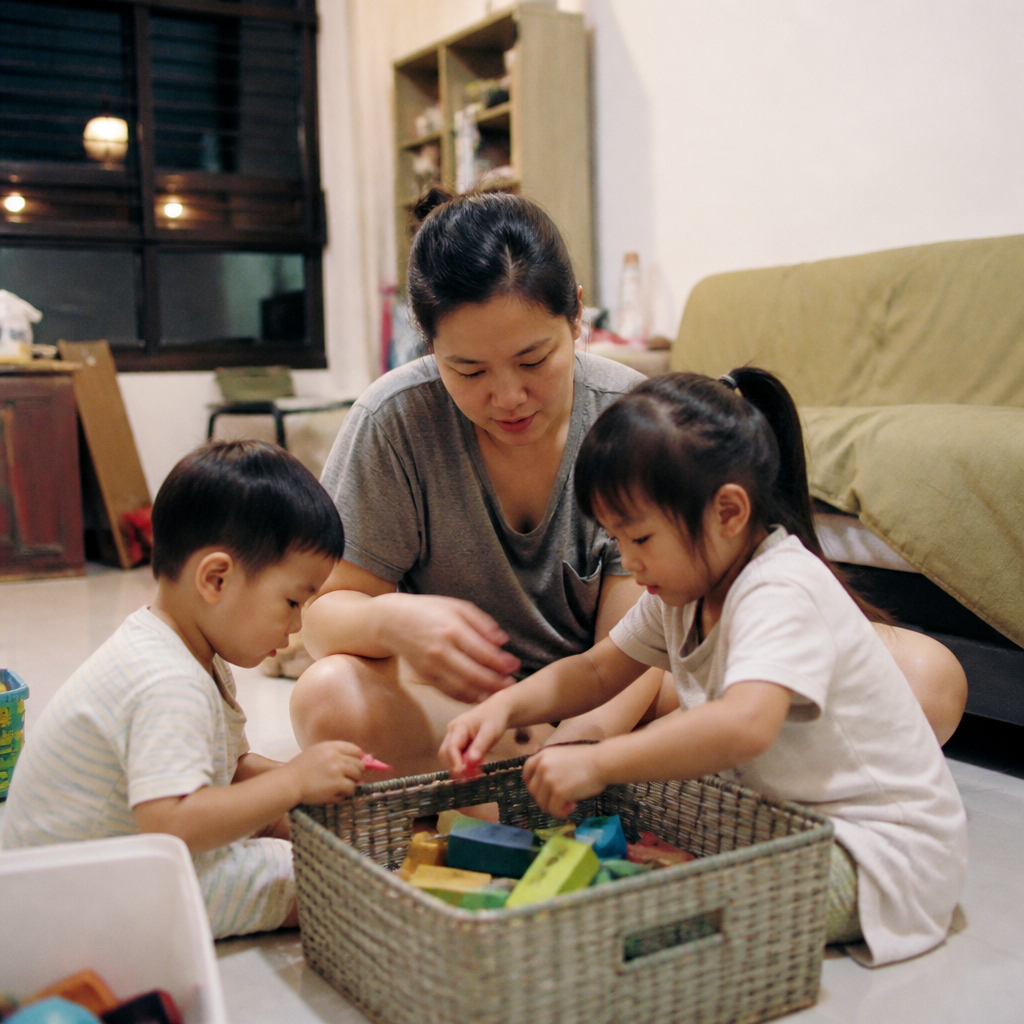
Complicated “advanced STEM” kits can easily backfire if a child still needs help following basic instructions. A toy is not automatically better because it looks more sophisticated. For many 6- or 7-year-olds, the best educational toys begin with simple materials that invite repeated use, not one-time novelty.
It also helps to keep sessions short. A toy that works for 10 to 15 minutes and ends on a positive note is often more effective than a longer activity that turns into conflict. At this age, consistency matters more than intensity.
Educational Toys For Ages 8 To 10
This is often a sweet spot for deeper learning through play. Children in this age range can usually handle more rules, longer attention spans, and more strategic thinking, but they still learn best through active engagement.
Best toy categories for ages 8 to 10
- STEM and science kits
Circuit sets, beginner robotics kits, magnetism experiments, and engineering challenges can work very well when matched to the child’s reading ability and patience. They are especially suitable for children who ask “why” often and enjoy hands-on exploration.
- Building toys
Construction sets, marble runs, mechanical building kits, and magnetic tiles encourage planning and spatial reasoning. A child who struggles to explain their thinking in words may still show strong problem-solving ability through building and testing ideas.
- Board games with strategy
Games involving deduction, planning, resource management, or pattern building help children think ahead and tolerate mistakes. This can be especially useful for children who give up quickly when answers are not immediate.
- Creative kits
Craft boxes, comic-making kits, origami, sewing kits, and design sets support creativity and persistence. Not every bright child enjoys logic-heavy toys. Some children learn best by making, designing, and expressing.
Why this age matters so much
Around Primary 3 to Primary 4, many children start facing more visible academic pressure. Homework gets heavier. School tests feel more serious. Some begin tuition and are already tired by evening. At this point, learning toys can help home learning feel less corrective and more balanced.
Used well, a strategy game on Friday night or a design challenge on Sunday afternoon can sharpen thinking without triggering the usual “go and study” resistance. That balance matters more than many parents expect.
A practical tip for this age group is to rotate toys instead of leaving everything available all the time. When children see the same items every day, interest can drop. Bringing out a puzzle set, building challenge, or word game again after a short break often makes it feel fresh without buying anything new.
Educational Toys For Ages 11 To 12
Older primary school children often reject anything that feels childish. That is important to remember. Some educational toys stop being used not because they are ineffective, but because they feel babyish. For preteens, choice and dignity matter.
Better formats for older children
- Advanced logic and puzzle sets
Sudoku-style games, escape-room kits, mystery-solving boxes, and higher-level brain teasers suit children who enjoy challenge. These are strong choices for problem solving when your child likes to work things out independently.
- Debate, word, and communication games
Vocabulary games, fast-thinking card games, and storytelling prompts can support oral fluency and expressive language. This is especially useful for children preparing for more demanding English tasks but who dislike direct drills.
- Coding, robotics, and design tools
For some children, this stage is ideal for more structured STEM toys. The key question is whether they enjoy troubleshooting. If they dislike trial and error, an expensive robotics set may sit untouched.
- Creative project kits
Journalling kits, animation sets, model-making tools, and more mature art supplies allow children to create with ownership. This can be especially helpful for children who need confidence more than correction.
Watch the emotional fit
By Primary 5 and 6, it is understandable for parents to become very exam-focused. But children at this age can tell when every activity has become performance-driven. If a “gift” clearly feels like hidden revision, resistance is almost guaranteed. Educational gift ideas tend to work best when they still feel enjoyable, even when learning is built in.
It can also help to involve older children in the decision. Giving them two or three suitable options respects their growing independence and increases the chance that the toy or kit will actually be used.
Choose Toys By Learning Skill, Not Just Age
Some parents do not want to shop by age alone, and that makes sense. Two 9-year-olds can have completely different strengths. If you are still asking what are the best educational toys for kids?, it helps to sort them by the skill you want to support.
Here is a simpler way to think about it.
A tutor often sees this clearly in language work. A child may read a comprehension passage reasonably well, but oral answers remain short, awkward, or overly memorised. Toys that encourage natural speaking can gently loosen that pattern at home.
Children who are used to chasing the “right answer” may also resist open-ended problem-solving toys at first. That does not always mean the toy is a bad fit. Sometimes it simply shows they need more practice with persistence and flexible thinking.
Affordable Educational Toys In Singapore That Are Actually Worth Buying
Cost matters. Most parents are not searching for the fanciest option. They just want something useful that will not become shelf clutter by next month. The good news is that affordable educational toys in Singapore can work very well when chosen carefully.
Budget-friendly categories that often give good value
- Card games and word games
These are portable, easy to replay, and often surprisingly rich for language, memory, and strategy. They also work well for family bonding because they do not require much setup.
- Puzzles and brain teasers
A well-chosen puzzle can hold attention far better than an expensive gadget that needs constant adult setup. It also gives children a visible sense of progress, which can be motivating.
- Art supplies
Basic but good-quality markers, paper, clay, stickers, and craft tools often lead to more repeated learning than one flashy boxed kit. Children return to them because they can create something different each time.
- Open-ended building materials
Even a modest construction set can offer many rounds of creative use if your child enjoys making and modifying. This kind of replay value often matters more than brand name.
What makes a toy worth the money
Before buying, ask yourself these three questions:
- Will my child use this more than once?
- Does it support a real skill my child needs?
- Can it be used alone or with family in a manageable way?
If the answer is no to all three, it is probably worth skipping. Parents often feel pressure to buy “enriching” items, but the most educational toy is the one that actually becomes part of family life.
One more useful filter is storage. Small homes are common in Singapore, so bulky toys that are hard to pack away may create more stress than value. Compact games, stackable building sets, and reusable art materials often work better for everyday use.
If your child needs more than toy-based support, especially with confidence, reading habits, or academic consistency, it may help to compare tutor options too. You can explore support here: Private home tuition in Singapore.
Where Singapore Parents Can Buy Educational Toys
When parents search for where to buy educational toys for children in Singapore, they usually care about three things, quality, convenience, and whether the toy is genuinely age-appropriate.
Where to look
- Bookstores and toy retailers
These are useful if you want to see the toy in person, check durability, and judge whether it feels too easy or too advanced.
- Museum, bookstore, and library-linked shops
These often curate more thoughtful educational gift ideas, especially for science, reading, and creativity. For reading and literacy inspiration, parents can also browse the National Library Board.
- Online marketplaces
These can offer convenience and lower prices, but reviews matter. Product photos often make toys look larger or more sophisticated than they really are, so it helps to check dimensions, age guidance, and user comments before buying.
What to check before buying
Look at the instruction language, number of pieces, storage needs, and whether the toy requires heavy parent involvement. A brilliant toy can still fail if it takes 40 minutes to set up on a Wednesday night when everyone is already tired.
Also think about your child’s actual habits. Some children love independent tinkering. Others only engage if the family joins in. Buy accordingly, not according to what looks most impressive online.
Frequently Asked Questions
Are educational toys really helpful for primary school children?
Yes, when they are chosen well. Educational toys can strengthen focus, communication, reasoning, and creativity through play. The key is fit. A toy that matches your child’s stage and interest is far more useful than one that only sounds impressive. They work best as support tools, not replacements for reading, conversation, school learning, or extra help when a child has bigger academic gaps.
What are the best educational toys for primary school kids in Singapore?
Popular choices include strategy board games, storytelling games, STEM kits, puzzles, construction sets, art materials, and pretend play resources for younger children. In most homes, the best options are the ones that match both school-age ability and personal interest, not simply whatever is trending or heavily marketed.
Should I buy toys based on age or learning skill?
Ideally, both. Educational toys by age are a helpful starting point, but learning skill matters just as much. A child who needs help with speaking confidence may benefit more from language games than from a toy labelled perfectly for their age. Age tells you what may be manageable. Learning need tells you what may actually be useful.
Are expensive educational toys always better?
No. Many affordable learning toys work very well, especially puzzles, card games, memory games, and craft supplies. Price does not guarantee repeated use, stronger learning, or better engagement. Sometimes the simpler toy wins because it is easier to take out, easier to understand, and easier to enjoy.
Can educational toys replace tuition or academic support?
Not always. Toys can support home learning habits, confidence, and curiosity, but they do not replace structured support when a child is consistently struggling with core academic skills. Some children benefit from both, playful reinforcement at home and more targeted guidance when deeper gaps are present.
Conclusion
So, what are the best educational toys for kids? Usually, they are the ones that match your child’s age, current learning needs, and natural interests, while still fitting real family life in Singapore. A strong toy does more than claim to be educational. It invites conversation, repeated use, and active thinking.
For younger children, language tools, pretend play, simple puzzles, and motor-skill activities are often excellent choices. For ages 8 to 10, building toys, strategy games, STEM kits, and creative materials can support deeper thinking. For older primary school children, more mature logic games, coding kits, communication games, and project-based creative tools usually work better.
Most importantly, educational toys should support learning, not replace everything else that matters. Reading together, talking about the day, outdoor play, school support, and rest still matter greatly. And if your child needs more structured help beyond learning toys, especially to build confidence and stronger study habits at home, you can compare tutor options here: Private home tuition support.
For more parent resources, you can also visit Singapore Tuition Teachers.