


Introduction
The days after PSLE results can feel oddly heavy at home. One moment, everyone is glad the papers are over. The next, you are comparing schools, checking travelling time, thinking about cut-off points, and wondering how many secondary school choices your child actually has, and how on earth to rank them properly.
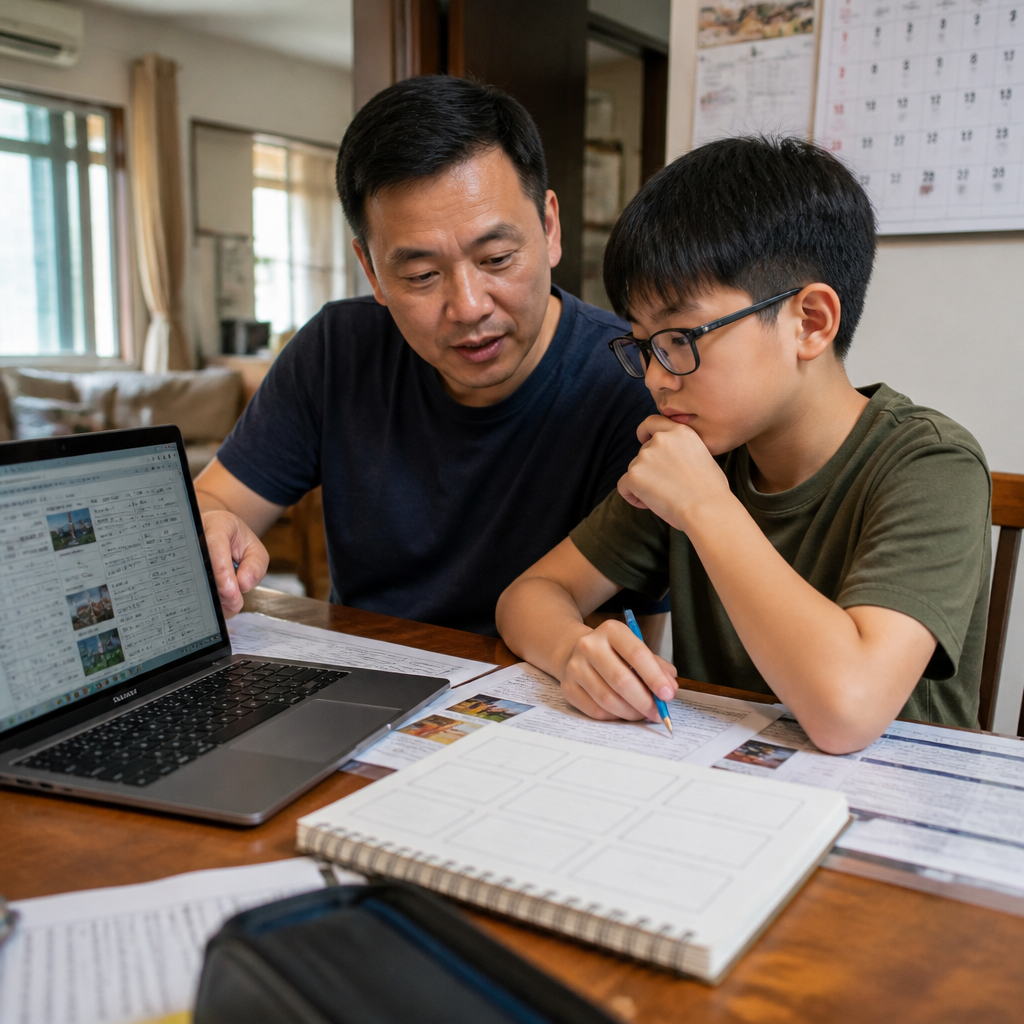
For many Primary 6 parents in Singapore, this is where the real stress begins. It is not just about picking six schools. It is about deciding which school goes first, which choices are realistic, and whether being too ambitious or too cautious could affect the final Secondary 1 posting result. The simple answer is that your child can submit six secondary school choices. The more important question is this, how should those six be arranged so the list is both sensible and true to your child’s needs?
This guide is for parents who want practical help with secondary school posting choices after PSLE. We will focus on ranking strategy, choice order, common mistakes, and how to build a balanced list calmly.
Key Takeaways
- Your child can submit 6 choices. The order matters because your child will be considered for the highest-ranked school they qualify for during the Secondary 1 posting exercise.
- Do not rank schools by popularity alone. A well-known school may look attractive, but if the travel is punishing or the environment does not suit your child, putting it too high can become a regret later.
- Use a balanced list. A practical list usually includes a mix of stretch choices, realistic options, and safer choices, so your child is not left with a weak fallback plan.
- Choice order is not a small detail. If a school is placed third, it means you prefer your first and second schools more. Many parents know which schools they like, but not the best way to rank them.
- Cut-off points matter, but they are not everything. Travel time, school culture, subject offerings, and your child’s emotional readiness should also shape the final order.
- Talk to your child before submitting. A quiet child may say “anything is fine” but still feel anxious about all-boys schools, long commutes, or highly competitive environments.
- Have a backup mindset. If you are worried about what happens when all six choices do not work out, build your list carefully now so your sixth choice is still somewhere you can genuinely accept.
Understand The 6 Choices And Why Order Matters
Parents often start with the most basic question, how many choices for secondary school are allowed after PSLE? Your child can submit six secondary school choices during the Secondary 1 posting exercise. That part is simple. What makes it stressful is what those six positions actually mean.

How many secondary school choices can P6 students select?
The official answer is six. Not eight, not ten, and not “however many we shortlist first.” That is exactly why ranking matters so much. You do not get unlimited tries.
Many families begin with a much longer list. After checking school websites, talking to friends and relatives, and browsing MOE tools, it is easy to end up with ten or twelve names. But when it is time to submit, only six can go in. The real job is not gathering names. It is trimming the list wisely and putting the schools in the right order.
Why the first-to-sixth order matters so much
Some parents assume that as long as the six schools are listed, the exact order is not a big deal. That is one of the easiest mistakes to make. The posting system considers your child for the highest-ranked school they can be posted to, based on eligibility and posting considerations.
So if your child can enter both Choice 2 and Choice 4, the higher-ranked school matters. The order is not decoration, it is preference. If you place a school first “just to try” even though you actually prefer another one more, the ranking no longer reflects what you truly want.
Tutors often notice the same pattern after posting season. A family chooses a school because it sounds impressive, then a few months later the daily routine becomes the real problem. Long travel, late CCA days, tired evenings, and rushed homework start to wear everyone down. The school may be good, but the ranking did not reflect real life.
For official details, always check the MOE Secondary 1 Posting page and use MOE SchoolFinder to compare schools.
Build A Shortlist Before You Rank
When parents ask how to choose six secondary schools after PSLE results, they are usually not asking how to find “good schools.” They are trying to avoid making a rushed decision they may regret later.
Start with a longer list, then narrow it down
Before ranking six schools, start with a bigger shortlist, perhaps eight to twelve options. This gives you room to compare properly instead of forcing a decision too early.
If your child’s score range makes several nearby schools possible, write them down first without worrying about order. Then compare the practical things that will affect daily life.
A school can look excellent on paper and still be exhausting in practice. That is why this stage matters.
Do not let one factor dominate the whole ranking
Cut-off points are useful, but they should not become the only thing driving your choices. The same goes for school name, family pressure, or one friend’s opinion.
A common pattern among students is this, they enter a school because the score range looked like a neat fit, but after a while the real issue is not academic difficulty. It is the early wake-up time, the unfamiliar culture, or the fact that they never really wanted that environment to begin with.
It also helps to compare schools using the same questions each time. For example, ask whether your child can realistically manage the commute for four to five years, whether the school’s pace suits your child’s temperament, and whether the programmes offered are things your child would still care about after the excitement of open house season fades. Looking at schools this way makes the shortlist more grounded and less emotional.
If your child may need extra support adjusting to secondary school subjects and workload, it helps to think ahead now. You can learn more about our secondary school tutors if you want a smoother academic transition.
Use A Balanced Ranking Strategy
The strongest ranking strategy is usually not extreme ambition and not extreme caution. It is balance.
Include dream, realistic, and safer options
A well-built list often includes three types of schools. This does not mean every family must follow a rigid formula, but this way of thinking helps prevent one-sided choices.
The middle choices often deserve the most thought. In many families, those are the schools most likely to become the final posting outcome.
Sample ranking scenarios
Here are some simple examples of how parents can rank secondary school choices after PSLE.
Scenario A: Ambitious but balanced
A child has done reasonably well and is considering a few popular schools plus some steady nearby options.
1. Dream school with strong fit but slightly competitive
2. Another aspirational school with manageable travel
3. Realistic school with good culture fit
4. Realistic nearby school
5. Safer school with acceptable commute
6. Safer school the child can still feel okay about
This works best when the first two choices are genuine preferences, not image-driven picks.
Scenario B: Cautious parent, selective child
A parent wants certainty, but the child strongly prefers two schools.
1. Child’s favourite realistic school
2. Child’s second-choice realistic school
3. Stretch option they still want to try
4. Another realistic nearby school
5. Safer option
6. Safer option with better commute
Sometimes this is wiser than placing all the “safe” options first. Playing too safe too early can quietly block a better fit.
A useful extra step is to imagine posting day. If your child gets Choice 3, will your family feel relieved because it was always a solid option, or disappointed because the ranking did not reflect your real preferences? That mental check often reveals whether the order is honest.
Avoid The Ranking Mistakes Parents Commonly Make
The biggest mistakes usually do not come from not caring. They come from panic, outside pressure, or trying to outsmart the process.
Ranking by prestige instead of true preference
This is one of the most common traps. A parent may already know that School A is not ideal for travel, culture, or the child’s temperament, but still rank it high because it is seen as a “better school.”
That sounds sensible at first. Later, it can become a daily struggle. Secondary school is not just about getting in. It is about coping for the next four to five years. A school that looks strong from the outside can still be a poor fit in real life.
Putting “safe” schools too high out of fear
Fear can make parents over-correct. After hearing stories about unsuccessful choices, some families place very safe schools in the top two spots even though they clearly prefer other schools more.
That is where regret creeps in. If your child qualifies for the first choice, that is likely where they will go. So if Choice 1 is there mainly because it feels safest, your own ranking may shut the door on schools you actually wanted more.
Filling the sixth choice carelessly
Some parents treat the sixth school as a last-minute filler. That is risky. If you are worried about what happens if all secondary school choices are unsuccessful, that concern should lead to a stronger backup plan, not a random final pick.
A simple rule helps here, every school on the list should be one your family can genuinely live with.
Another mistake is copying another family’s ranking too closely. Even if two children have similar results, their personalities, travel routes, interests, and support needs may be very different. Advice from friends can be helpful, but your final list should still be built around your own child.
Reduce The Risk Of An Unwanted Posting Outcome
This is often the fear sitting behind all the hesitation, especially when the child’s options feel borderline.
What happens if all secondary school choices are unsuccessful?
If all six choices are unsuccessful, your child may be posted to a school with remaining vacancies. That is why the wording and order of your list matter so much. You do not want to leave things to whatever is left if you still have room to choose carefully now.
This does not mean you must become overly conservative. It simply means the list should be responsibly built. Six highly competitive or poorly matched choices increase unnecessary risk.
How to lower the risk without becoming too safe
A useful way to calm the decision is to pressure-test the list before submitting.
- Check the top choices. Are they genuine preferences, or are they there because they sound impressive?
- Check the middle choices. Are they realistic and still acceptable if that becomes the posting outcome?
- Check the final choice. If that result appears on posting day, will your family feel disappointed but steady, or shocked and upset?
That last reaction is often very revealing.
You can also reduce risk by making sure your shortlist includes schools with different levels of competitiveness and different practical strengths. For example, one school may be slightly more competitive but close to home, while another may be less competitive and offer a calmer environment. A varied list gives your child more than one reasonable path.
Talk Through The Final Ranking With Your Child
This part is easy to overlook. Adults may focus on strategy, while the child quietly carries worries they cannot explain well.
Listen for what your child is not saying
At age twelve, many children say “anything” or “up to you.” That does not always mean they have no preference. Sometimes they do not want to sound difficult. Sometimes they are not sure how to explain what feels uncomfortable.
A child may be worried about the distance, the competitiveness, or leaving friends behind. Friendship should not decide the whole list, but for a Primary 6 child, it is still emotionally real. Dismissing it too quickly can shut down the conversation.
Keep the conversation practical
Instead of asking, “Which school do you want?” try comparison questions:
- “Which school feels like somewhere you can imagine going every day?”
- “Would you rather travel longer for this school, or choose the nearer one?”
- “Which one makes you feel excited, and which one only looks good on paper?”
These questions often bring out more honest answers. They also help the child feel included, which matters if the posting result is not their first choice.
It can also help to discuss routines rather than labels. Some children respond better when you ask about mornings, uniforms, CCAs, or how tired they think they would feel after a long day. These details make the decision more concrete and less abstract.
Do a Final Check Before You Submit
Right before submission, pause and review the list as a ranked list, not just six names.
Check the order from top to bottom
Read the six schools aloud in order and ask, “If our child qualifies for both School 1 and School 2, do we really want School 1 more?” Then repeat that all the way down.
This simple check catches many last-minute ranking mistakes.
Review fit, travel time, school culture, and cut-off points
Before you lock in the list, make one final pass through the core factors.
For current information, always check the MOE Secondary 1 Posting page and MOE SchoolFinder.
When parents ask how to choose six secondary schools after PSLE results, this final review is often what turns a stressful shortlist into a confident ranking.
Frequently Asked Questions
How many choices for secondary school can my child submit after PSLE?
Your child can submit six choices. The order matters because the posting process considers the highest-ranked school your child can enter based on the posting criteria.
Should we put the most prestigious school first even if it is a bit unrealistic?
Only if it is truly your preferred option and still a reasonable attempt. If a school is placed first just because it sounds impressive, the result may look good on paper but feel wrong once daily travel, culture, and pressure become real.
What is the best way to rank secondary school choices in Singapore?
A balanced approach usually works best. That often means placing genuine top preferences near the top, realistic and acceptable choices in the middle, and safer options at the bottom that you can still honestly accept.
What happens if all secondary school choices are unsuccessful?
If all six choices are unsuccessful, your child may be posted to a school with remaining vacancies. That is why the fifth and sixth choices should never be treated casually.
Can my child just follow where friends are going?
Friends matter, and it is completely normal for children to care about that. But friendship alone should not drive the ranking. Over the next few years, daily fit matters more, academically, emotionally, and practically.
Conclusion
Ranking six secondary schools after PSLE may look administrative on paper, but at home, it often feels deeply personal. The real question is not only how many secondary school choices a P6 student can select, but how to rank those six wisely and calmly.
A strong list reflects real preference, not panic. It balances dream schools, realistic options, and safer choices. It also takes seriously the things that shape everyday life, such as school fit, travel time, culture, and likely posting outcomes.
If you are working through your child’s Secondary 1 posting choices in Singapore, do not rush the order. A thoughtful ranking now can save your family a lot of second-guessing later.
And if your child may need extra support adjusting to secondary school subjects and workload, learn more about our secondary school tutors.