


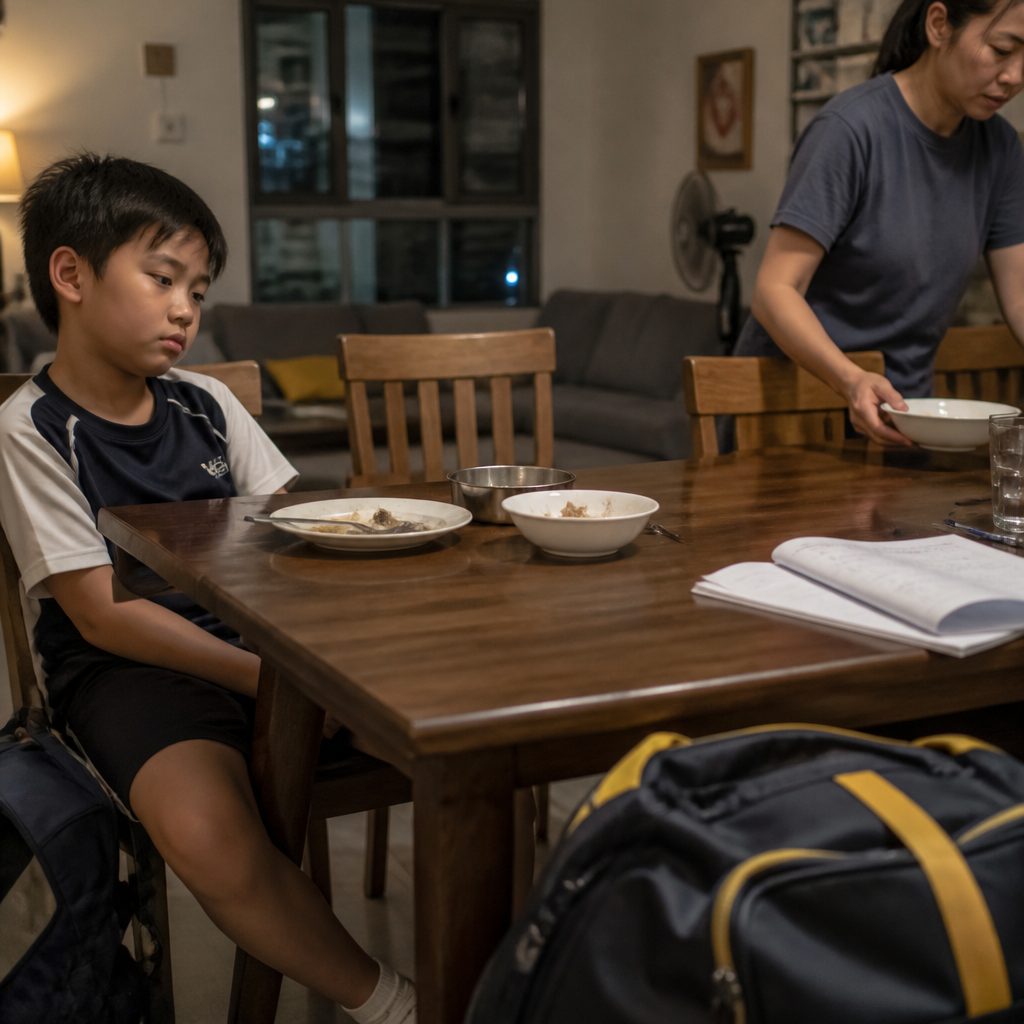
It is 9.45pm on a Wednesday. Your child has just returned from CCA, dinner is unfinished, spelling revision is still waiting, and a tuition worksheet has become the reason for another tense conversation. By Saturday, there may be swimming, Chinese enrichment and tuition, leaving little room to rest, play or simply be bored.
When balancing CCA and Enrichment Classes, many Singapore parents find themselves pulled in two directions. You may worry that your child is already too tired, while also wondering whether cutting back means losing valuable opportunities. There is no magic number of classes that works for every family. A manageable week depends on your child’s age, temperament, school workload, CCA demands, travel time, sleep and genuine interest.
Key Takeaways
- Look beyond lesson hours. A 90-minute class can easily become a three-hour commitment once travel, waiting, meals and post-class homework are included.
- CCA intensity changes across the year. A performing arts rehearsal before a concert or a sports team preparing for competition needs more recovery time than a quieter period.
- Sleep is a non-negotiable signal. If an otherwise willing child repeatedly sleeps late, wakes exhausted or falls asleep during car rides, the schedule is asking too much.
- One meaningful activity may be enough. Prioritise the activity your child values and can sustain over a crowded collection of credentials.
- Academic support must fit the week. Balancing CCA and tuition works better when lessons are flexible and targeted, rather than adding another fixed commitment to every weekend.
- Exam seasons require adjustment. PSLE, O-Level and A-Level preparation may call for temporarily reducing enrichment when revision time has become fragmented.
Start With Your Child’s Real Week
A timetable can look perfectly reasonable on paper: CCA twice a week, one tuition lesson and one enrichment class. The reality may feel very different by Wednesday evening.
A child who ends school at 2pm, waits for CCA at 3pm, finishes at 6pm and reaches home after dinner may have lost the whole evening. Add a 45-minute journey across neighbourhoods, and “three hours of CCA” becomes a much bigger commitment for the family.
Count energy, not only hours
Some children can handle a full schedule when the activities genuinely energise them. Others feel drained after one social, noisy or highly structured afternoon. Introverted children, students with long commutes, and those who need more time to process schoolwork may need more breathing room.
Tutors often notice this pattern: a student is not weak in a subject, but arrives at lessons so tired that they cannot recall what they understood two days earlier. More tuition can then seem like the answer, when the real issue is exhaustion.
Protect the parts of the week nobody schedules
A manageable weekly schedule includes sleep, dinner, showering, homework, family conversation and unstructured downtime. Downtime is not wasted time. After being directed by teachers, coaches and instructors all day, children need space to decompress.
The Ministry of Education describes CCA as part of students’ holistic development, not a race to accumulate activities. Check your school’s current CCA expectations through MOE’s CCA information, as attendance and activity demands can differ by school and CCA.
Audit the Full Commitment Before Adding a Class
Before enrolling in a new programme, map out one ordinary week, not an ideal week. Include school dismissal times, CCA, travel, meals, homework, revision, tuition, enrichment, weekend commitments and bedtimes. Then notice which parts of the week leave your child visibly rushed.
Consider what each activity really costs
A class is rarely just the time printed on the schedule. Looking at the full commitment makes it easier to spot why a child may be struggling.
A child may attend willingly yet still struggle with the work that follows. Debate training, ballet and coding classes can involve practice or projects at home. Equally, a student anxious about oral presentations may need quiet time after drama rehearsal, while another may find rehearsal a welcome break from academics.
Keep a recovery window
Try to preserve at least one lighter weekday evening and a block of weekend time without instruction. This gives space for unfinished schoolwork, family visits or recovery after an unexpectedly difficult week.
Without a buffer, small delays can quickly become parent-child conflict. When every slot is booked, a Maths worksheet taking 30 minutes longer feels like a crisis instead of a normal part of learning.
Primary School: Build Interest Without Filling Every Afternoon
Primary school is often when overscheduling begins quietly. A child may have student care, a school CCA, Chinese enrichment, abacus, swimming, music and tuition, with every choice seeming sensible on its own.
Keep early commitments broad and enjoyable
For younger children, a school-based CCA plus one regular enrichment activity is often plenty, especially in Primary 1 to 3. This is not a universal limit. A child who loves football and looks forward to art may manage both well.
The more useful question is whether there is still time to complete homework without tears and sleep at a reasonable hour. A reluctant child is not always lazy or ungrateful. Sometimes resistance before a lesson is their clearest way of showing that the day has become too full.
Reassess before PSLE pressure rises
In Primary 5 and 6, revision becomes more demanding. Some children benefit from continuing their favourite CCA because it gives them identity, friendships and stress relief. Others need a temporary reduction in external enrichment when weekend revision becomes a series of rushed worksheets.
Avoid removing every enjoyable activity automatically. A child who spends every hour studying may become more resentful, not more focused. Instead, review whether tuition addresses a clear learning need and whether a class can pause for a term rather than be abandoned completely.

Secondary School: Balance Activities With a Heavier Workload
CCA commitment for Singapore secondary students can rise sharply when leadership roles, competitions, performances and training seasons begin. At the same time, subjects become more content-heavy, and students may face several tests in the same fortnight.
Separate meaningful strain from harmful strain
A demanding CCA is not automatically unhealthy. A student preparing for a concert may come home tired but proud, stay organised and recover after the event. That is different from a student who has stopped eating properly, forgets assignments, cries before lessons or spends every Sunday catching up.
A common pattern among students is adding extra tuition in every weak subject during O-Level preparation. This can backfire when there is no time to consolidate feedback independently. More lessons may create the appearance of effort while reducing the quiet practice needed to correct recurring mistakes.
Make tuition responsive, not another burden
During peak CCA periods, fewer but more purposeful lessons may be more useful. A tutor can focus on a difficult topic, exam technique or a revision plan instead of assigning a large weekly workload.
If your child needs flexible academic support that fits around CCA, rest and family time, explore an arrangement suited to your child’s workload and confidence. The aim is not to squeeze another activity into the week, but to make academic help workable.
Junior College: Choose Commitments With Purpose
Junior College students may look independent, but their schedules can become unsustainably dense. Lectures, tutorials, project work, CCA leadership, commuting and A-Level preparation quickly consume the week. External enrichment may still be worthwhile when it has a clear purpose, such as a sustained passion, portfolio work or genuine career exploration.
Do not mistake busyness for progress
Some JC students cope by cutting sleep. They submit work, attend everything and appear functional, until concentration drops and small tasks start taking twice as long. Persistent sleep loss deserves attention, not praise for “being hardworking”. Review practical sleep guidance from HealthHub.
A student who returns home at 8pm after CCA may not realistically complete four hours of revision at full quality. A shorter, focused task and an earlier bedtime can be more productive.
Pause enrichment when the trade-off changes
By JC, the question is less about the number of enrichment classes and more about why each commitment remains. If an activity brings joy, community or meaningful development, it may deserve to stay. If it continues only because stopping feels like failure, it is worth reconsidering.
A temporary pause before major examinations is not a lost opportunity. It can be a mature decision to protect health and academic confidence.
Warning Signs Your Child’s Schedule Is Too Full
The clearest warning signs usually appear at home, not on the timetable. Watch for patterns over several weeks rather than reacting to one difficult day.
Have a calm review conversation
Ask, “Which part of your week feels hardest?” rather than “Why can’t you manage?” You could also ask which activity they would keep if they had to choose, what they miss doing at home, and whether a particular journey or timing is the real problem.
Consult teachers, CCA teachers-in-charge or coaches when concerns continue. They may know whether a lighter role, temporary break or adjusted training expectation is possible.
Frequently Asked Questions
How many enrichment classes per week is too many for my child?
There is no safe universal number. One high-intensity class with long travel can be more draining than two nearby, enjoyable sessions. If your child sleeps well, completes schoolwork without constant distress, has downtime and still wants to attend, the schedule may be manageable. If not, reduce the load before adding another class.
Should my child stop CCA during PSLE, O-Level or A-Level preparation?
Not necessarily. A valued CCA can protect mood and motivation during stressful periods. Consider reducing external enrichment first, then review training frequency, competition commitments and revision needs with the school. The right choice depends on your child’s workload and wellbeing.
Is tuition necessary if my child already has a demanding CCA?
Tuition is useful when it addresses a specific gap, builds confidence or provides structure your child genuinely needs. It is less helpful when it merely fills every available hour. A targeted, flexible arrangement may suit your child better than multiple weekly lessons.
What if my child wants to do everything?
Interest is wonderful, but children may not see the full cost of a packed week. Let them choose priorities, then explain practical trade-offs such as fewer free Saturdays or less time with friends. A trial period with a planned review can be kinder than an immediate permanent commitment.
Choose a Sustainable Week, Not an Impressive Calendar
CCA and enrichment can enrich a child’s school years, build confidence and create friendships that matter deeply. But a full calendar is not the same as a fulfilling childhood. The manageable amount is the amount that still leaves room for sleep, meals, family connection, independent revision and moments when your child is not performing for anyone.

Review the schedule whenever school demands change, CCA enters a busy season or your child’s mood shifts. A thoughtful adjustment is not giving up. It is helping your child stay engaged in the opportunities that genuinely matter.