


It is 9.30pm. Your child is still refusing to pack their school bag, the tablet has not been returned, and tomorrow’s school day is looming. You have reminded, negotiated, raised your voice and perhaps threatened to cancel the weekend outing. Then the same argument returns the following week.
If you are wondering how to teach your child about consequences, you are not alone. Many Singapore parents feel caught between being too harsh and too lenient, especially when homework, CCA, tuition, chores, screen time and family routines compete for attention.
Consequences that truly stick are not about making a child suffer. They help a child connect a choice with its impact, then practise making a better choice next time. The aim is responsibility, not fear. A calm, proportionate response often teaches more than a dramatic punishment delivered when everyone is upset.
Key Takeaways
- Connect the consequence to the behaviour. Device misuse calls for a device-related response, not an unrelated punishment.
- Use natural consequences only when they are safe. Never compromise meals, sleep, school attendance or emotional security to teach a lesson.
- Keep logical consequences clear and proportionate. A child who leaves art supplies out should clean them up before restarting the activity.
- Connect before correcting. A tired child returning from CCA may need a brief reset before discussing an incomplete chore.
- Match consequences to your child’s age. Younger children need immediate guidance; teenagers can take more responsibility for planning and repair.
- Prioritise follow-through over severity. Repeated threats that are never carried out teach children that boundaries are negotiable.
- Include reflection and repair. Help your child identify what happened, who was affected and what to do differently next time.
Start With the Lesson You Want to Teach
Natural consequences happen on their own
Natural consequences occur without a parent creating them. A child who chats instead of completing a project may have less free time later because the work still needs doing. A teenager who fails to charge a device may need to manage without it temporarily.
These outcomes can be useful because they are directly connected to the choice. However, parents should step in when health, safety, education or emotional security is at stake. Do not let a child go hungry because they forgot lunch, travel home unsafely after missing transport, or lose necessary sleep before an exam to “learn a lesson.” A lesson is not worth it if the consequence is too heavy for the mistake.

Logical consequences are linked to the choice
Logical consequences are set by adults, but they should be related, respectful and realistic. If siblings cannot use a game console without fighting, the console can be put away for the evening. If a child leaves school shoes in the corridor, they should put them away before beginning play.
The connection should make sense to your child. Removing every weekend privilege over one unfinished worksheet feels arbitrary, so the child may focus on perceived unfairness instead of their responsibility.
Avoid both punishment and permissiveness
Punishment tries to make a child feel bad enough not to repeat a behaviour. Shaming, insults, physical punishment and threats may stop behaviour briefly, but they can also create fear, resentment or secrecy. A child may hide unfinished work rather than ask for help.
Permissiveness also carries a cost. Regularly rescuing a child from forgotten items, doing their chores or restoring screen time after a broken agreement teaches them that someone else will absorb the impact.
Positive discipline sits between these extremes: warm, firm, predictable and respectful. It gives children both security and accountability.
Set Clear Expectations Before Problems Begin
Focus on a few important routines
Constantly correcting everything—from messy rooms to slow showers—exhausts both parents and children. Start with two or three high-friction routines, such as completing homework before recreational screens, packing the school bag before bedtime or putting dishes in the sink.
Be specific. “Be responsible” is vague. “By 8.30pm, your homework is in the file and your bag is packed” provides a visible finish line.
Adjust expectations for days with late CCA or enrichment classes. A boundary works best when your child has a genuine chance of meeting it.
Discuss consequences while everyone is calm
A consequence announced during an argument can sound like revenge. Discuss it beforehand: “Games on the tablet come after spelling work and your shower. If you use it before then, I will keep it until tomorrow after school.”
Ask your child to repeat the agreement in their own words. When grandparents or a domestic helper provide after-school care, adults should agree on a few simple boundaries so that one person does not unintentionally reverse another’s decision.
Choose limits you can maintain
“Never use your phone again” is unrealistic, especially when a secondary-school student needs it for class messages or transport. A smaller limit is easier to enforce: “No entertainment apps tonight. You may use the phone for schoolwork at the dining table.”
Children may test a newly consistent boundary, particularly if rules have changed often before. That does not necessarily mean the approach is failing; they may be checking whether the limit is reliable.
Use a Calm Sequence: Pause, Follow Through, Repair and Reflect
Regulate first
When your child slams a door after tense Maths revision, neither of you may be ready to learn. Trying to teach responsibility at peak anger often creates a power struggle.
Try: “We are both upset. Let’s take ten minutes, then talk about what happened and what needs to happen next.” This pause does not remove the consequence. It prevents the response from becoming a personal attack.
Describe the action, not the child
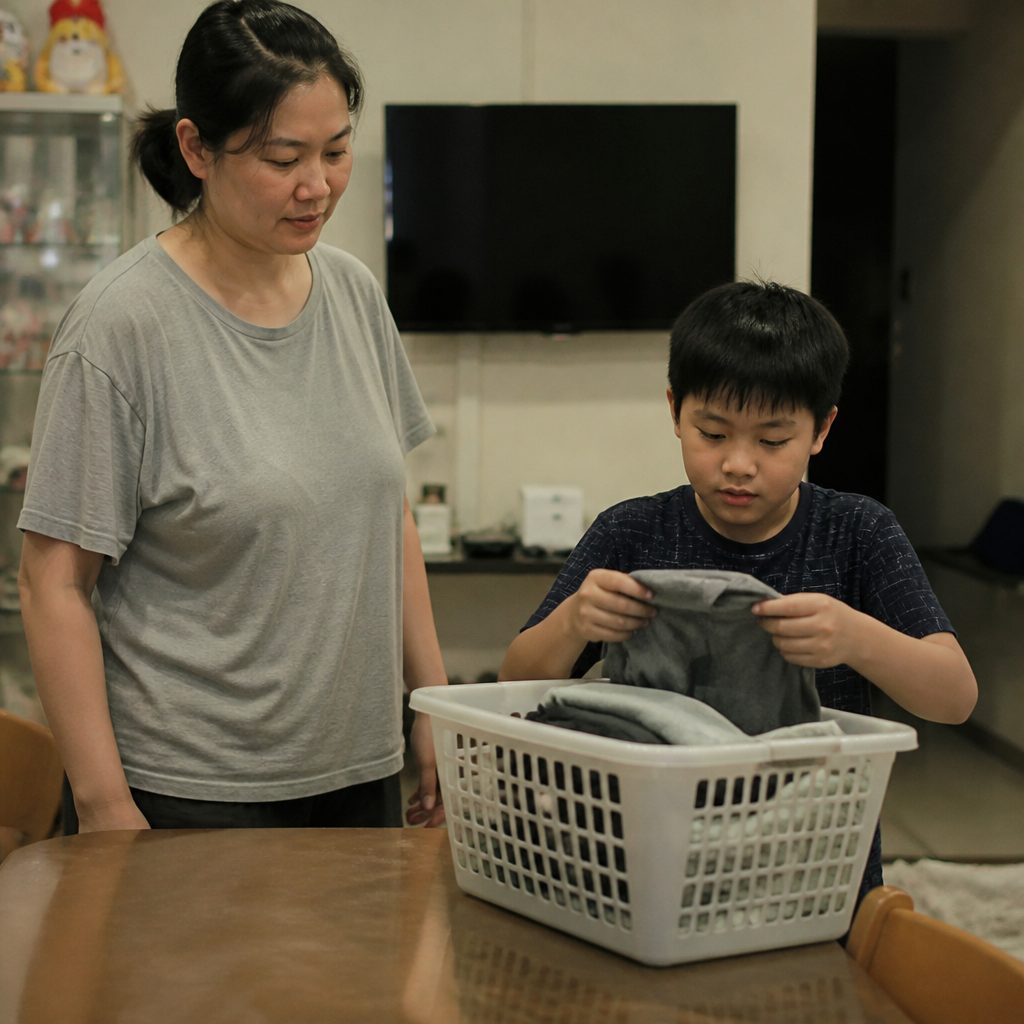
Say, “You agreed to load the laundry before starting your game, but it was not done.” Avoid labels such as “lazy” or “disobedient.” Character judgments can become identities children defend against.
Then follow through. Pause the game, have the laundry completed and allow the child to return if time remains. Responsibilities come before privileges, without humiliation.
Make room for repair
Consequences should include making things right when possible. A child who shouted at a sibling and damaged their work might help restore it, give them space and apologise sincerely when calm. A teenager who missed curfew without sending an update might temporarily have an earlier return time and agree on a communication plan.
Avoid demanding an immediate, performative apology. Ask, “What do you think your brother needs from you now?” This encourages empathy as well as compliance.
Match Consequences to Your Child’s Age
Lower primary: keep it immediate and supported
Younger children need consequences close to the behaviour. If a child throws stationery during homework, pause, help them calm down and have them pick up the items before continuing. If packing the school bag is difficult, guide them through a checklist instead of doing it for them.
Natural consequences should remain small. Forgetting a library book may mean being unable to borrow another that week, followed by using a visible reminder for the next return date.
Upper primary: connect privileges and responsibility
Upper-primary children can take clearer ownership. If a child extends a screen break beyond the agreed time, the next entertainment period might be shortened by the time misused. Explain the connection briefly rather than beginning a long debate.
During PSLE preparation, keep expectations firm while offering manageable choices, such as whether to complete Science revision or English corrections first. Choice helps children practise self-management instead of working only to avoid conflict.
Secondary school: build trust and planning
Teenagers need more input alongside greater accountability. A student who repeatedly starts assignments late may need to use some weekend time to finish rather than relying on a parent to rescue the work. A missed curfew may result in an earlier return time at the next outing.
Do not use consequences to control every preference. Ask what would make success more likely: an alarm, shared calendar or check-in after tuition. The long-term goal is to reduce parental reminders.
When Schoolwork Causes Repeated Conflict
Check for learning difficulties
A child who appears defiant may be avoiding work they do not understand. A Primary 5 student may “forget” a Maths worksheet because fractions feel impossible; a Secondary 3 student may switch apps repeatedly because an essay creates anxiety.
It may still be appropriate to pause entertainment until an agreed study block is attempted. Pair the boundary with curiosity: “Which question made you stop?” Treating every delay as laziness can deepen shame and avoidance.
A practical expectation might be: “You do not have to finish every question perfectly tonight. Spend 25 focused minutes trying, then show me where you got stuck.” This protects effort while leaving room for support.
Protect basic needs and seek help when necessary
Never remove meals, sleep, affection, family belonging or necessary learning support. Academic results should not determine whether a child is treated warmly. High expectations may be common near PSLE or O-Levels, but fear rarely creates lasting study habits.
If learning struggles are causing repeated conflict, explore supportive tutors who can strengthen understanding and confidence. Tuition does not guarantee results or replace family boundaries, but suitable help can reduce the pattern in which every worksheet becomes a parent-child argument.
Persistent aggression, severe withdrawal, extreme anxiety, self-harm concerns, suspected developmental differences or behaviour that seriously disrupts daily life requires more than stricter consequences. Speak with an appropriate healthcare or mental-health professional, your child’s school counsellor or another trusted educational professional.
Frequently Asked Questions
What if my child cries and says the consequence is unfair?
Acknowledge the emotion without removing the boundary: “I know you are disappointed. The tablet is still away tonight because our agreement was broken.” Stay calm and available, especially with younger children.
How many reminders should I give?
For an established routine, one reminder is often enough before the agreed consequence. New routines require more coaching while the child learns the steps.
Must a consequence happen immediately?
Use an immediate consequence when practical, especially for younger children. A later response can work for teenagers—such as adjusting the next outing after a curfew breach—if the connection remains clear.
What if other caregivers apply different rules?
Discuss the issue privately and agree on one or two rules everyone can support. Avoid criticising another caregiver in front of your child. Simple, shared expectations are more sustainable than a complicated discipline plan.
Consistency, Not Fear, Makes Consequences Stick
Teaching your child about consequences does not require harsh punishments or endless reminders. Children learn when expectations are clear, outcomes relate to their choices, adults follow through calmly, and there is a chance to repair the harm and try again.
Some days will still be messy. If you lose patience, return to the boundary, apologise if your tone was hurtful and continue the lesson. That, too, is responsibility in action.
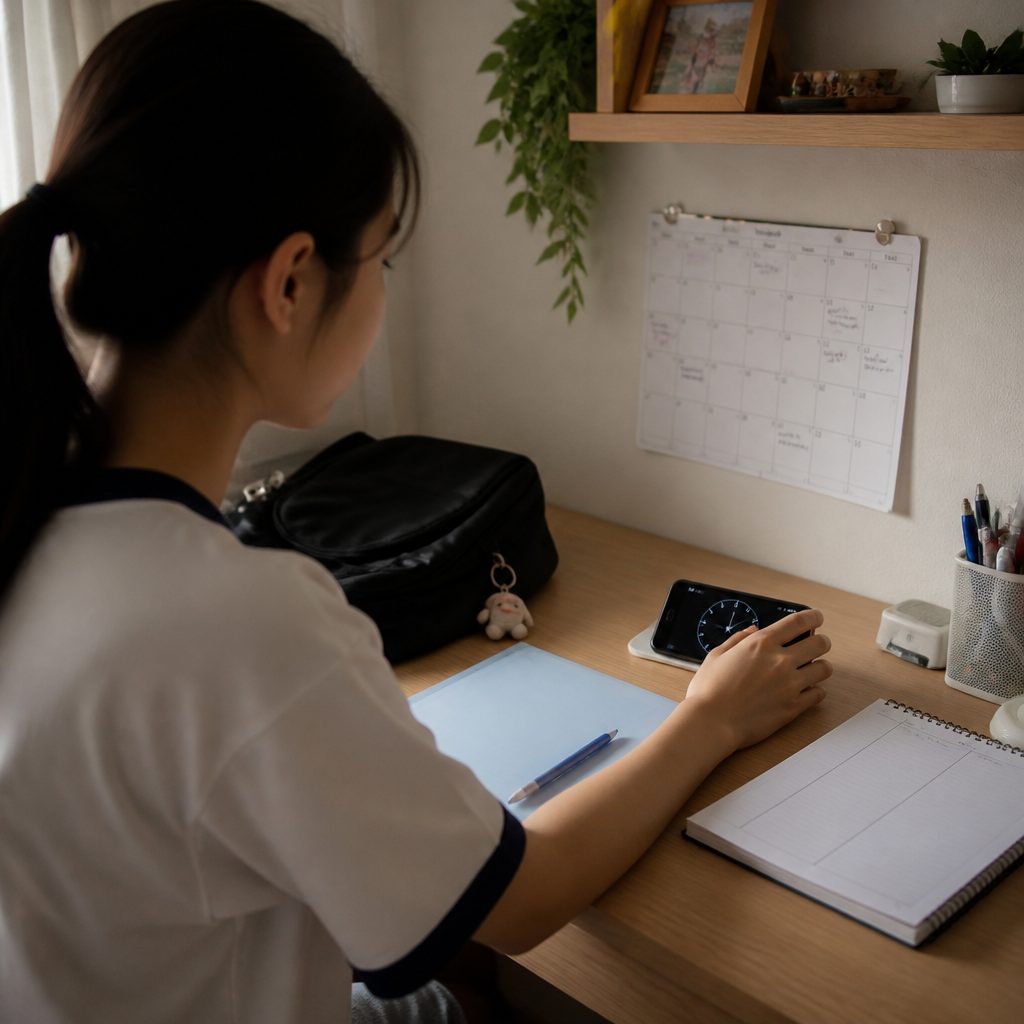
When schoolwork has become a daily battleground, you can contact us for private home tuition support that complements, rather than replaces, steady family routines.