


It is 8.45pm. Tuition has just ended, one worksheet is still untouched, and a conversation about screen time has turned into another argument. Or perhaps the worry runs the other way: school ends at 2pm, but homework does not begin until after dinner, and you wonder whether too much time is slipping away.
For many Singapore parents asking how much free time should students have after school, this is a familiar balancing act. You want your child to keep up, but you also do not want every evening to feel tense, rushed and exhausting.
There is no single number that suits every student. A Primary school child with a short commute needs something different from a Secondary student returning late from CCA, or a JC student juggling lectures, project work and A-Level revision. The right balance depends on sleep, workload, travel, temperament and how demanding that particular week is.
The aim is not to fill every hour productively. A healthy after-school routine gives students room to recover, spend time with family and complete focused schoolwork, without turning every evening into a battle.
Key Takeaways
- Free time supports learning, not just entertainment. A child who can eat, decompress and move around before studying is often more focused than one pushed straight from school into homework.
- Look at the whole weekday. Travel, CCA, tuition, meals, homework and bedtime all affect how much realistic rest time is available after school.
- The quality of downtime matters more than a fixed number of hours. Chatting with friends, exercising, reading or simply resting can be more restorative than long periods of tired, distracted scrolling.
- Students need different routines at different stages. Primary pupils usually need more play and adult guidance, while Secondary and JC students need increasing independence alongside clear sleep boundaries.
- Exam periods call for selective changes, not permanent pressure. PSLE, O-Level and A-Level preparation may require more revision, but removing all downtime can weaken concentration and increase resentment.
- Repeated conflict is useful information. Fights over homework or screens can point to an unrealistic workload, unclear expectations, fatigue or a learning gap, rather than laziness.
Start With Recovery After School
School does not end when the bell rings
Parents’ concerns are understandable. You see upcoming tests, unfinished corrections and classmates attending multiple tuition classes. Giving your child free time can feel like letting them fall behind.
Yet a student who arrives home mentally drained is rarely ready for meaningful revision simply because the timetable says it is homework time. Tutors often notice that students can sit at a desk for hours but retain very little when they begin hungry, tired or upset after school.
A useful starting point is to protect a daily transition period. On an ordinary weekday, many children benefit from roughly 30 to 60 minutes after reaching home to eat, shower, talk, rest or move about before academic work begins.
A child arriving home at 5.30pm after CCA may need more recovery than one who gets back at 2.30pm. This does not mean homework disappears. It simply acknowledges that concentration has limits.
Sleep sets the real limit
The question of how much homework is too much cannot be separated from bedtime. If a routine repeatedly pushes a child into sleeping far too late, the schedule is already asking for too much, even if every activity seems worthwhile on paper.
Review term dates and school holidays through MOE Singapore’s calendar when planning heavier revision periods, so rest is not postponed indefinitely. For practical sleep guidance, parents can also refer to HealthHub Singapore.
A sustainable student schedule protects sleep first, then fits revision around it. This can feel counterintuitive when examinations are approaching, but a packed timetable is not always an effective one.
Match the Routine to Your Child’s School Stage
Primary School: protect play and connection
Primary pupils usually need a more visible buffer between school and work. On a typical non-CCA weekday, aim for a mix of snack time, conversation, play and perhaps 45 to 90 minutes of unstructured leisure across the afternoon and evening, alongside manageable homework.
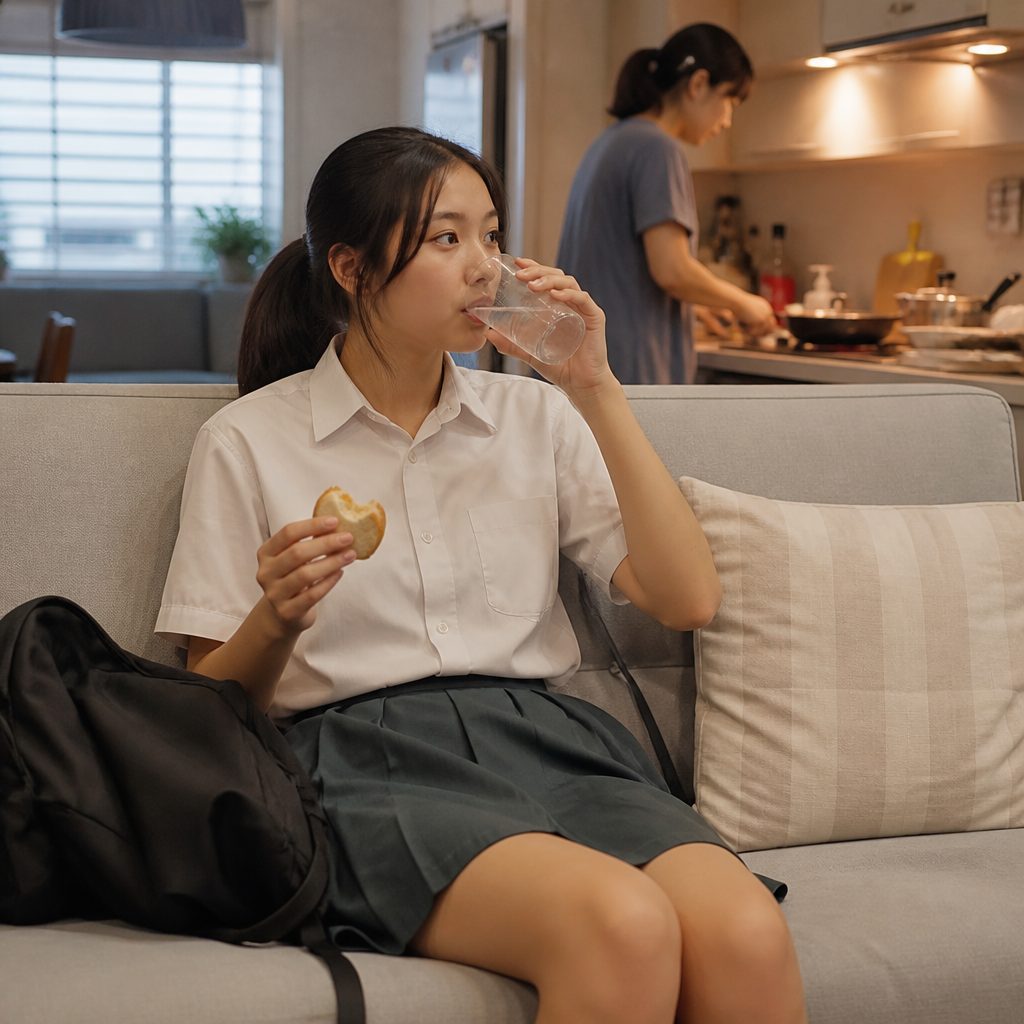
A child who spends 40 minutes building Lego, cycling downstairs or chatting during dinner is not necessarily wasting time. These moments can help younger children regulate themselves and return to work with a clearer mind.
What often backfires is turning every gap between school, tuition and bedtime into an academic task. By 9pm, even a conscientious P5 pupil may be crying over a simple Maths question because the day has become too long.
During PSLE preparation, revision may grow, but free time should shrink gradually and temporarily. Keep at least one calm part of the day that is not about marks.
Secondary School: balance workload and independence
Secondary students often need about one to two hours of genuine discretionary time on a regular weekday, though this may be broken into smaller pockets around CCA, dinner and homework. That time may include music, sport, messaging friends or a favourite show.
The challenge is that some students call all phone use “rest” while homework is quietly delayed until midnight. Rather than ban every device, agree on a clear start time for work.
For example, a student who reaches home at 4pm might rest until 5pm, complete focused work from 5pm to 6.30pm, eat dinner, then return for a shorter review block if needed. The point is not to micromanage every minute. It is to make sure rest does not become a source of greater stress later in the night.
In O-Level years, students may need longer study blocks near examinations. Still, a schedule with no social contact, movement or downtime can produce the familiar pattern of rereading notes without absorbing them.
Junior College: allow autonomy with safeguards
JC students face an adult-like workload, but many still need help noticing when they are overextended. A realistic study-life balance may include one to two hours of flexible time on lighter weekdays, with less available on CCA or project-heavy days.
Free time may look different at this age: gym sessions, meeting friends briefly, gaming or pursuing an interest. The key question is whether it restores them and whether commitments are still being met.
A JC student who completes planned work and sleeps adequately does not need every evening monitored. But a student who is regularly awake at 2am, missing deadlines and becoming withdrawn needs a gentler, more direct conversation.
Rest Is Not the Same as Endless Screen Time
Recognise restorative downtime
Not all unstructured time is equal. Restorative free time leaves a child steadier, more connected or more ready to begin work. It can include a snack with grandparents, a walk, a nap, drawing, sport, music, reading for pleasure or talking to friends.
Passive screen use is not automatically harmful. A tired teenager may genuinely enjoy 30 minutes of videos after a long day. The concern begins when the activity consistently makes them more agitated, delays homework or crowds out sleep.
Instead of asking, “Why are you always on your phone?”, try a question that opens up the conversation:
“Do you feel more rested after this, or more stressed because work is waiting?”
Notice when the balance is off
Too little rest often appears as irritability over minor requests, frequent headaches or stomachaches, tears over routine homework, falling asleep in the car, or an inability to start work despite sitting at the desk. These are not always signs of poor discipline.
Too much unstructured time can look different. Homework begins only after repeated reminders, revision plans stay vague, screens continue past agreed limits, and schoolwork becomes a late-night emergency.
A common pattern among students is that cutting all leisure creates even more resistance. A clearer routine, with a defined break and one small first task, is usually more effective.
Build a Flexible After-School Routine
A Primary School weekday example
A P4 pupil home by 3pm might have a snack and free play until 3.45pm, finish a short homework block by 4.45pm, attend tuition or practise a weak area if scheduled, then have dinner and relaxed family time before a calm bedtime routine.
The lesson is not that every P4 child needs these exact times. A child with spelling corrections may need a second short block, while another who completes work efficiently may have more playtime.
A Secondary School weekday example
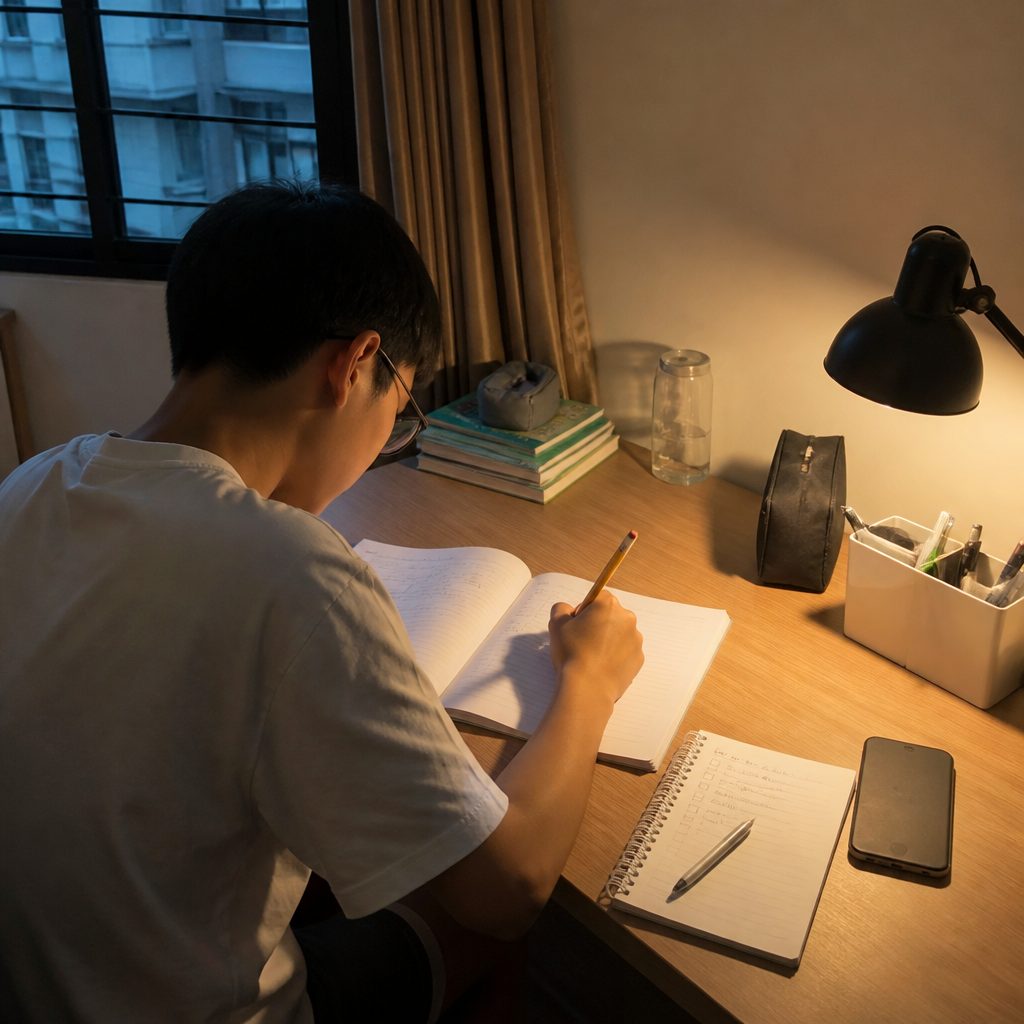
A Secondary 2 student home at 4.30pm after CCA could shower, eat and rest until 5.30pm. From 5.30pm to 7pm, they complete priority homework, then have dinner and free time.
A 45-minute review block after dinner might be reserved for a test the next day, not imposed automatically every night. This avoids the common mistake of scheduling a tired student for three intense evening hours after training.
A JC weekday example
A JC student home at 6pm may need dinner and a 30-minute reset before a 90-minute focused study block. After a short break, another 45 to 60 minutes can be used for tutorial preparation or content review, with time left to unwind before bed.
If your child is struggling to balance schoolwork, rest and confidence, personalised support from an experienced tutor may help make the weekly routine more manageable. Targeted help in one difficult subject can reduce the nightly time spent feeling stuck, rather than adding another broad commitment.
Make Changes Without Turning Home Into a Negotiation Room
Discuss the pattern, not one bad evening
When a parent sees unfinished work at 10pm, it is natural to react sharply. But one difficult night may follow a test, CCA event or unusually heavy school day.
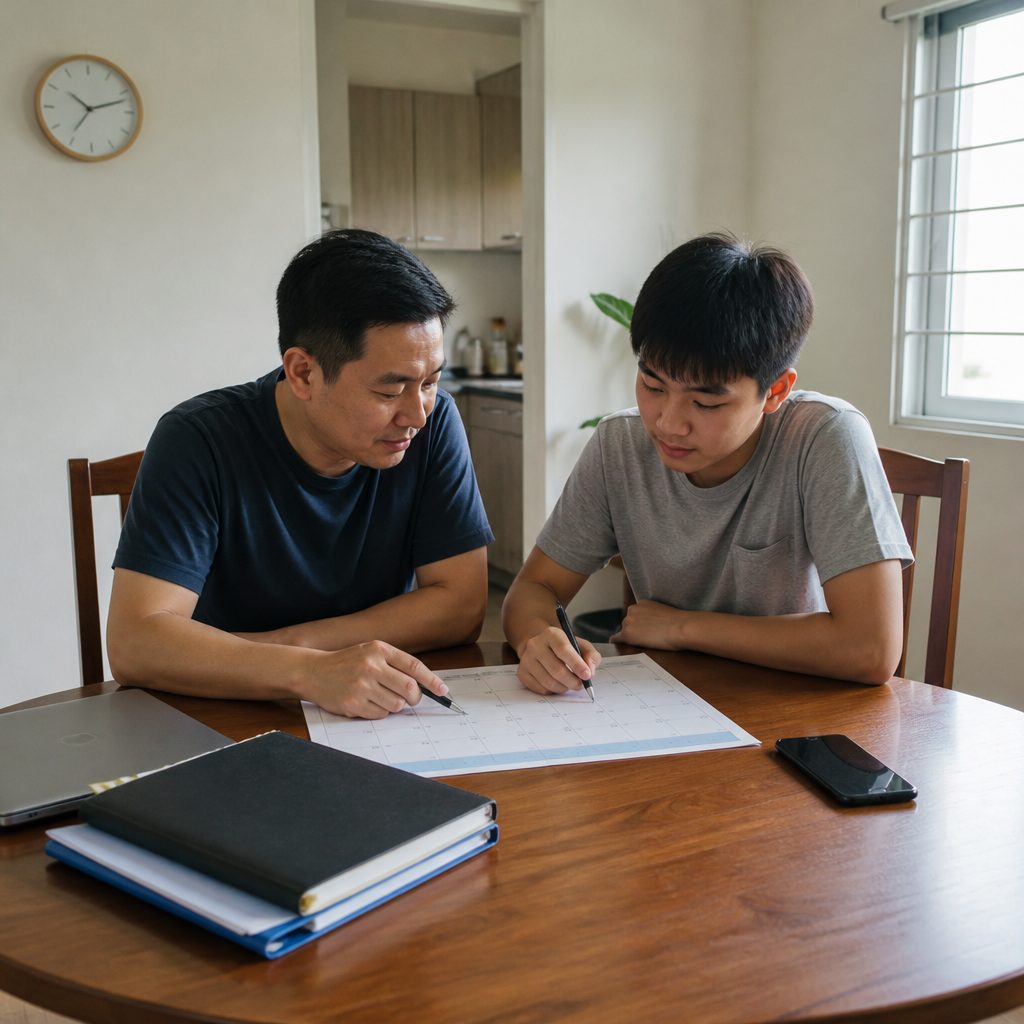
Look at one or two weeks before deciding that your child is either overscheduled or irresponsible. Choose a neutral moment, perhaps Saturday morning, and ask what part of the afternoon feels hardest.
Some children need a snack before work. Others lose time because they do not know which assignment to start. A teenager may be avoiding a subject because they have stopped understanding it.
Change one pressure point at a time
Avoid redesigning the entire timetable after one argument. Try one adjustment for a week: move tuition to a lighter day, reduce a nightly revision block, keep phones outside the bedroom, or set a 20-minute start task before leisure.
A routine that is too rigid can create secrecy and resentment. One that is too loose leaves parents carrying all the reminders. The middle ground is predictable expectations with room for CCA fatigue, school events and major examination weeks.
Know when stress needs more support
Seek guidance from a school counsellor, doctor or qualified mental-health professional if stress, sleep problems, withdrawal, persistent low mood or major behavioural changes continue. Academic pressure can be real, but a child should not have to manage sustained distress alone.
Frequently Asked Questions
Is two hours of screen time after school too much?
It depends on when and how it happens. Two hours before homework, leading to midnight work, is likely disrupting the routine. Two hours spread across transport, a short post-school break and relaxing after completed work may be more manageable. Sleep, mood and responsibilities matter more than a single number.
Should free time stop during PSLE, O-Levels or A-Levels?
No. Revision needs may rise, especially close to examinations, but removing all downtime usually weakens focus. Reduce optional activities selectively, maintain sleep and keep short moments for meals, movement and connection.
My child has tuition almost every weekday. Is that automatically too much?
Not automatically, but the total load deserves a careful review. If tuition replaces repeated hours of confusion and leaves the child calmer, it may be useful. If it creates late dinners, rushed homework and regular exhaustion, fewer but more targeted sessions may be a better fit.
How do I know how much homework is too much?
Homework is too much when it routinely displaces sleep, causes distress night after night, or requires a child to work long hours without understanding the material. Speak with the teacher when work is consistently unmanageable, and note which tasks take unusually long.
Conclusion
How much free time students need after school changes with age, commute, CCA, workload and personality. The best routine is not the fullest one. It is the one that allows steady academic effort, enough sleep and space for a child to recover and still feel like themselves.
Start by reviewing one ordinary week together, protect rest time after school, and adjust one pressure point at a time. If schoolwork has become a daily source of tension, personalised subject support may help make the week more manageable.