


Malay oral practice can feel stressful when your child rarely speaks Malay at home. They may know the words during written exercises, yet go quiet when asked a simple question. Or they may rush through a passage, worried that one mistake will spoil everything.
As oral assessments approach, many Singapore parents wonder how much to correct. Should you encourage memorisation, practise more often, or simply let your child speak freely? The aim is not perfect recitation. It is helping your child communicate clearly, develop ideas and speak with growing confidence.
Preparing for Primary Malay oral exams means building skills in reading, listening, observation, vocabulary and conversation. The exact format can differ by level and may be updated, so check the latest guidance from your child’s school, MOE and SEAB.
Key Takeaways
- Practise little and often. A focused 10-minute Malay conversation after dinner is usually more effective than a long, tense session on Sunday night. Frequent, low-pressure practice helps children become comfortable speaking without feeling that every session is a test.
- Reading aloud needs meaning, not speed. Encourage your child to pause at punctuation and understand each sentence instead of racing through unfamiliar words. Clear pacing and natural expression make reading easier for an examiner to follow.
- Build usable vocabulary by topic. Words related to school, family, health, community and daily routines become more useful when your child can use them in personal sentences and conversations.
- Teach your child to extend answers. A short response becomes stronger when they add a reason, feeling, example or possible outcome. This gives the conversation more depth without requiring a memorised script.
- Use pictures and everyday scenes. A hawker centre queue, littered playground or helpful classmate can become practical oral-exam conversation practice because children already understand these Singapore settings.
- Correct selectively. Stopping a child after every pronunciation slip can make them more hesitant than inaccurate. Let them finish first, then work on one or two meaningful improvements.
- Confidence comes from familiar routines. Rehearsing how to greet, think, answer and recover from a forgotten word makes the oral setting feel less frightening.
Understand What Examiners Look For
Know the main oral skills
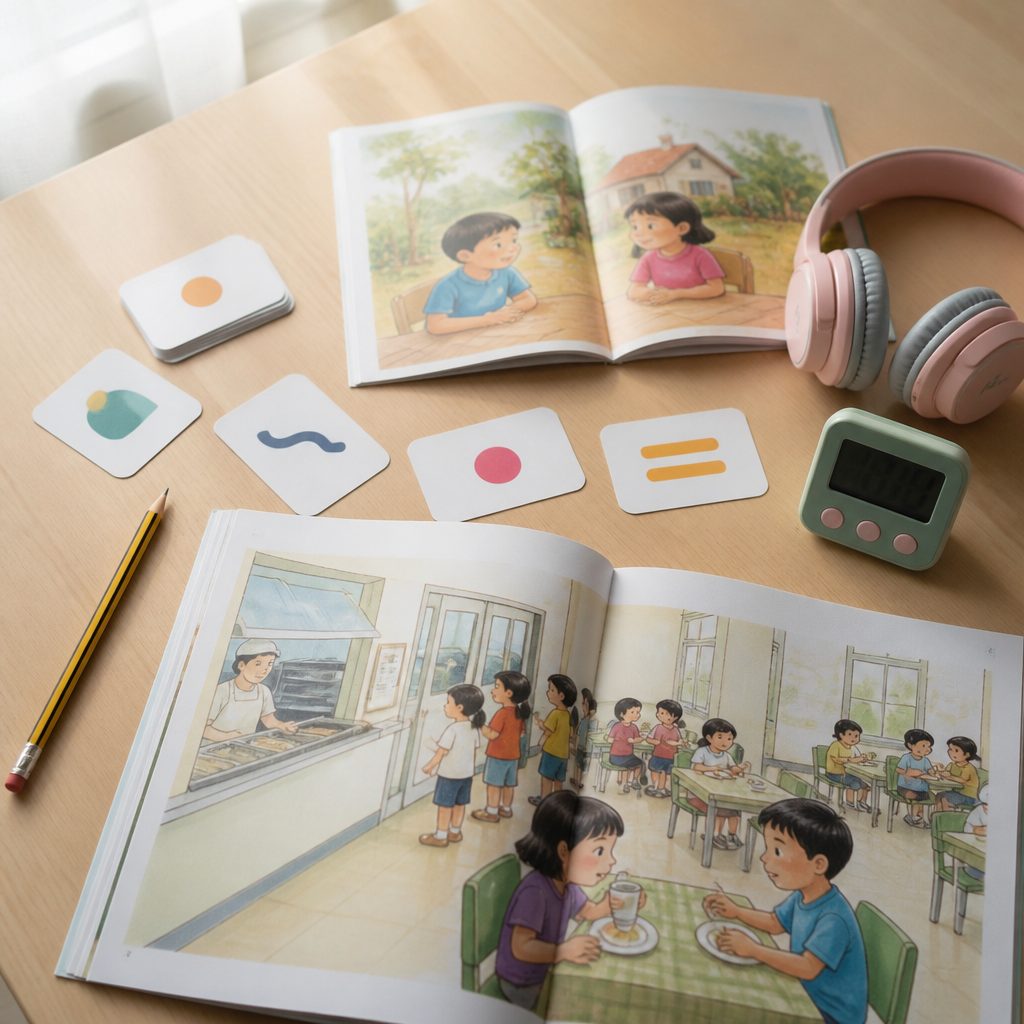
Primary Malay oral assessments generally involve reading aloud and a conversation component based on a visual stimulus, such as a picture or video, depending on the level and current examination requirements. Reading aloud assesses pronunciation, articulation, pacing and expression. Conversation assesses whether a pupil can understand the stimulus, use suitable vocabulary and express relevant ideas.
The MOE Primary Malay Language Teaching and Learning Syllabus emphasises listening, speaking, reading and writing as connected language skills. Oral preparation works best when it builds genuine language use, rather than treating the exam as a script to memorise.
Avoid the perfect-answer trap
Many pupils can memorise a polished answer on Monday, then freeze when the teacher changes one question on Friday. Tutors often notice this pattern: a child sounds confident with a familiar picture but struggles to explain why an action is good or what they would do in a similar situation.
Rather than asking your child to repeat a paragraph, ask follow-up questions. If a picture shows children cleaning a beach, try, “Mengapa mereka membersihkan pantai?” and “Apakah akan berlaku jika sampah dibuang merata-rata?” These questions build flexible thinking, which matters far more in a real oral conversation.
Strengthen Reading Aloud Skills
Tip 1: Read short passages slowly and clearly
A child who reads too quickly may simply be trying to get the task over with. This is especially common after a long school day, CCA and homework. At 9.30pm, when everyone is tired, rushing through a Malay passage can easily turn into another family argument.
Choose a short paragraph instead. Ask your child to mark full stops with a slash and circle words that need practice. They can read once for accuracy, then again with expression.
In a sentence such as “Pada hari Sabtu, Amir pergi ke perpustakaan,” remind them to make a small pause after “Sabtu” and at the end of the sentence. Steady and clear is more helpful than fast and breathless.
Tip 2: Practise difficult sounds in real words
Pronunciation improves more naturally through meaningful words than isolated drilling. If your child confuses sounds in words such as “rasa”, “kerja” or “syukur”, place each word in a short sentence: “Saya rasa gembira,” or “Ayah pergi kerja.”
Try not to turn practice into a lesson where every syllable is criticised. Record 30 seconds on a phone, let your child listen, then choose one sound to improve. Hearing their own reading can help them notice rushed endings or unclear words without feeling constantly corrected.
Tip 3: Discuss the passage before reading
Expression is difficult when a child does not understand the text. Before reading, ask simple questions: Who is in the passage? What happened? Is the character happy, worried or surprised?
If the passage describes a lost kitten, your child will naturally sound more concerned when reading, “Anis mencari anak kucingnya.” This short discussion strengthens vocabulary and comprehension too, instead of treating reading aloud as a separate performance.
Help Your Child Speak About Pictures and Videos
Tip 4: Observe before speaking
When shown a picture, some pupils blurt out the first object they see, then quickly run out of ideas. Give them a calm starting routine: look at the people, place, actions and possible issue. Ten quiet seconds of observation is not failure. It is preparation.
Using a picture of a school canteen, a lower-primary pupil might say, “Murid-murid sedang makan di kantin.” An upper-primary pupil can add detail: “Saya nampak seorang murid membuang sisa makanan ke dalam tong sampah. Dia menjaga kebersihan kantin.”
Practise with scenes from daily Singapore life, such as an MRT station, void deck, library, market or playground. Familiar settings reduce the pressure of thinking about both the scene and the language at once.
Tip 5: Extend answers naturally
A reliable way to move beyond one-line answers is to add a reason, example or personal response. If your child says, “Saya suka bersenam,” gently ask, “Mengapa?” They might continue, “Saya suka bersenam kerana badan saya menjadi sihat. Saya selalu bermain badminton dengan abang saya.”
This should not become a formula they repeat mechanically. It is simply a habit of giving the examiner something meaningful to respond to. Upper-primary pupils especially benefit from explaining consequences: “Jika kita tidak bersenam, kita mungkin mudah penat.”
Tip 6: Prepare for questions beyond the stimulus
Conversation can move from what is shown to what the child thinks or has experienced. A picture about helping an elderly person may lead to questions about courtesy, family routines or community responsibility.
Try a parent-child role-play. Ask, “Pernahkah kamu menolong seseorang?” Your child can answer honestly, even if the example is small: “Saya pernah menolong nenek membawa beg semasa kami pergi ke pasar.”
Build Vocabulary and Confidence Without Pressure
Tip 7: Create a small weekly vocabulary bank
Limited vocabulary can be a real obstacle, particularly for children who mostly use English at home. Yet handing them a list of 50 words to memorise can backfire. They may remember “kebersihan” for a spelling test but be unable to use it while speaking.
Choose one theme each week, such as health, school, family or the environment. Keep five to eight useful words, then use them in mini-conversations. For a health theme, useful words could include “bersenam”, “makanan berkhasiat”, “letih” and “sihat”. At breakfast, ask, “Apakah makanan berkhasiat yang kamu makan hari ini?”
A notebook can help, but keep it practical. Beside each word, write one child-friendly sentence and one personal example. For instance, “Berkongsi: Saya berkongsi pensel dengan kawan saya.” This makes vocabulary easier to retrieve naturally during oral practice.
Tip 8: Let mistakes happen, then repair them
Fear of mistakes often causes more damage than a weak vocabulary bank. A child may know the answer but whisper, look down or say “tak tahu” because they expect immediate correction.
During practice, let your child finish. Then say, “Saya faham idea kamu. Mari kita perbaiki satu ayat bersama-sama.” If they say, “Dia buang sampah,” help them add, “Dia membuang sampah ke dalam tong sampah.”
A common pattern among students is that confidence grows when corrections feel manageable. The child should leave the session feeling capable, not exposed.
If speaking Malay at home feels unnatural, start with predictable moments. Greet each other in Malay, describe one part of the day or ask one question while travelling home. Consistency matters more than creating an all-Malay household overnight.
Create a Realistic Oral Practice Routine
Keep weekday practice short
A manageable routine is three short sessions a week. On one day, read aloud for 10 minutes. On another, discuss a picture. On the third, revise vocabulary through conversation.
This is easier to sustain than forcing an hour of practice after a demanding tuition schedule or CCA day. The night before a school oral practice, avoid suddenly introducing many new phrases. Children often become more anxious when they feel they have not covered enough.
Review familiar strengths instead, such as opening a response politely, describing what they see and adding one reason.
Simulate the oral examination setting
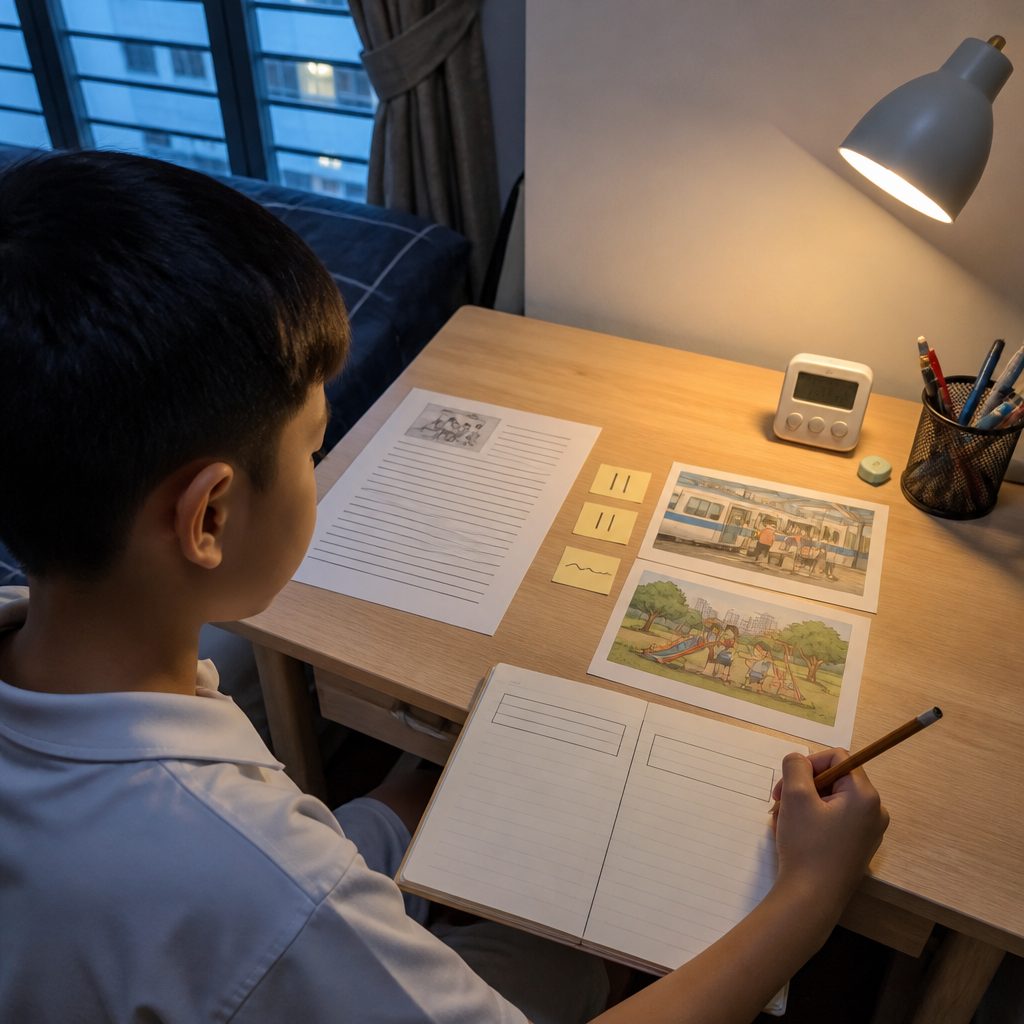
Once a week, sit across from your child and conduct a short mock oral. Begin with a friendly greeting. Give them a passage, then a picture, and ask two or three follow-up questions. Keep the entire session to about 15 minutes for younger children, and slightly longer for upper-primary pupils.
Afterwards, give feedback in this order: one strength, one improvement and one next practice target. For example: “Your reading was clear. Next time, pause more at commas. This week, let’s practise words about keeping Singapore clean.”
If your child remains very hesitant despite regular practice, personalised support can provide a lower-pressure space to speak and receive targeted feedback. Help your child build confidence in Malay speaking, strengthen vocabulary and practise oral-exam skills with patient, personalised support through our Primary Malay tutors.
Frequently Asked Questions
How much Primary Malay oral practice does my child really need each week?
Ten to 15 focused minutes, three or four times a week, is often enough when practice includes speaking, listening and feedback. A tired child forced through a long session may become less willing to speak Malay, so regular short sessions are usually more effective.
My child freezes during Malay oral. Should they memorise full answers?
Memorising a few useful phrases is fine, such as “Pada pendapat saya” or “Saya berasa gembira kerana”. Full scripts are risky because the examiner’s questions and visual stimulus may differ. Teach ideas and vocabulary, then let your child express them naturally.
What can I do if nobody speaks Malay at home?
Start small and do not feel guilty. Use picture discussions, Malay storybooks, school passages and simple daily questions. Your role is not to become a flawless Malay teacher. It is to create regular, safe opportunities for your child to try speaking.
How can I correct Malay oral mistakes without making my child shut down?
Wait until they complete their thought, then correct one or two important points. Repeating every error immediately can interrupt fluency and make a nervous child stop volunteering answers. Begin by acknowledging what they communicated well before addressing the next improvement.
Where can I check the latest Primary Malay oral examination format?
Check notices from your child’s school and the latest information from MOE and SEAB. Requirements may change, so current official guidance should take priority over older worksheets or advice.
Conclusion
Preparing for Primary Malay oral exams is less about finding a flawless script and more about building calm, regular speaking habits. Clear reading, practical vocabulary, careful observation and developed answers give pupils something dependable to rely on when they feel nervous.
Keep practice short enough to fit real family life, especially during busy school weeks. Let your child make mistakes, help them improve one step at a time and celebrate when they speak with more ease. With patient practice, Malay oral can become a conversation they are ready to handle rather than an exam they fear.