


Introduction
You hear it after the paper comes back. “But I listened already.” For many parents, that is the frustrating part. Your child sounds perfectly fine in everyday English, can chat, answer questions, and even read reasonably well, yet listening comprehension marks still slip away.
This happens more often than parents expect. For Primary school and PSLE students especially, listening comprehension is not just about hearing words. It tests focus, vocabulary, inference, and speed, all under exam conditions. That is why passive exposure, like leaving English cartoons on in the background, rarely leads to better scores. Real improvement usually comes from structured, active listening practice.
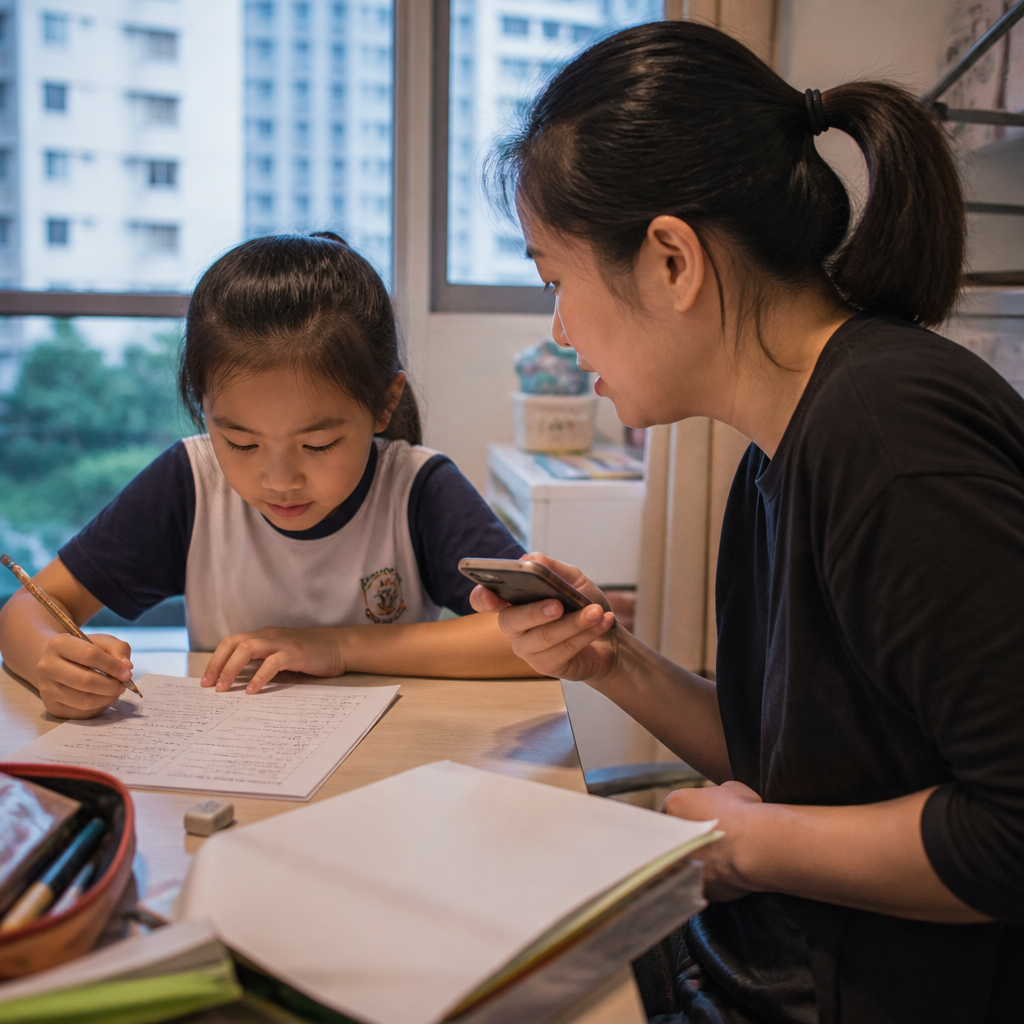
In this guide, we will look at practical ways to improve listening comprehension in a Singapore context, with clear strategies for PSLE preparation, home practice, and common school exam struggles.
Key Takeaways
- Listening comprehension is more than just hearing English. Children are tested on attention, vocabulary, inference, and speed in processing spoken information, especially in school and PSLE-style conditions.
- Passive listening is not enough. Background exposure helps familiarity, but it does not automatically build exam readiness.
- Short, consistent home practice works better than long weekend drilling. Even 10 to 15 focused minutes a few times a week can strengthen listening stamina and accuracy.
- Primary and PSLE students need exam-specific practice. Familiarity with question types, common topics, and the pace of spoken English matters.
- Parents can help without becoming the “stress police”. A calm, guided routine is often more effective than repeated scolding to “concentrate”.
- Fast improvement comes from active listening habits. Teaching children to anticipate, note keywords, and recover quickly after missing one detail can raise scores faster than simply doing more papers.
- Extra help may be useful when the same problem keeps repeating. A tutor can provide targeted support and structured listening practice instead of generic drilling.
What Listening Comprehension Really Tests In Singapore
Parents often assume listening comprehension is a simpler section because there is no long composition to write and no open-ended answer to plan. In reality, many children lose marks here because the skills being tested are less obvious.
Attention, vocabulary, inference, and processing speed
At Primary level, especially for PSLE English, the task is not just to hear correctly. A child has to stay mentally switched on from the start, recognise vocabulary in context, infer meaning from tone or details, and process information quickly enough to answer before the next part moves on.
That mix is exactly why some children who read quite well still struggle with listening tasks. A student may explain a written passage calmly on paper, but during listening, one unfamiliar word throws them off and they mentally lose the next few lines too.
Why passive listening does not improve exam scores
Many families try to improve English by increasing exposure, and that does help to a point. But there is a real difference between hearing English and training for a listening test.
If your child is listening to a podcast while colouring, snacking, or playing, attention is divided. The brain is not learning to catch clues under pressure. That is why some children say, “I always listen to English at home,” but still do poorly in school assessments. Exam listening is about active tracking, not background familiarity.
What MOE and PSLE expectations mean in practice
The English syllabus and examination framework give parents a useful reference point. You can check the latest information at MOE’s English Language syllabus page and the PSLE information page from SEAB. In practice, schools are looking at whether students can understand spoken Standard English, identify key information, and respond accurately to what they hear.
So when thinking about how to improve listening comprehension, the real goal is not simply to “listen more”. It is to listen with purpose, process quickly, and answer accurately.
Build Active Listening Skills, Not Just More Exposure
If your child keeps drifting during passages, the answer is usually not more worksheets. It is usually better listening behaviour.
Teach your child to listen for specific targets
Before playing any audio, give one clear mission. For example, “Listen for where the event is happening,” or “Listen for what problem the speaker is facing.” This trains the brain to search for meaning instead of just letting words pass by.
This is one of the most effective ways to improve listening comprehension, especially for younger children who are easily distracted. A Primary 4 child may not manage a full PSLE-style task yet, but can still succeed if asked to listen for three details, such as who, where, and what happened.
Train recovery after a missed detail
A common reason children do badly is not just that they miss one line. It is that they panic after missing it, then miss the next line as well.
Practise saying, “Miss one, move on.” If your child does not catch a word, teach them not to freeze. They should keep listening for the next useful clue. If they miss the name of a place but hear “next to the community library” and “opposite the food court”, they may still infer the answer.
Use short replay drills, not endless repetition
Replay can help, but too much replay creates a false sense of confidence. If a child listens to the same clip six times, they are often memorising rather than improving listening.
A more effective drill looks like this:
If you want guided support for this kind of targeted English practice, you can explore English tuition or contact a private home tutor here.
How To Practise Listening Comprehension At Home
Busy families do not need special software or piles of assessment books to make progress. What matters more is using ordinary materials in a structured way.
Use everyday English audio with a clear routine
Parents often ask how to practise listening comprehension at home without making the whole house feel like a classroom. The answer is to use real-life audio in short, planned bursts.
Good options include:
- Short local news clips on familiar Singapore topics.
- School-level educational videos with gentler pacing.
- Child-friendly podcasts that reduce reliance on visuals.
- Read-aloud passages by a parent when you want to control the pace.
After a short clip, ask, “What happened first?”, “Why did it happen?”, and “What detail do you remember?” That works much better than simply asking, “Did you understand?”
Build vocabulary around common listening topics
Children often lose marks not because the whole passage is difficult, but because one unfamiliar word blocks understanding. They may know the story is about a school trip, but not understand “assembly point”, “permission slip”, or “departure time”.
That is why home listening practice should include topic vocabulary. Focus on familiar PSLE and school-based themes:
- School activities
- Transport
- Health
- Shopping
- Neighbourhood places
- Weather
- Community events
A simple method is to keep a small “heard but not sure” notebook. If your child hears a word and cannot explain it, write it down, clarify it, and revisit it later in a sentence.
Parent-guided discussion beats silent practice
Some parents worry they are not good enough to teach English. For listening, your role is often not to teach a full lesson. It is to guide attention.
A short exchange like this can be very effective:
- “What is the main idea?”
- “Which word helped you know that?”
- “What did the speaker sound like, worried or excited?”
You are helping your child notice clues, not spoon-feeding answers.
Listening Practice That Works For Primary Students
For younger learners, practice has to be short enough to hold attention, but focused enough to build exam skills. Long sessions often backfire, especially after a full school day.
Try picture-based listening and detail hunts
One useful exercise is picture matching. Show a simple picture of a market, classroom, or playground. Read or play a short description and ask your child to identify which detail matches.
This sharpens attention to detail, which is often where careless mistakes happen. Many students catch the general story but miss the exact colour, object, or location that changes the answer.
Use sequencing exercises
Many Primary students understand the broad story but mix up the order. That is enough to cause wrong answers in multiple-choice or matching sections.
Try a sequencing task with three to five steps. Read a short scenario and ask your child to arrange events in order. Often, the issue is not just vocabulary. It is difficulty tracking spoken information in sequence.
Practise true or false with correction
This works especially well for children who think they understood everything when they only caught the broad idea. Read a short passage, then give statements for your child to judge as true or false.
The correction part matters most. It forces precise listening and builds accuracy before exam pressure takes over.
How To Prepare For PSLE And School Listening Exams
When PSLE is approaching, general listening practice needs to become more exam-specific. Otherwise, children may improve in casual listening but still underperform in test settings.
Understand the exam demand clearly
For PSLE English listening comprehension, what often makes the section difficult is the pace. There is little time to recover if attention drifts. Questions may involve identifying details, understanding context, and drawing simple inferences from what is heard.
That is why “My child understands when I explain after the audio” is not enough. The real challenge is understanding in real time.
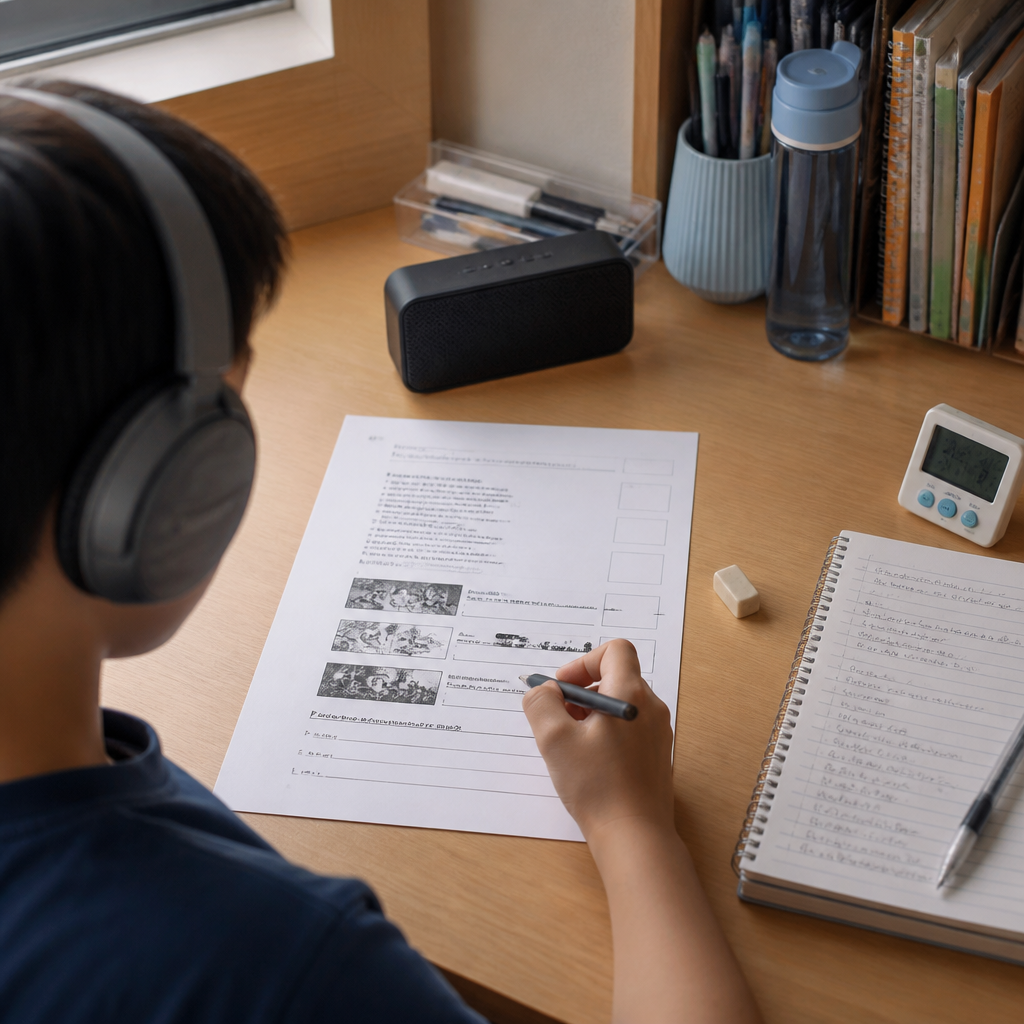
Train under timed and realistic conditions
Some families only practise in relaxed settings, with pausing, replaying, and many hints. That builds comfort, but not always readiness.
Closer to exams, use a more realistic routine:
Correct common exam mistakes early
Here are some recurring issues tutors often see:
- Choosing an answer based on one familiar word instead of the full meaning
- Missing negatives like “did not” or “unless”
- Panicking at unfamiliar vocabulary and mentally tuning out
- Forgetting to scan options before listening
Before the audio starts, train your child to glance through the questions and notice the likely keywords. If the options include days or timings, they already know to listen carefully for time references.
Secondary Students Need A Different Approach
Although this article focuses mainly on Primary and PSLE learners, Secondary students also need support, especially when listening tasks become longer and more inferential.
Expect more complex vocabulary and implied meaning
In Secondary school, students are often expected to handle denser content, more mature topics, and subtler meaning. Sometimes the difficulty is not speed at all. It is indirectness. A speaker may not say “I am disappointed” directly, but the tone and context make it clear.
That means older students need to listen for attitude, purpose, and implication, not just surface facts.
Encourage simple note-taking
For Secondary students, quick note-taking can make a visible difference. They do not need full sentences. Useful shortcuts include arrows for cause and effect, short forms, and one-word topic labels. If a student tries to write too much, they stop listening.
Look for the real weakness
Sometimes an older student has already done many listening papers but still repeats the same mistakes. In these cases, the issue is often not laziness or lack of effort. It may be weak vocabulary, poor auditory memory, or exam anxiety.
That is why targeted review is usually more useful than simply doing another ten papers.
A Simple Weekly Routine For Busy Singapore Families
A realistic routine usually works better than an ambitious one that collapses after three days. With school, enrichment, tuition, and CCA, many families simply do not have an hour a day for listening work.
A workable 4-day plan
Monday: 10 minutes
Play a short audio clip and ask three oral questions. Focus on the main idea and one supporting detail.
Wednesday: 15 minutes
Do a vocabulary-linked listening task using a topic like transport or school events. Clarify unfamiliar words and ask your child to use one or two of them in a sentence.
Friday: 10 to 15 minutes
Try one exam-style practice segment with no pausing. Review mistakes calmly after the task and identify whether the issue was focus, vocabulary, or rushing.
Sunday: 15 minutes
Have a parent-child recap. Discuss what kinds of details were missed that week, such as numbers, sequence, or keywords, and decide what to focus on next week.
Keep the routine light but consistent

This kind of schedule works because it builds regularity without burning the child out. Short, steady practice usually builds better listening stamina over time.
When a tutor may help
If your child consistently cannot focus, misses obvious details, or performs far worse in timed listening than in untimed review, extra guidance may be worth considering. The right tutor can break the skill down and provide structured support. If you want to learn more, you can contact our tutors here.
Frequently Asked Questions
How long does it take to improve listening comprehension?
It depends on the underlying problem. If the issue is mainly weak exam habits, improvement can happen within a few weeks. If vocabulary range and focus are weaker, progress is usually steadier. In most cases, consistency matters more than intensity.
What are the best ways to improve English listening skills at home for a Primary school child?
Short, active sessions usually work best. Use child-friendly audio, ask specific follow-up questions, and build vocabulary from common school topics.
My child hears English every day. Why are listening comprehension marks still low?
Daily exposure helps with familiarity, but exam listening requires active processing. A child may understand casual conversation and still struggle to catch details, infer meaning, and answer under time pressure.
Are assessment books enough for listening comprehension practice?
Not always. Papers are useful, especially for PSLE preparation, but children also need guided listening habits. If they keep making the same mistakes, more papers may simply repeat the same pattern.
How can parents improve a child’s listening comprehension without causing stress?
Keep sessions short, calm, and specific. Avoid turning every mistake into a lecture. It is usually better to focus on one or two habits at a time, such as catching keywords or staying calm after missing a word.
Conclusion
Learning how to improve listening comprehension in Singapore is not about flooding your child with more English audio. It is about helping them listen actively, process quickly, and stay calm under school and PSLE-style conditions.
For Primary students, especially those preparing for PSLE, the biggest gains often come from short, consistent home practice, stronger vocabulary around common topics, and direct training in attention and recovery skills. Secondary students benefit from deeper work on inference and note-taking.
If your child keeps losing focus, missing details, or underperforming despite effort, do not assume they are lazy or careless. Very often, they simply have not been taught how to listen strategically. With the right routine and support, this skill can improve. If you would like more personalised help, you can learn more about our tutors here.