


Introduction
If you have been asking what the IB curriculum is, chances are you are not just looking for a neat definition. You may be trying to picture your own child in that environment, and that can feel like a big decision. Many Singapore parents end up weighing the same things, academic rigour, school culture, cost, university options, and one very practical concern: will my child actually thrive in this system?
In simple terms, the IB, or International Baccalaureate, is a globally recognised education framework used by many international schools. It is known for inquiry-based learning, interdisciplinary thinking, and a broader style of assessment than systems that rely mainly on major exams. For families here, understanding the IB curriculum usually comes down to this, how it shapes daily learning, how it differs from local schooling, and whether it matches your child’s strengths, temperament, and long-term goals.
Key Takeaways
- The IB is more than one programme. It includes different stages, from primary years to pre-university, so the IB experience looks very different at age 7, 13, or 17. Parents should avoid assuming that one child’s experience in the Diploma Programme reflects what a younger child will face in the Primary Years Programme.
- Inquiry-based learning is central. Children are often asked to question, research, connect ideas, and explain their thinking, not just memorise and reproduce answers. This can be highly engaging for curious learners, but it may also feel unfamiliar at first if your child is used to tightly structured worksheets and model answers.
- Assessment is broader than major exams alone. Depending on the programme, students may be graded through projects, coursework, presentations, reflections, and final examinations. That broader assessment style can reduce overreliance on one exam, but it also means students need consistent effort across the school year.
- IB and MOE are not simply better or worse than each other. The difference Singapore families usually notice most is learning style, pacing, and assessment culture. One system may suit your child better than the other, even if both are academically strong.
- The IB can suit many types of learners, but not every child. A curious, independent child may enjoy it, but even bright students can struggle if they dislike open-ended tasks or if weak time management goes unchecked. Fit matters more than labels like “gifted” or “not academic.”
- University preparation is a real strength of the IB. Many parents ask how the IB prepares students for university because it builds research, writing, discussion, and self-management over time. These habits can be valuable well beyond school.
- School fit matters as much as curriculum fit. Each Singapore international school may offer different IB stages, subject options, support systems, fees, and admissions expectations, so always verify details directly with the school and official sources.
What The IB Curriculum Is And How It Works
When parents ask what the IB curriculum is, they often imagine one fixed syllabus. In reality, it is better understood as a learning framework and philosophy used across several age groups. The International Baccalaureate was designed to help students think independently, communicate clearly, and look at issues from more than one perspective.
The four IB programmes
There are four main IB programmes, and it helps to see them side by side.
This matters because the IB curriculum for a primary school child looks nothing like the IB for a teenager preparing for university applications. A PYP child may explore a theme through reading, discussion, experiments, and a simple presentation. A DP student may be managing higher-level subjects, essays, lab work, and internal assessments all at once.
The core learning approach
Across the different IB programmes, one idea keeps showing up, inquiry. Instead of only asking, “Can your child remember this chapter?”, teachers often ask, “Can your child apply this idea, question it, compare perspectives, and explain why it matters?”
That sounds appealing to many parents, but it can also feel unfamiliar at first. Some children who are used to clear worksheets and model answers may feel unsettled in the beginning. Over time, those who adjust often become more comfortable speaking up, writing analytically, and handling open-ended tasks.
Another useful way to understand the IB is that it aims to develop habits, not just content recall. Schools often place emphasis on reflection, collaboration, and communication alongside academic knowledge. For parents, this means progress may not always look like stacks of practice papers. Sometimes it looks like a child learning to defend an opinion, improve a draft after feedback, or connect one subject to another.
For official programme information, parents can refer to the International Baccalaureate website.
What The IB Looks Like At Each School Stage
One reason parents feel uncertain is simple, the IB does not feel the same throughout childhood. Looking at it by school level usually makes things much clearer.
In the primary years
For families trying to understand the IB curriculum in primary school, the PYP often feels less like separate subject silos and more like connected learning. Children still build literacy, numeracy, and content knowledge, but lessons may be organised around broader themes.
So instead of learning Science and English in completely separate boxes, a child may explore habitats, read nonfiction texts, write reflections, and create a project around the same theme. In a good fit, this feels engaging and meaningful. In a weaker fit, some parents worry the structure seems too loose compared with more explicit drilling.
That concern is understandable. If you are used to spelling lists, weighted assessments, and tightly sequenced workbooks, the PYP can seem less immediately measurable. Still, many children benefit from learning how to ask questions early, rather than waiting until upper levels. It can also help younger learners see school as something more than completing tasks correctly. They begin to understand that learning involves curiosity, discussion, and making sense of the world around them.
In the secondary years
By the MYP stage, the work usually becomes more academically structured while keeping the interdisciplinary style. Students are expected to connect ideas across subjects and reflect on how they learn. This can be rewarding for children who enjoy discussion and big-picture thinking.
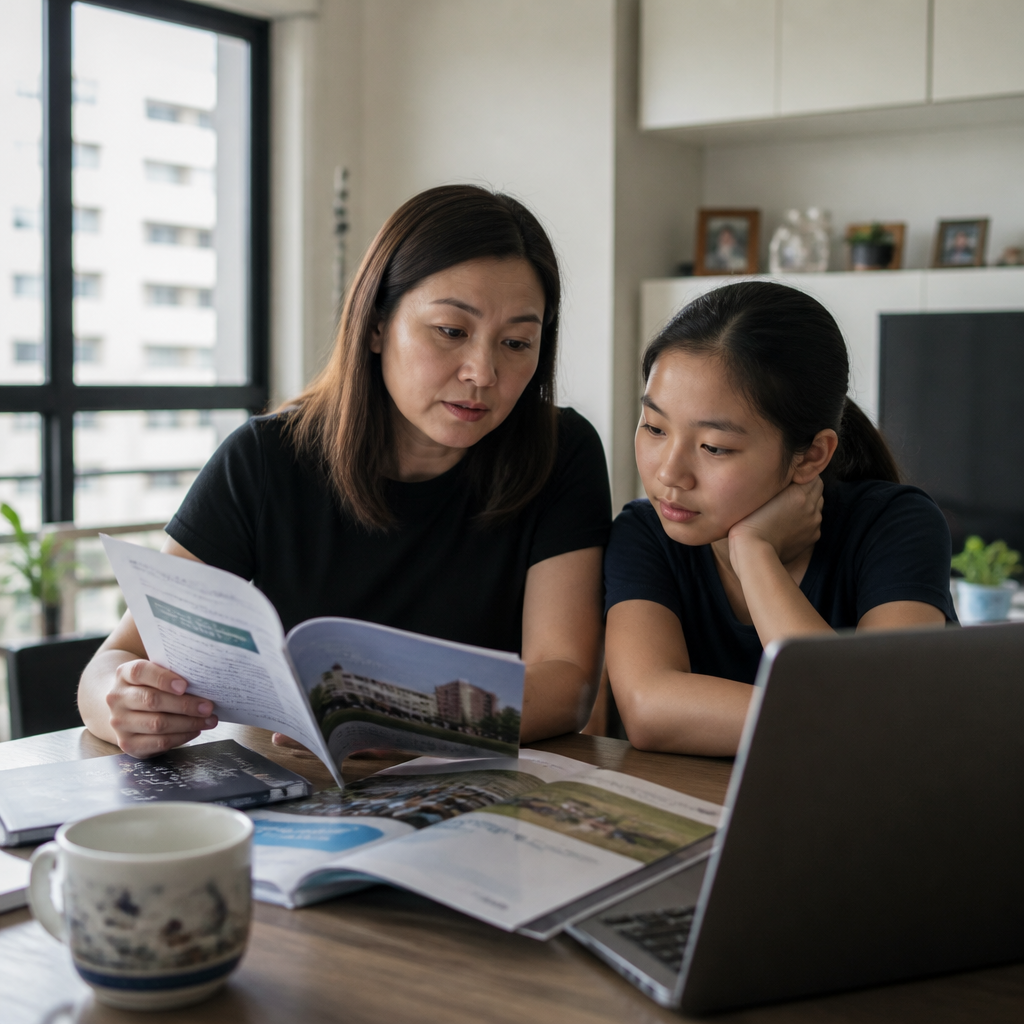
It can also expose weaknesses quickly. A student may be bright, understand lessons well, and still struggle badly with deadlines, research tasks, and longer-term projects. Tutors often notice this pattern. The issue is not always ability. Quite often, it is organisation and planning.
This is also the stage where parents may start noticing whether their child truly likes the IB style or is merely coping with it. Some students become more engaged because they enjoy being asked to think independently. Others start feeling stretched by the need to juggle multiple criteria, projects, and written responses across subjects.
In the pre-university years
The DP is the stage many Singapore parents know best. It has a reputation for being demanding, and that reputation is fair. Students take multiple subjects, often at different levels, while also managing core components that develop writing, reflection, and research skills.
What makes it challenging is not just academic difficulty. It is the sustained workload over time. A student usually cannot rely on last-minute mugging alone. That is one reason the IB Diploma is often seen as strong preparation for university.
For some teenagers, this structure is exactly what helps them mature academically. They learn to plan backwards from deadlines, manage competing demands, and write with more depth. For others, the same demands can feel relentless if support systems are weak.
IB vs MOE: What Singapore Parents Should Know
When families compare the IB and the MOE curriculum, the real difference is usually not just content difficulty. It is the overall learning culture.
Structure, pace, and classroom style
The MOE pathway is generally more centralised and exam-oriented, with clearer national benchmarks. Many parents appreciate that sense of familiarity and comparability. There is also a more defined progression through major checkpoints such as PSLE, O-Levels, or A-Levels.
The IB often gives more space for discussion, research, presentations, and applied thinking. That does not make it less rigorous. In fact, some students find it more demanding because they cannot depend on memorisation alone.
A child who thrives on routine, direct instruction, and clearly defined exam formats may do very well in the MOE system. A child who keeps asking “why”, enjoys independent exploration, and dislikes learning only for tests may respond well to the IB.
Here is a simple way to think about the contrast.
Assessment culture
Another major difference is assessment. In MOE schools, exams often carry strong psychological weight because they are linked to high-stakes progression. In the IB, assessment can be more varied. Depending on the programme and school, students may be evaluated through coursework, oral presentations, projects, investigations, class tasks, and final exams.
On paper, that may sound less stressful. But there is a trade-off. Steady accountability can be harder for some students than one big exam. They cannot drift for weeks and then cram at the end.
Language, breadth, and international orientation
Many IB schools in Singapore also offer broader language choices and a more international classroom environment. For some families, that is a major draw. For others, especially those thinking about local pathways, mother tongue expectations, or possible reintegration into the MOE system, it raises practical questions that should not be brushed aside.
For broad-minded families who may relocate, the international recognition of the IB can also be attractive. But if your child is likely to remain on a local route, it is worth thinking carefully about how smooth future transitions will be.
For a broad overview of Singapore’s education landscape, parents can check MOE’s education overview.
How Inquiry-Based Learning Feels In Daily School Life
Inquiry-based learning sounds impressive, but most parents want to know what it actually looks like on an ordinary weekday, when the child is tired, there is CCA, and everyone is already watching the clock.
Less copying, more thinking aloud
In many IB classrooms, children are asked to discuss, question, compare, and justify. A teacher may ask, “Why do you think this happened?” instead of “Write the textbook answer.” Over time, this can build confidence and articulation.
The transition is not always smooth. Some Singapore children, especially those who have been praised for being “quiet and correct,” need time to adjust. They may know the answer but still hesitate because there is no single script to follow.

More open-ended tasks, more need for organisation
A common misconception is that inquiry-based learning is soft or vague. Actually, it often demands more self-management. A project with research, drafting, feedback, and presentation can be tougher than a worksheet because the child has to plan the whole process.
This is where some families feel stuck. You may see your child spending a long time “working on a project” but producing very little. Often, the hidden issue is not laziness. It is difficulty breaking a large task into smaller steps.
Parents sometimes find that simple routines help more than constant nagging. A visible planner, mini-deadlines, regular review of teacher feedback, and a quiet writing routine can make inquiry-based work feel much less overwhelming.
If your child is on the IB pathway and needs help building steadier habits, subject clarity, or confidence with written tasks, you can explore support through our IB tutors or read more on our IB tuition page.
Is The IB Curriculum Suitable For Your Child?
The honest answer is that it depends less on whether your child is “smart enough” and more on how your child learns best.
Children who often do well in the IB
Many children do well when they:
- Enjoy asking questions. A child who keeps probing beyond the textbook often finds the IB more natural. Instead of stopping at a factual answer, they want to know why something happens and how it connects to the wider world.
- Can express ideas in speech or writing. Since discussion and explanation matter, children who are willing to elaborate often settle in more comfortably. They do not need to be extroverted, but they do need to build the habit of communicating their thinking.
- Handle independent work reasonably well. Not perfect independence, but some ability to manage a timeline helps a lot, especially in the upper years where projects and coursework can overlap.
Children who may need more support
Some children can still succeed in the IB, but they may need stronger scaffolding if they:
- Prefer very clear right-or-wrong tasks. Open-ended assignments can feel unsettling at first, especially if they are used to one model answer and are unsure how to judge their own work.
- Struggle badly with procrastination. In the DP especially, delayed work builds up quickly. A capable student can fall behind not because the content is impossible, but because deadlines start colliding.
- Need lots of external structure. Without regular guidance, even strong students may underperform. In these cases, support at home, from school, or through tutoring can make the difference between coping and constantly feeling overwhelmed.
A common pattern among students is this: they struggle in the IB not because it is too advanced, but because they never properly learned how to plan, annotate, draft, or revise. Parents then assume the curriculum is the problem, when the issue is really skill support.
It is also worth remembering that fit can change over time. A child who enjoys the PYP may not automatically enjoy the DP, and a student who initially finds the IB uncomfortable may later grow into it once study habits improve.
How The IB Prepares Students For University
Parents often ask how the IB prepares students for university, especially when comparing it with A-Levels or other pre-university pathways.
Research, writing, and academic stamina
The IB, especially at DP level, often trains students to do more than absorb content. They are expected to analyse sources, build arguments, write at length, and manage ongoing deadlines. These demands are very close to what many students later face in university.
A student who has already experienced research-based assignments may cope better with undergraduate expectations than one who is used only to short-answer exam practice. That does not mean the transition becomes easy, but the style of thinking can be helpful.
Breadth plus specialisation
Another strength is balance. Students usually maintain breadth across subject areas while also taking some subjects at a deeper level. For teenagers who are not yet completely certain about their future course, this can be useful.
At the same time, breadth has its own cost. A student who wants to narrow down very early may find the spread demanding. So the better question is not “Which system is better?” but “Which system supports my child’s next stage best?”
University recognition and practical checks
IB qualifications are widely recognised internationally, but parents should still verify entry requirements for specific universities and courses. Recognition does not mean identical admissions expectations everywhere. It is always worth checking the latest information from universities, the IB organisation, and the school your child is considering.
What To Check Before Choosing An IB School In Singapore
Choosing the IB is not just choosing a curriculum. In Singapore, it also means choosing a specific school environment, fee structure, and student culture.
Programme availability and transition points
Not every international school offers every IB stage. Some may offer PYP and MYP but not DP. Others may run the full pathway. This matters if you are hoping for continuity from primary to pre-university.
If your child is entering from preschool, a local primary school, or a different international curriculum, ask how transitions are supported. A smoother transition can matter just as much as the curriculum itself.
Support systems and workload culture
Ask practical questions. How much homework is typical? What learning support is available? How are weaker writers or anxious students helped? How does the school communicate with families?
These details matter because two schools can both be IB schools and still feel very different. One may feel nurturing and well-scaffolded. Another may expect children to become independent very quickly.
Cost, community, and long-term fit
Fees are a real consideration for Singapore families, and it is better to be honest about that than to pretend it does not shape decisions. Beyond fees, think about community fit, travel time, language environment, and whether your child is likely to feel that they belong there.
Curriculum offerings, admissions requirements, and programme details vary by school, so do check the latest information directly with individual schools, the IB organisation, and where relevant, Singapore’s Ministry of Education.
Frequently Asked Questions
Is the IB curriculum harder than the MOE curriculum in Singapore?
Not in a simple, across-the-board way. Some children find the IB harder because of coursework, open-ended tasks, and ongoing deadlines. Others find MOE pathways harder because of exam pressure and high-stakes competition. In many cases, difficulty comes down to learning style, strengths, and how well a child handles structure versus independence.
Can my child switch from MOE to IB, or from IB back to MOE?
It is possible, but the ease of transition depends on age, subject background, language requirements, and the receiving school’s policies. A younger child may adapt more easily than an older student moving close to key examination years. Before making plans, it is best to check directly with the schools involved rather than assume the move will be straightforward.
Does the IB place less emphasis on exams?
Not necessarily less emphasis, but a different balance. Many IB pathways include substantial coursework and other assessments alongside exams. In the Diploma Programme, final examinations still matter a lot, but students are not judged by exams alone. For some learners, that feels more manageable. For others, the constant demands can actually feel heavier.
Is the IB only suitable for outspoken or highly independent children?
No. Quiet children can do well in the IB too. The bigger question is whether they can gradually learn to think independently and communicate their ideas. Some need more support at first, and that is not unusual. It does not automatically mean they are a poor fit for the curriculum.
What if my child is academically capable but struggling with IB workload?
That is very common, especially in the upper years. The issue is often task management, writing clarity, or confidence with interpretation rather than raw ability. When support comes in early, whether from school, home, or tutoring, it can make a real difference before stress snowballs into burnout or disengagement.
Conclusion
So, what is the IB curriculum? For Singapore parents, it is best understood as an international learning pathway that values curiosity, communication, conceptual understanding, and a broader style of assessment. It includes different programmes across primary, secondary, and pre-university years, and it can be an excellent fit for some children, but not automatically for all.
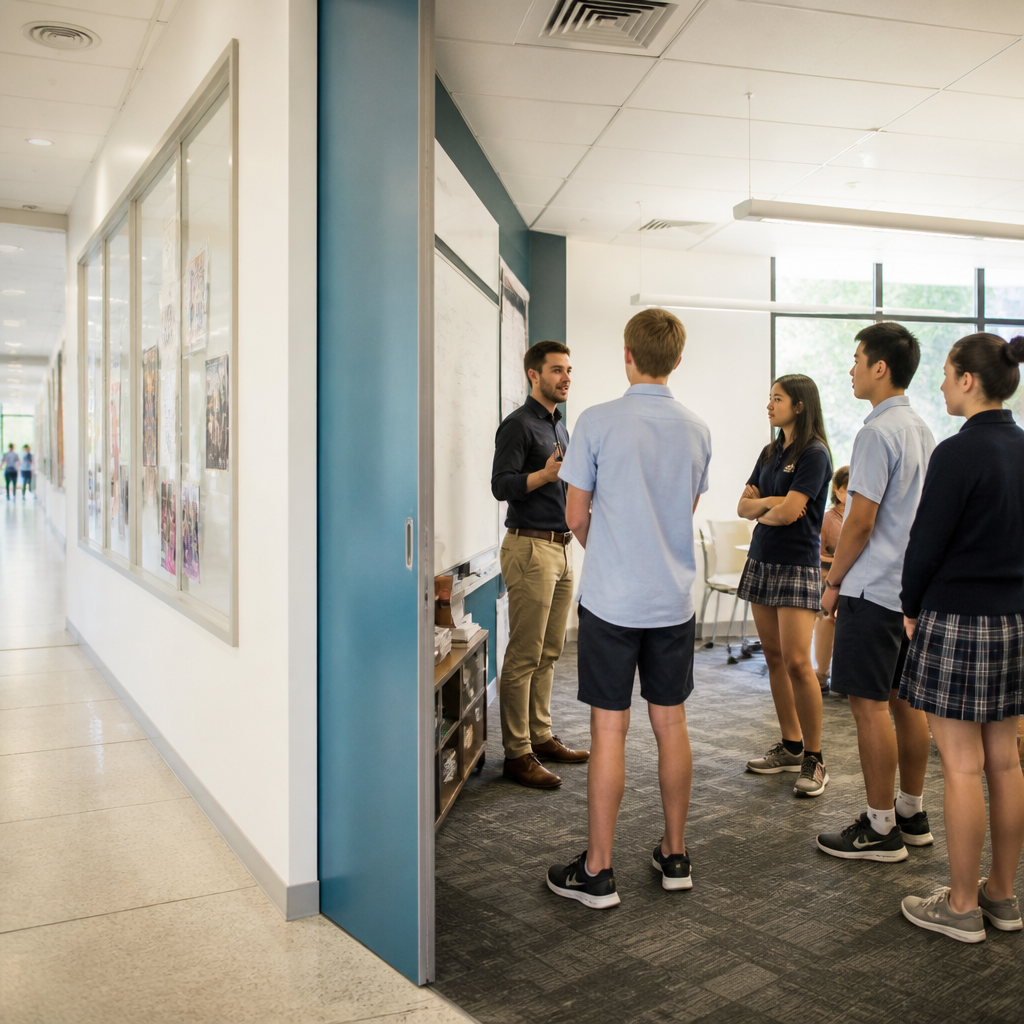
The most helpful comparison is not whether IB or MOE is universally better. It is whether the learning style, assessment demands, school culture, and long-term pathway suit your child. Some children flourish with inquiry and independence. Others do better with clearer structure and exam familiarity. Both are valid.
As you compare options, check the latest information with individual schools, the IB organisation, and MOE. If your child needs steady support with subject understanding, workload management, and confidence while navigating the IB pathway, you can learn more about our IB tutors here.